
What flexibility does hiring versus purchasing a stairlift offer?
Hiring a stairlift offers greater short-term flexibility, with less upfront commitment and the option to have it removed when it is no longer needed, while purchasing gives you long-term control over the equipment and its use. The better choice depends on how long you expect to need the stairlift, your budget, the agreement terms and whether your home or mobility requirements may change.
Hiring generally offers more flexibility for short-term or uncertain needs, because it reduces the upfront commitment and usually allows the stairlift to be removed when it is no longer required. Purchasing offers greater long-term control: you own the equipment, can keep it for as long as needed and may have more freedom over future use, servicing and disposal. The right option depends on the expected duration of use, the type of staircase, your budget and the terms offered for installation, maintenance and removal.
Flexibility of hiring a stairlift
- Less long-term commitment: Hiring can be suitable when recovery is expected, a property may be sold or circumstances are likely to change. You pay for access to the stairlift rather than taking ownership of equipment that may not be needed later.
- Easier removal when circumstances change: Once the stairlift is no longer needed, the provider may be able to arrange its removal. Confirm in advance whether removal is included, whether charges apply and how much notice is required.
- Reduced responsibility for maintenance: Hire agreements commonly include servicing and repairs, subject to the contract. This can make budgeting more predictable and avoids having to arrange every repair independently.
- Potentially lower initial cost: Hiring normally avoids the full purchase price at the outset. This may be useful when immediate access is needed but the long-term requirement is uncertain.
- Suitable for some temporary situations: A hire arrangement may be practical after an injury, during rehabilitation or while waiting for a more permanent accessibility solution. Availability will depend on the stairlift model and the staircase.
Hiring does not mean that every stairlift can be moved from one home to another. A straight stairlift may be more straightforward to install and remove, while a curved stairlift is made to suit the individual staircase and may have limited usefulness elsewhere. If you expect to move home, ask whether the equipment can be adapted, removed or reinstalled, and what costs or restrictions would apply.
Flexibility of purchasing a stairlift
- Complete ownership: Once purchased, the stairlift remains yours to use for as long as it is safe and suitable. You are not tied to a rental period or required to return the equipment at the end of an agreement.
- Better suited to ongoing needs: Buying can be more practical when the stairlift is likely to be needed for several years or by more than one person in the household. The initial cost is spread over the period of ownership rather than paid as a continuing hire charge.
- Greater control over future decisions: You can decide whether to keep, sell, donate or arrange removal of the stairlift, although a provider may need to assess its condition and safety before any reuse.
- More choice over specification: Purchasing may provide greater scope to choose a new or reconditioned model, a particular seat configuration or features that suit the user and staircase. The available options should be assessed against safety and the physical environment rather than selected on appearance alone.
- Responsibility after the included cover: Ownership means that you will normally need to arrange and pay for servicing, repairs, replacement parts and eventual removal unless these are covered by a separate agreement. Warranty terms and service packages can change the practical difference between buying options.
Purchase can also offer flexibility if your needs evolve, but the equipment still has to remain suitable. For example, changes in balance, transfer ability, posture or the number of people using the stairlift may mean that the seat, controls or safety features need reviewing. A stairlift should not be modified or used in a way that conflicts with the manufacturer’s instructions or the installation assessment.
Comparing the main types of flexibility
- Duration: Hire is usually more adaptable when the required period is unknown or relatively short. Buying tends to offer better value and control when use is expected to continue.
- Cash flow: Hire avoids a larger initial purchase payment but creates ongoing charges. Buying requires more money at the start, followed by ownership costs such as servicing and repairs.
- Changes to the home: If building work, a move or a change of occupancy is likely, establish how either arrangement deals with removal, storage and reinstallation.
- Maintenance: Hiring can transfer much of the maintenance administration to the provider. With ownership, you have more choice over who carries out servicing but must arrange it and meet the cost.
- Equipment choice: Hire availability may be limited to suitable equipment currently available for the staircase. Buying may allow more choice, but the most appropriate model still depends on a professional assessment.
- End of use: A hire agreement may provide a defined return process. With a purchase, you remain responsible for deciding what happens to the stairlift and checking whether removal or reuse is appropriate.
Check the agreement before deciding
The word “flexible” can mean different things in different agreements. Before hiring, check the minimum hire period, notice required to end the agreement, removal charges, repair and servicing arrangements, cover for accidental damage, and what happens if the stairlift is no longer suitable. Ask whether payments continue while a repair is being arranged and whether the agreement can be transferred if the property is sold.
Before purchasing, check what is included in the price, the length and scope of the warranty, servicing recommendations, call-out and repair charges after cover ends, and the cost of removal. For a reconditioned stairlift, ask about its condition, parts availability and the cover provided. For a curved installation, confirm how changes to the staircase or a house move could affect future use.
Which option is likely to suit you?
- Hiring may be preferable if the stairlift is needed temporarily, the length of use is uncertain, you want to limit the initial payment or you prefer the provider to handle most maintenance arrangements.
- Purchasing may be preferable if the stairlift is expected to be used for the long term, several household members may rely on it, you want full ownership or you are comfortable arranging future servicing and removal.
- A purchase may not provide useful flexibility if the user’s needs or the property are likely to change soon, particularly where a bespoke stairlift would have limited resale or relocation potential.
- A hire agreement may not be the most economical choice for prolonged use, especially if ongoing payments eventually exceed the cost of suitable ownership. This should be assessed using the full contract cost rather than the initial payment alone.
A home assessment is the most reliable way to compare the two options. It can establish whether the staircase can accommodate the required equipment, whether a straight or curved solution is appropriate, what adaptations may be needed and how removal or future changes could be handled. Ask for a clear comparison of the total hire and purchase costs, included maintenance, contract obligations and likely end-of-use arrangements. This lets you choose the option that provides the right balance of financial control, practical adaptability and reliable access.
The flexibility of hiring a stairlift depends on the agreement, not simply on the fact that you do not own the equipment. A hire arrangement may make it easier to end use when circumstances change, but you should confirm the minimum hire period, notice required and whether removal is included or charged separately.
Check who is responsible for servicing, repairs and accidental damage, and whether payments continue while the stairlift is being repaired. If you may move home or need the stairlift only during recovery, ask whether it can be removed, stored or reinstalled and what restrictions apply. These details show whether hiring will provide practical flexibility as well as a lower initial commitment.
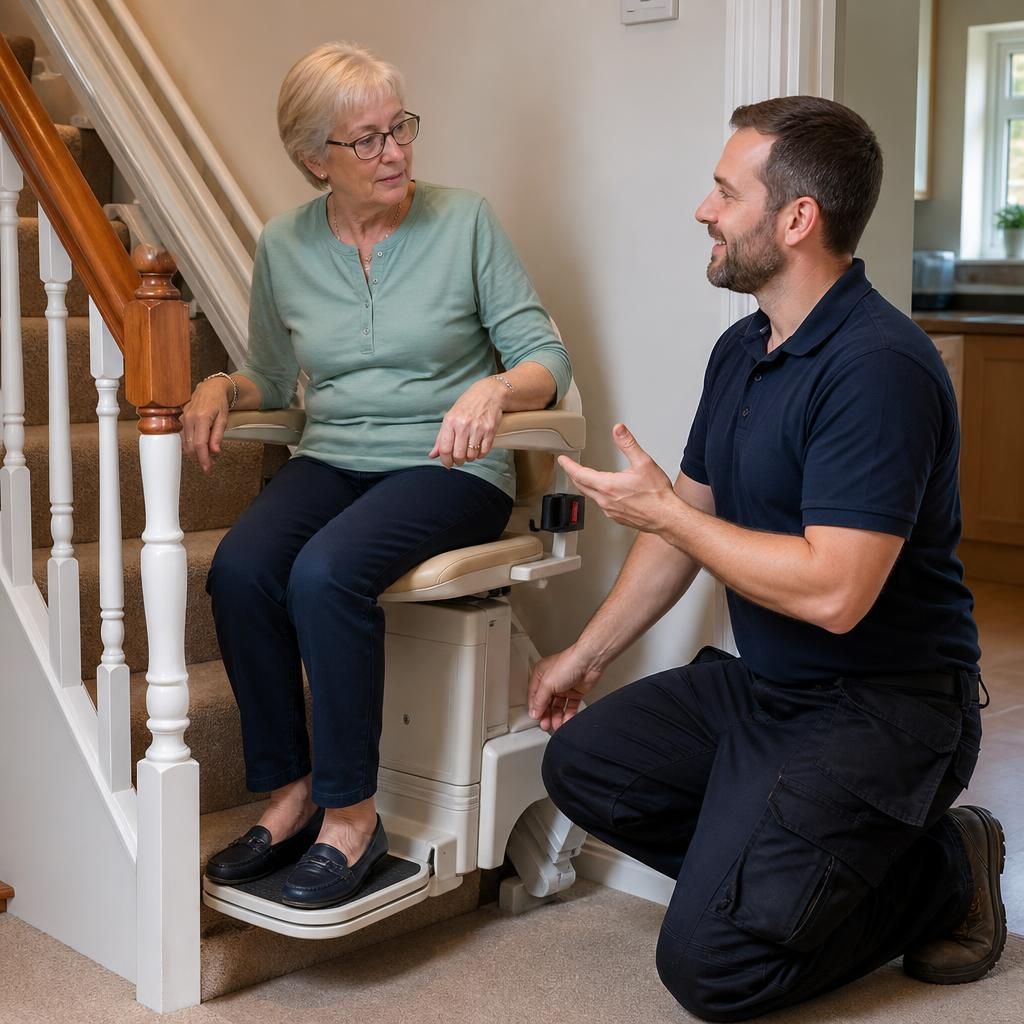
Compare your stairlift hire and purchase options
Speak to Independent Stairlifts for a home assessment and a clear comparison of stairlift hire and purchase options, including installation, maintenance and removal arrangements.