
What factors should be considered when deciding if buying a stairlift adds value to a home?
Buying a stairlift can add practical value to a home by making every floor accessible, supporting independence and helping you remain in familiar surroundings. Whether it offers financial value depends on factors including how long it will be needed, the property layout, installation and maintenance costs, and whether a future buyer is likely to require one.
Buying a stairlift can add substantial practical value to a home by making upper floors usable, supporting independence and allowing you to remain in familiar surroundings. It does not automatically increase the property’s market value, however. The financial value depends on the home’s layout, the quality and condition of the installation, how long the stairlift is needed, the cost of alternatives and whether a future buyer is likely to regard it as useful.
Separate practical value from resale value
For the person living in the property, a stairlift may provide value by restoring access to bedrooms, bathrooms, storage and other essential areas. This can avoid the disruption and expense of moving, converting rooms or carrying out more extensive accessibility work. It may also reduce the need to use only the ground floor.
That benefit is different from adding value to the sale price. A stairlift is a specialist adaptation rather than a general home improvement, so buyers will not necessarily pay more for a property because one is installed. Some may appreciate the accessibility; others may not need it and may prefer an uninterrupted staircase. The effect is therefore usually neutral or dependent on the individual buyer, rather than a guaranteed increase in market value.
Consider how long the stairlift will be needed
The length of time you expect to use the stairlift is one of the most important factors when comparing its cost with its value. If it will be used regularly for several years, buying may provide good value because the initial cost is spread over a longer period of use. It may also be more economical than repeatedly paying for hire.
If mobility needs are temporary or uncertain, hiring can reduce the risk of paying for equipment that is no longer required. This is particularly relevant after an operation, during rehabilitation or when a change in circumstances may soon require a different solution. Hire agreements can involve ongoing payments and terms that need checking, so compare the full expected cost rather than looking only at the initial outlay.
Include the full cost of ownership
The purchase price is only one part of the assessment. Ask for a clear explanation of what is included in the quotation and consider:
- the stairlift itself and whether it is new or reconditioned;
- the survey, fitting and any necessary electrical work;
- alterations needed to accommodate unusual stairs, narrow landings or doorways;
- warranty cover and the cost of servicing after the warranty ends;
- replacement batteries, repairs and call-out charges where applicable;
- removal, storage or making good the staircase if the stairlift is taken out; and
- any ongoing costs associated with an extended warranty or maintenance plan.
A lower purchase price is not necessarily better value if the equipment has limited cover or is unsuitable for the person using it. The safest comparison is the likely total cost over the period you expect to need the stairlift.
Assess the property and staircase
The type of staircase affects both the installation cost and the potential usefulness to a future occupier. A straight stairlift is normally designed for a straightforward flight, whereas a curved stairlift is made to follow an individual staircase. A curved model may provide a better solution for the current home but is generally more specific to that property and may be harder to transfer or resell.
Also consider the position of the lift when parked, access to doors and hallways, the width of the staircase and whether other household members can use the stairs safely. A professional assessment should check the complete route, not just the angle or length of the stairs. Outdoor access may improve the usability of a garden or entrance, but it is unlikely to create a direct increase in the property’s sale price.
Think about future buyers
An installed stairlift may make a property more appealing to someone who already needs accessible accommodation or is planning for changing mobility. It can show that the home has been adapted for easier movement between floors. However, accessibility features do not suit every buyer, and some may be concerned about removal, appearance or the condition of the staircase underneath.
Because of this, do not assume that the cost of a stairlift will be recovered when the property is sold. If you may move soon, ask whether the stairlift can be removed without significant damage and whether the supplier offers a removal, part-exchange or resale service. The available options depend on the model, its age, condition and the type of staircase.
Compare the stairlift with the alternatives
The relevant comparison is not always buying a stairlift versus doing nothing. Consider the cost and disruption of the alternatives, such as:
- moving to a more suitable property;
- rearranging rooms to create a temporary ground-floor living space;
- installing other accessibility equipment, such as a bath lift or riser recliner;
- making wider structural changes to the home; or
- paying for additional assistance with activities that require access to another floor.
A stairlift may be good value even without increasing the property’s market price if it avoids a more expensive move or allows the existing home to remain suitable. Conversely, it may not be the right investment if the staircase is rarely used, the property is likely to be sold shortly or a different adaptation would address the main difficulty more effectively.
Check suitability, condition and future maintenance
Value depends on reliable use as well as price. The stairlift should be suitable for the user’s weight, posture, transfer ability and control of the handset or controls. Features such as a powered swivel seat, folding rails or a different seat design may affect the cost but can be important for safe and convenient use.
For a reconditioned stairlift, ask what work has been completed, what warranty is provided and whether replacement parts and servicing remain available. For a new stairlift, check how long support lasts and what happens once the warranty expires. A lift that is difficult to maintain, uncomfortable or poorly matched to the user may offer less value despite a lower initial price.
Make the decision using your own priorities
Before buying, write down the expected period of use, the total ownership cost, the likely cost of hiring for the same period and the cost of moving or adapting the home instead. Include the practical value of being able to use the whole property, not just a possible future sale price.
If resale is a major concern, obtain independent advice from an estate agent or property professional about local buyer expectations. They can comment on the market for the type of home, but they cannot guarantee that a stairlift will increase its value. In most cases, the strongest reason to buy is that the stairlift makes the property more suitable and usable for the current household. Its effect on resale value should be treated as a possible secondary benefit, not as a guaranteed return on the investment.
Buying a stairlift usually adds practical value to a home rather than guaranteeing a higher sale price. It can make bedrooms, bathrooms and other essential areas accessible, helping the current household remain in the property and potentially avoiding the cost and disruption of moving or carrying out major adaptations.
When assessing the investment, compare the full purchase and ownership cost with the expected period of use, the cost of hiring and suitable alternatives. Also consider the staircase layout, future maintenance, removal requirements and whether the lift could appeal to a future buyer. A stairlift fitted to a particularly specific curved staircase may be less transferable, while a well-maintained installation with suitable removal options may be easier to manage if circumstances change.
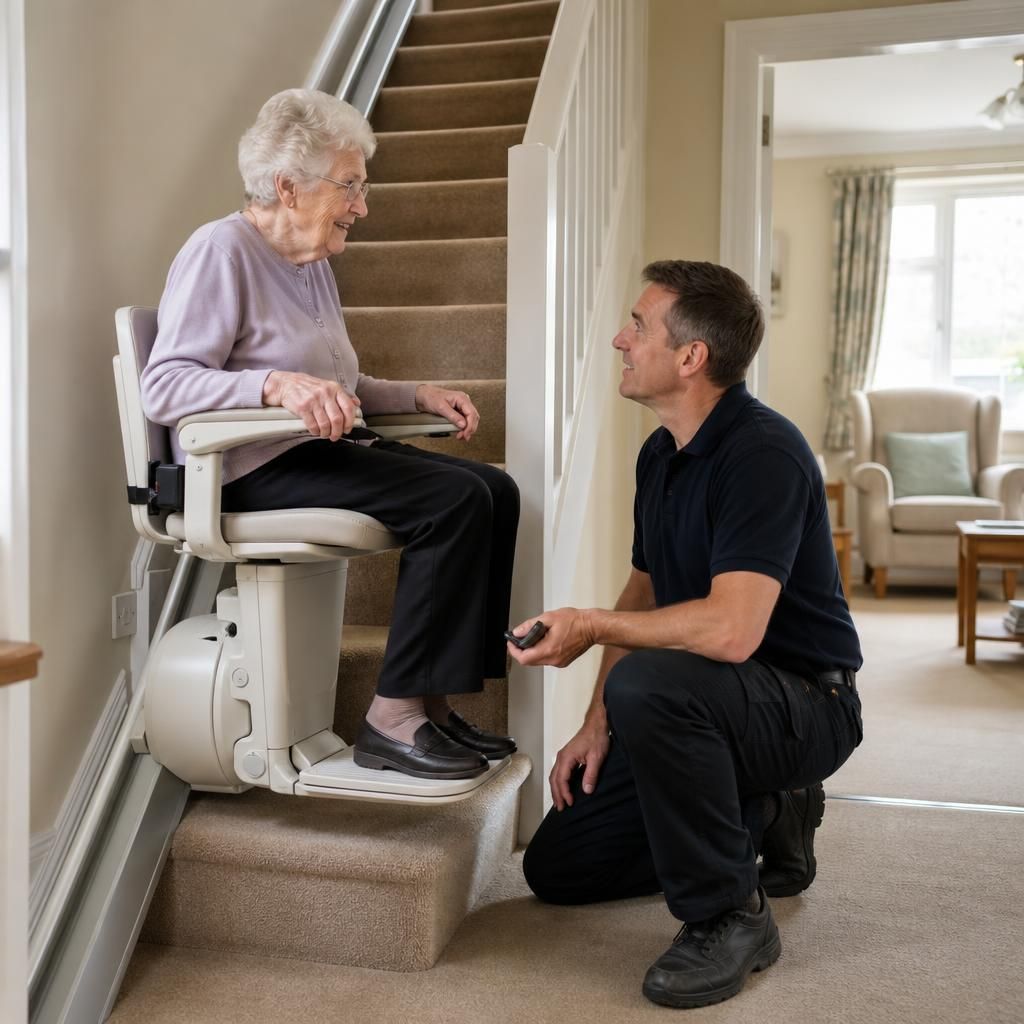
Discuss Whether Buying a Stairlift Is Right for Your Home
Discuss your staircase, expected period of use and the full ownership cost with Independent Stairlifts to assess whether buying is the right option for your home.