
What are the main benefits of hiring a stairlift compared to buying one outright?
Hiring a stairlift usually means a lower upfront cost, greater flexibility if your mobility needs may change, and less responsibility for arranging servicing or removal, depending on the agreement. It can therefore suit temporary use or customers who prefer predictable payments, while buying outright may offer better value for long-term use.
Hiring a stairlift can provide a lower initial financial commitment, greater flexibility and less responsibility for servicing, repairs and eventual removal than buying one outright. It is often suitable when your mobility needs are temporary or uncertain, although purchasing may be more economical where the stairlift is likely to be needed for many years.
Lower upfront cost
Buying a stairlift usually involves paying for the equipment, survey, installation and any required adaptations at the outset. Hiring spreads the cost through an agreed payment arrangement, so you do not need to fund the full purchase price immediately. This can help when a stairlift is needed at short notice or when preserving savings for other care and household costs is important.
The exact payment structure depends on the hire agreement. Check whether there is an initial installation charge, a refundable deposit, a minimum hire period or separate charges for removal. A lower starting cost does not necessarily mean a lower total cost, particularly if the stairlift remains in place for a long period.
Useful flexibility when circumstances may change
A hired stairlift can be a practical option when you expect your mobility needs, living arrangements or care requirements to change. For example, it may suit someone recovering from an operation, using a temporary accommodation arrangement, or deciding whether remaining in their current home is suitable in the longer term.
Depending on the agreement, hiring may make it simpler to end the arrangement and arrange removal when the stairlift is no longer required. This avoids having to sell a stairlift privately or find a suitable buyer. However, notice periods, minimum terms and removal conditions vary, so these should be confirmed before installation.
Less responsibility for maintenance and repairs
Hire agreements commonly include servicing and repairs, subject to their terms and exclusions. This can reduce the need to arrange routine maintenance yourself and provides a clear route for reporting a fault. It is important to establish what is covered, including call-outs, replacement parts, batteries and damage caused by misuse or accidental impact.
Buying a stairlift gives you ownership, but it also means you are generally responsible for arranging servicing and paying for repairs once any included warranty has ended. You should still check the warranty and service provisions for a hired stairlift, as cover is not identical across all agreements.
Removal may be more straightforward
When a hired stairlift is no longer needed, the provider may be able to arrange its removal as part of the agreement or for a stated charge. This can be helpful if you are preparing to move home, returning a property to its original condition or arranging changes after a death. Ask whether removal includes making good any fixing points and whether separate work is needed to repair decoration.
With a purchased stairlift, you retain the equipment and can decide whether to leave it in place, move it to another compatible staircase or arrange removal. A stairlift removed from one staircase will not always be suitable for another, particularly if it has a curved rail or the new staircase has different dimensions.
Hiring can be appropriate for different types of staircase
Both hire and purchase may be available for straight, curved or outdoor stairlifts, but the options and terms can differ. A curved stairlift is made to suit the staircase, so a provider may need to assess whether an existing unit can be reused. Outdoor installations also require consideration of weather exposure, electrical supply and ongoing condition.
A proper assessment remains important whichever payment option you choose. The stairlift must fit the staircase, allow safe transfers at the top and bottom, and accommodate the user’s height, weight, posture and mobility. Hiring should not mean accepting a less suitable model simply because it is available more quickly.
Predictable budgeting, subject to the agreement
Regular hire payments can make household budgeting easier than meeting an unexpected repair bill after purchasing. Some agreements include ongoing support, while others charge separately for specific services. Request a written breakdown of:
- any installation or assessment charge;
- the recurring hire payment and how often it is collected;
- the minimum hire period and notice required to end the agreement;
- servicing, repairs, replacement parts and emergency call-out cover;
- damage, misuse and accidental damage exclusions;
- removal charges, deposits and any costs when the agreement ends; and
- what happens if you move home or no longer need the stairlift.
When buying may be the better option
Hiring is not automatically cheaper. If you are likely to use the stairlift for the foreseeable future, buying may provide better value over the full period of ownership. You also have greater control over the equipment and are not tied to the conditions of a hire agreement. A purchased stairlift may have some resale or transfer value, although this depends on its age, condition, model and whether it can be installed safely on another staircase.
Buying can also be preferable if you want a particular specification, intend to keep the stairlift for a long time or do not want recurring payments. You should budget for servicing, batteries, repairs outside the warranty and removal when comparing the total cost with hiring.
How to compare the options fairly
Start by estimating how long the stairlift is likely to be needed, without treating that estimate as certain. Compare the total expected hire payments and all stated charges with the purchase price, installation cost and likely ownership costs over the same period. Consider the value of included maintenance and the practical cost of arranging repairs yourself.
Ask for the terms in writing and check whether the quoted hire price applies to a new or reconditioned stairlift. A reconditioned stairlift may be suitable and can reduce costs, provided it is assessed, prepared and installed correctly. The agreement should also explain responsibility for faults and the condition expected when the stairlift is returned.
In summary, hiring is most beneficial when you need to limit the initial outlay, expect to use the stairlift for a limited or uncertain period, or prefer maintenance and removal to be handled under an agreement. Buying may offer stronger long-term value when the stairlift will be used for many years. The right choice depends on the expected duration of use, the staircase, the equipment required and the complete terms rather than the headline price alone.
Hiring a stairlift can be beneficial when your need for extra access is temporary or uncertain. Instead of paying the full purchase and installation cost at the outset, you make payments under an agreed hire arrangement. This can help you manage your budget while recovering from an illness or operation, arranging longer-term care, or deciding whether your current home remains suitable.
Many hire agreements also include servicing and repairs, giving you a clear process for reporting faults without arranging every repair yourself. Check the agreement carefully, as cover may differ and can exclude accidental damage, misuse, batteries or certain replacement parts. Confirm the minimum hire period, notice requirements, removal arrangements and all additional charges before installation.
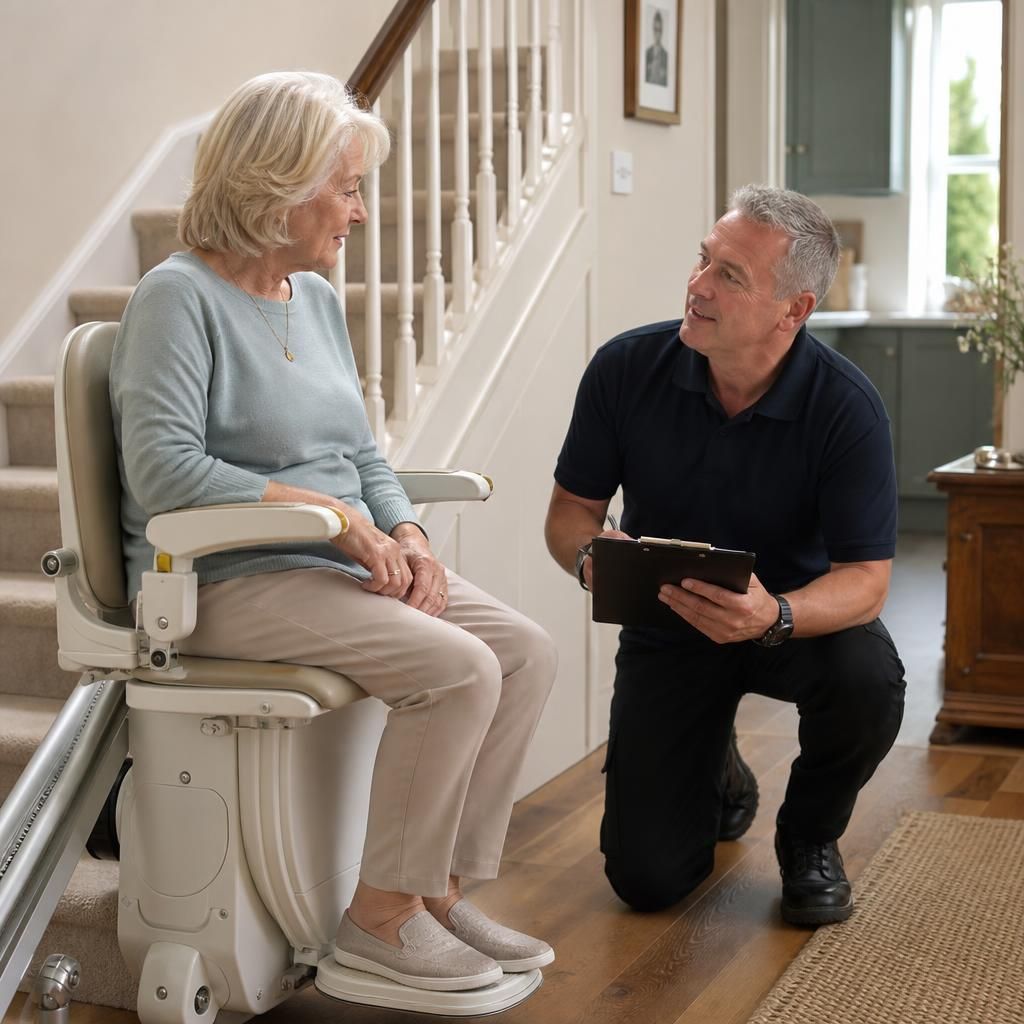
Discuss your stairlift hire options
Discuss your stairlift hire options with our team, including the agreement terms, likely costs and suitability for your staircase. We can help you compare hiring with buying based on how long you expect to need the stairlift.