
Is renting a stairlift more cost-effective if my mobility needs are temporary?
Renting a stairlift is often more cost-effective when your mobility needs are temporary, as it avoids the larger upfront cost of buying. The best option depends on the expected rental period, installation and removal charges, ongoing hire fees and the cost of purchasing a suitable reconditioned or new stairlift.
Renting a stairlift is often more cost-effective when your mobility needs are temporary, because it avoids the larger upfront cost of buying. However, the right choice depends on how long the stairlift is likely to be needed, the type of staircase, the installation and removal charges, the ongoing hire fee, and the purchase price of a suitable new or reconditioned model.
When hiring is usually financially sensible
Hiring can be a practical option following an operation, injury or short-term illness, or while you are recovering and waiting to regain confidence on the stairs. It may also suit a temporary change in circumstances where your longer-term mobility needs are not yet clear. Rather than paying the full purchase and installation cost at the outset, you pay an initial charge followed by regular hire payments for the period covered by your agreement.
Hiring is more likely to offer value when the expected rental period is relatively short. As the hire continues, the total of the regular payments can eventually approach or exceed the cost of buying a stairlift. This is why the expected duration is usually the most important factor in the comparison.
How to compare the total costs
Ask for the complete cost of hiring over the period you realistically expect to need the stairlift. This should include:
- Installation or fitting charges
- The weekly or monthly hire fee
- Any minimum hire period
- Servicing and maintenance charges, if they are not included
- Removal and collection costs when the stairlift is no longer required
- Any deposit, administration charge or charge for damage outside normal wear and tear
- Costs if you end the agreement earlier or need to extend it
Then compare that figure with the total cost of buying a suitable stairlift, including installation, servicing, repairs and eventual removal if the stairlift is no longer needed. A reconditioned stairlift may have a lower purchase price than a new one, so it should be included in the comparison rather than comparing rental only with a new model.
A simple way to assess the options is to calculate the estimated hire cost for the period you expect to need the lift, then ask when the combined hire payments and other charges would reach the purchase price of the most suitable alternative. This is not a guarantee of which option will be cheapest, because quotes and contract terms vary, but it gives you a useful break-even point.
What is normally included in a rental agreement
Many rental arrangements include servicing and repairs during the hire period, subject to the terms of the agreement. This can make budgeting easier and limits the risk of an unexpected repair bill. Check exactly what is covered, including call-outs, replacement parts, batteries and faults caused by misuse. Also confirm who is responsible for arranging removal and whether hire payments continue until the stairlift has been collected.
Some agreements have a minimum rental period or require notice before cancellation. If your recovery takes longer than expected, ask how the hire can be extended and whether the regular rate changes. If you recover sooner, check whether returning the stairlift early reduces the cost or whether the minimum term still applies.
The type of stairlift affects the calculation
Temporary hire is generally easier to arrange for a standard straight staircase, because suitable equipment can often be installed and removed without extensive customisation. Curved staircases require a rail designed for the particular shape of the stairs. Rental may still be possible, but availability, fitting requirements and costs can differ, particularly where the staircase has unusual dimensions, tight turns or multiple levels.
Outdoor stairlifts and installations with unusual access requirements may also need a more detailed assessment. A stairlift that is technically suitable but difficult to source or remove may not provide the same financial advantage as a readily available straight-stair model. An assessment is therefore important before relying on a rental estimate.
Buying may be better when the need is uncertain or long term
If there is a reasonable possibility that the stairlift will be needed indefinitely, buying can provide better long-term value. Once purchased, there are no continuing hire payments, although you remain responsible for servicing, repairs and any future removal. Buying may also give you more choice over the model, seat options and finish, particularly where a bespoke curved stairlift is required.
A reconditioned stairlift can be worth considering where the budget is limited and the staircase is suitable for a standard model. It may reduce the upfront cost of buying, but it is still important to check the warranty, servicing arrangements, condition of the batteries and what happens if the stairlift is no longer required.
Other practical factors matter as well as price
The cheapest option on paper may not be the most suitable if the stairlift is uncomfortable, difficult to use or unavailable when it is needed. Confirm that the proposed model can safely accommodate the user, works with the staircase and allows for the user’s likely level of mobility. If the condition may change, discuss whether the equipment can continue to meet those needs.
Ask for a written quotation that separates the initial cost, ongoing hire payments and end-of-hire charges. It should also explain maintenance responsibilities, cancellation terms, the likely installation timescale and whether the stairlift remains the supplier’s property throughout the agreement. If VAT relief may apply because of a disability or qualifying long-term condition, ask whether the quotation reflects the correct treatment; eligibility and the required declaration should be confirmed with the supplier.
In summary
Hiring is commonly the more cost-effective route for a genuinely temporary mobility need, especially where the staircase takes a standard straight stairlift and servicing is included. Buying, particularly a suitable reconditioned stairlift, may become better value if the equipment will be needed for a longer or uncertain period. Comparing the full hire cost with the full purchase cost, rather than looking only at the monthly payment or purchase price, will give you the clearest answer for your circumstances.
Renting a stairlift is usually more cost-effective when mobility needs are genuinely temporary, because it avoids the larger upfront cost of purchasing and installing a lift. The comparison should be based on the complete cost for the expected hire period, not just the advertised weekly or monthly payment.
- Check whether installation, servicing, repairs and removal are included.
- Ask about minimum hire periods, deposits and cancellation terms.
- Compare the total rental cost with buying a suitable new or reconditioned stairlift.
Hiring may offer particular value after an operation, injury or short-term illness. If recovery takes longer than expected, confirm how the agreement can be extended. If long-term use becomes likely, buying may provide better value once ongoing hire payments approach the purchase cost.
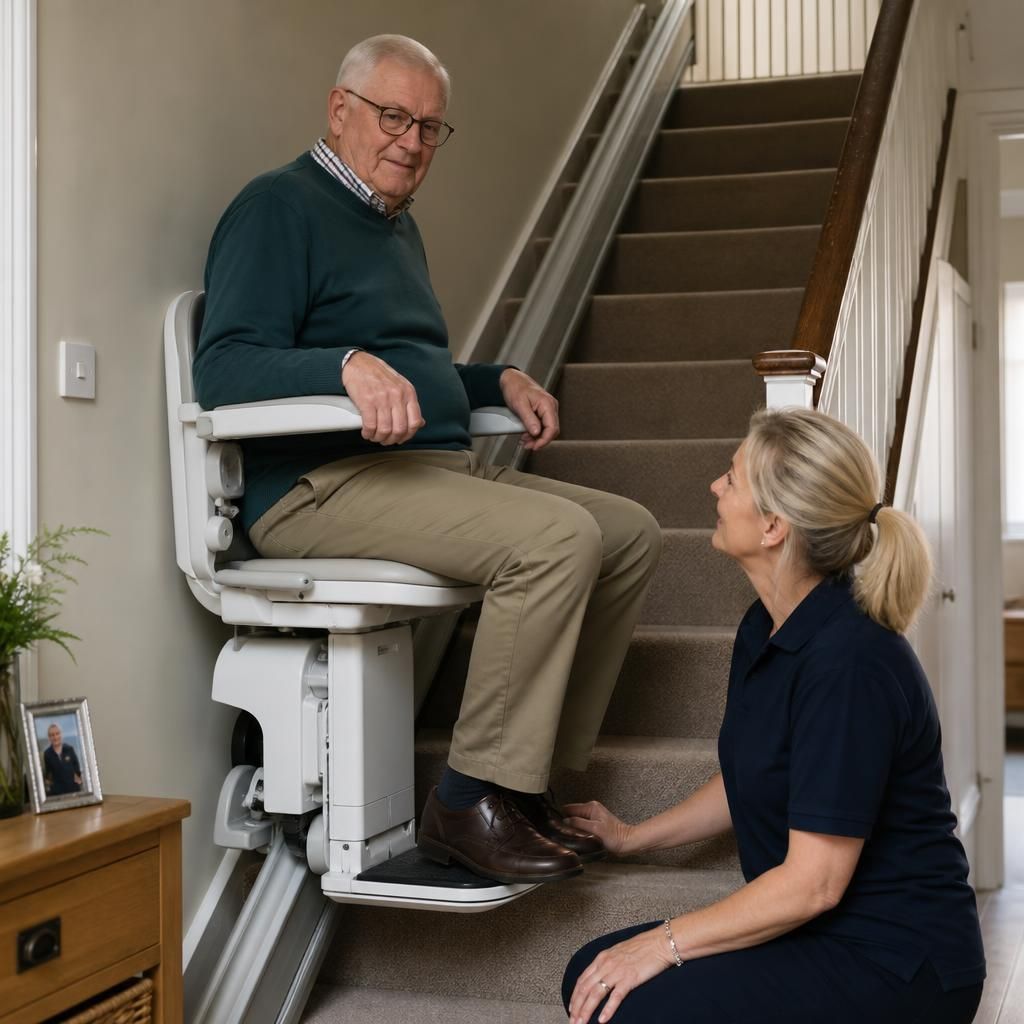
Compare your stairlift hire and purchase options
Contact Independent Stairlifts for a written comparison of hiring and buying options based on your staircase, expected usage period and mobility needs. We can explain the full costs, including installation, maintenance and removal, so you can make an informed decision.