
How does the maintenance responsibility differ between hiring and purchasing a stairlift?
When you hire a stairlift, the hire agreement will usually make the provider responsible for routine servicing, repairs and call-outs, subject to its terms and exclusions. When you buy a stairlift, you normally become responsible for ongoing maintenance once the warranty or any included service cover ends, although you can arrange a separate servicing plan.
The maintenance responsibility is usually simpler for a hired stairlift: the hire provider normally covers routine servicing, breakdown repairs and engineer call-outs for as long as the agreement remains active. When you purchase a stairlift, you generally become responsible for its ongoing upkeep after any warranty or included service period ends, although a separate maintenance plan may be available.
The exact arrangement depends on the hire or purchase contract, so check the terms provided with your stairlift. These should explain what is included, how to report a fault, whether call-outs are covered, and which circumstances may result in a charge.
With stairlift hire, the provider will commonly be responsible for:
- Planned servicing and safety checks at the intervals set out in the agreement.
- Diagnosing and repairing faults that arise through normal use.
- Replacing worn or failed components covered by the agreement.
- Attending breakdowns and arranging an engineer call-out where necessary.
- Providing advice by telephone or remotely before sending an engineer.
Hiring can therefore make maintenance costs more predictable, particularly where the stairlift is needed for a limited period. It also means you do not usually need to find an engineer or decide which replacement parts are suitable. The provider retains responsibility for the equipment while it is being hired and should explain how to report a problem.
However, maintenance is not necessarily unlimited. A hire agreement may exclude damage caused by misuse, accidental impact, unauthorised alterations, unsuitable cleaning, or failure to follow the operating instructions. It may also set out different arrangements for batteries, power supplies, remote controls, upholstery, or damage caused by a fault elsewhere in the property. Ask specifically whether out-of-hours visits, emergency call-outs and replacement batteries are included.
When you buy a stairlift, responsibility is usually divided into three stages:
- Warranty period: the manufacturer or installer may repair or replace covered faults without charging for parts or labour, subject to the warranty terms.
- Any included service cover: a purchase package may include servicing or breakdown cover for a stated period. This is separate from the ownership of the stairlift and should not be assumed to continue indefinitely.
- After cover ends: you normally arrange and pay for servicing, repairs, replacement parts and engineer call-outs unless you have taken out a maintenance plan.
Owning the stairlift gives you more control over when it is serviced and which cover you choose, but you need to plan for future costs. Batteries, charging components, drive parts, sensors, controls and other items can eventually require attention. The age, model, usage, installation environment and condition of the stairlift can all affect what work is needed.
Routine maintenance should be carried out by a suitably qualified stairlift engineer and in line with the manufacturer’s instructions. Do not attempt to bypass safety features, adjust the drive mechanism or repair electrical components yourself. Keep the track, seat and controls clean as advised, avoid placing objects on the stairlift, and report unusual noises, jerky movement, reduced battery performance or charging problems promptly. Early reporting may prevent a minor fault from developing into a more disruptive breakdown.
There can also be a difference when a stairlift is moved, altered or transferred to another staircase. With a hired stairlift, the provider will normally decide whether it can be adjusted, removed or reinstalled and may charge for work not included in the agreement. With a purchased stairlift, you own the equipment, but any relocation, modification or reinstallation should still be assessed and completed by a competent installer. A stairlift may not be suitable for a different staircase, even if it appears similar.
Before choosing between hiring and buying, compare the maintenance arrangements rather than looking only at the initial price. Check whether the agreement includes:
- Scheduled servicing and how often it is provided.
- Parts and labour for faults caused by normal use.
- Engineer call-outs, including evenings or weekends if relevant.
- Battery testing and battery replacement.
- Cover for accidental damage, misuse or water exposure, where applicable.
- Support if the stairlift becomes unreliable or cannot be used safely.
- The process for cancelling hire, ending cover or renewing a service plan.
In practical terms, hiring transfers more of the day-to-day maintenance risk to the provider, while purchasing gives you ownership but leaves you responsible for arranging maintenance once included cover has ended. If your need is temporary or you want predictable support, the maintenance terms may favour hiring. If you expect long-term use, compare the total purchase cost with the likely cost of servicing and repairs, and consider whether a maintenance plan provides suitable protection.
If you are unsure what your current arrangement covers, refer to your agreement or contact Independent Stairlifts before authorising repair work. The terms of your specific stairlift, warranty and service plan will determine whether a visit or replacement part is included or chargeable.
The main maintenance difference is who arranges and pays for repairs. With a hired stairlift, the provider will usually organise servicing, engineer call-outs and repairs covered by the agreement. When you buy a stairlift, the warranty or included cover may deal with faults initially, but you normally become responsible for arranging and funding maintenance after that protection ends.
Check the specific terms before making a decision, particularly for battery replacement, accidental damage, out-of-hours call-outs and faults caused by misuse. Hiring can provide more predictable support, while purchasing gives you ownership but means you should budget for future servicing or consider a separate maintenance plan.
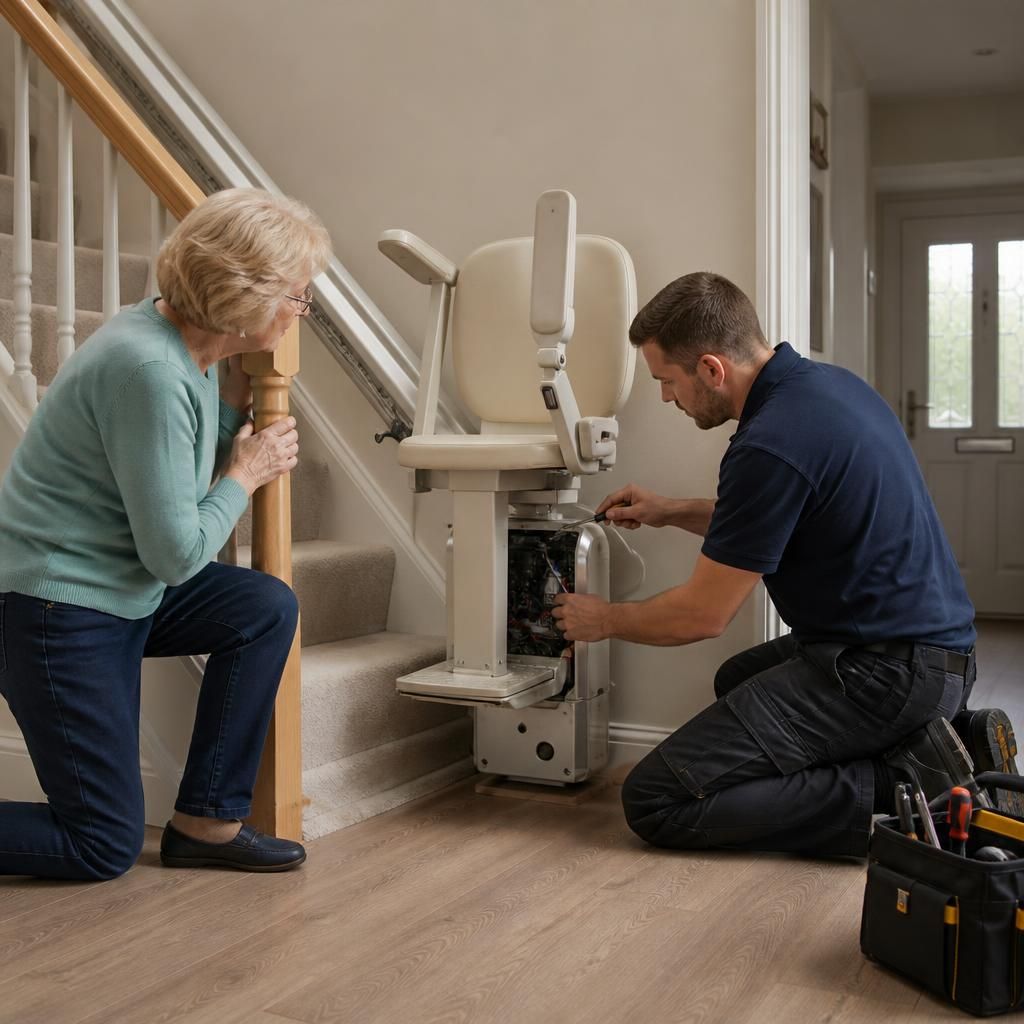
Discuss your stairlift maintenance options with our team
Speak to our team to review the maintenance responsibilities and service cover available with hiring or purchasing a stairlift. We can explain the terms for your chosen stairlift and help you compare the options for your home.