
How do maintenance needs differ between hiring and buying a stairlift?
When you hire a stairlift, the agreement will usually include servicing and repairs, so the provider manages most maintenance during the hire period. When you buy a stairlift, you are responsible for arranging servicing and paying for repairs once any warranty or service cover ends, unless an ongoing maintenance plan is included.
Maintenance is usually included in a stairlift hire agreement, whereas buying a stairlift normally makes you responsible for arranging and paying for servicing and repairs after the warranty or any included cover ends. The exact responsibilities depend on the hire contract, purchase terms and any maintenance plan, so these documents should be checked before you commit.
With a hired stairlift, the provider will generally remain responsible for keeping the stairlift operational throughout the agreed hire period. This commonly includes routine servicing, fault diagnosis, labour and repairs caused by normal use. If the stairlift breaks down, you would normally contact the provider rather than arrange an engineer independently. Some agreements may also include replacement parts and breakdown call-outs, but exclusions can apply.
Hire agreements can differ in how they deal with damage, misuse, accidental faults or changes made by someone other than the provider. They may also specify the permitted use of the stairlift and the process for reporting a problem. Keep the agreement and contact details somewhere accessible, and report unusual noises, movement, charging problems or error warnings promptly rather than continuing to use a stairlift that may be unsafe.
With a purchased stairlift, the owner normally arranges maintenance. A new stairlift may include a manufacturer’s warranty or an initial period of service cover, but this does not necessarily cover every type of fault or all future servicing. Once that cover ends, you may need to pay for an engineer’s visit, labour, replacement parts and any travel or call-out charges. A reconditioned stairlift can have different warranty and servicing terms, so confirm what is included at the point of purchase.
Buying does not mean that maintenance is optional. Regular professional servicing helps identify wear, check safety systems and confirm that the lift is operating correctly. An engineer may inspect the drive system, batteries and charging points, seat and safety belt, controls, sensors, track, wiring and other model-specific components. The recommended service interval should be followed, particularly where the stairlift is used frequently or by someone who relies on it every day.
Some owners choose an ongoing maintenance plan after the warranty ends. This can make costs more predictable and may include scheduled servicing, repairs or priority assistance, depending on the plan. Other owners pay for servicing and repairs as needed. Before choosing either approach, check whether parts, labour, call-outs, batteries and out-of-hours assistance are included, as these details can make a substantial difference to the overall cost.
Routine upkeep is similar under both arrangements. Whether hired or owned, the user or carer should:
- Keep the track, steps and landing areas clear of obstructions.
- Use the stairlift only as instructed and avoid carrying loads that exceed the manufacturer’s guidance.
- Leave the stairlift on its charging point when it is parked, where the instructions require this.
- Keep the seat, controls and safety belt clean and report damage.
- Watch for changes in performance, including reduced travel speed, unusual sounds, intermittent stopping or difficulty charging.
- Arrange professional attention rather than attempting electrical or mechanical repairs themselves.
Batteries are a common maintenance consideration. They are consumable components and will eventually need replacement, regardless of whether the stairlift is hired or owned. Under a hire agreement, battery replacement may be included if the batteries have reached the end of their normal service life, but this should be confirmed. With a purchased stairlift, the owner may have to pay for replacement batteries unless warranty or maintenance cover applies. Damage caused by leaving a stairlift unused or disconnected from its charger may be treated differently from normal battery wear.
The main practical difference is therefore not the day-to-day cleaning or safe use of the stairlift, but who arranges professional care and carries the financial risk of unexpected faults. Hiring can reduce the need to budget separately for repairs during the contracted period, while buying provides ownership but requires you to plan for servicing and future component replacement. A purchase may still include useful warranty protection, but the terms and duration should be established in writing.
Before hiring or buying, ask for clear answers to the following points:
- Is routine servicing included, and how often will it be carried out?
- Who should be contacted if the stairlift stops working?
- Are labour, call-outs and replacement parts included?
- Are batteries and other consumable items covered?
- What happens if the stairlift is damaged, misused or altered?
- How long does any warranty or service cover last?
- What charges apply when the cover ends?
- Are there response arrangements for urgent breakdowns?
Independent Stairlifts can explain the maintenance terms that apply to a particular hire or purchase option and help you compare the likely responsibilities over the expected period of use. If your circumstances change, contact the team before arranging repairs or removing the stairlift, as unauthorised work may affect warranty or hire agreement conditions.
The main maintenance difference is who arranges and pays for professional care. With a hired stairlift, servicing, fault diagnosis and repairs are commonly included for the length of the agreement, although the contract should be checked for exclusions such as accidental damage, misuse, batteries or out-of-hours call-outs.
When you buy a stairlift, any manufacturer’s warranty or included service cover may handle some early faults, but the owner usually arranges servicing and pays for repairs once that cover ends. Ask whether parts, labour, batteries and call-outs are included, and keep the recommended servicing schedule whether the stairlift is hired or owned.
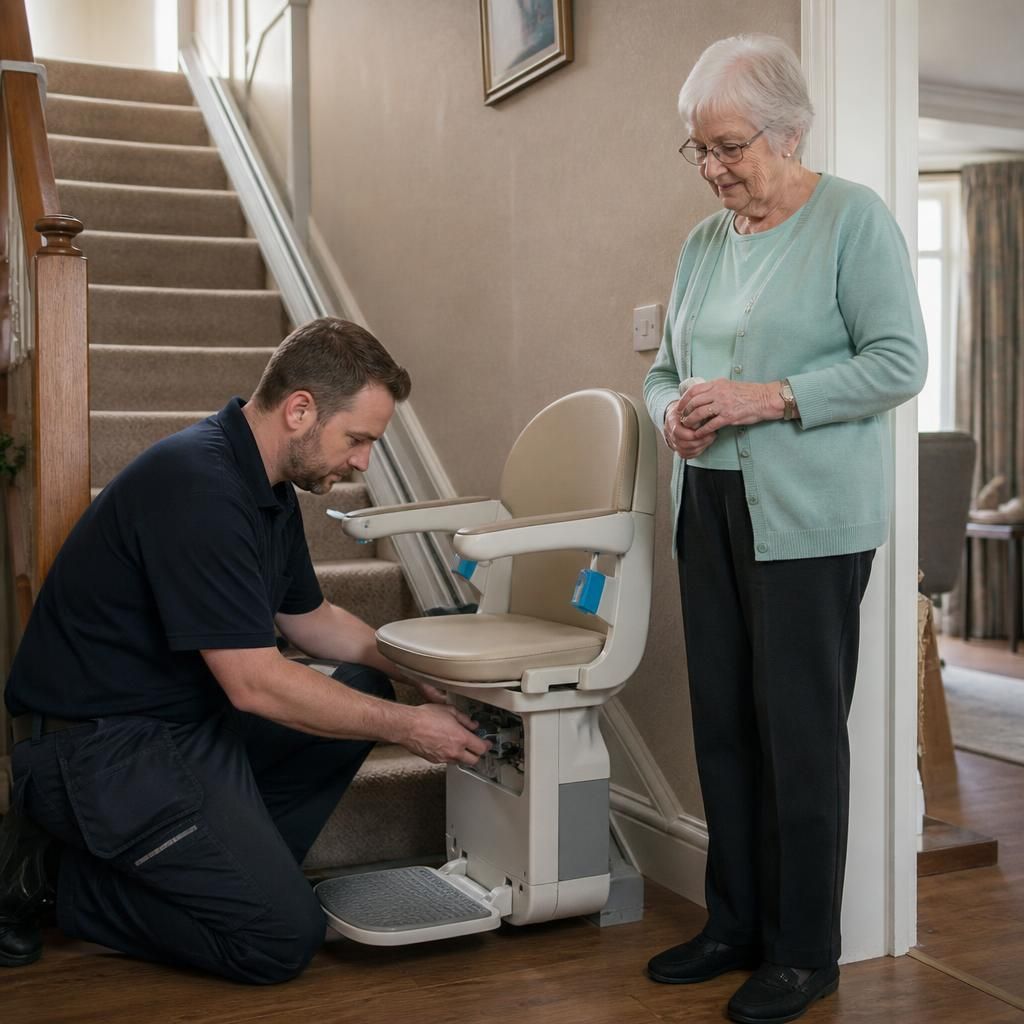
Discuss your stairlift maintenance options
Discuss your stairlift maintenance options with Independent Stairlifts to confirm what servicing, repairs, parts and call-outs are included with your hire or purchase agreement.