
What should I know about ongoing maintenance costs for stairlifts?
Ongoing stairlift maintenance costs can include routine servicing, replacement parts, call-out charges and optional repair cover. The total depends on the stairlift model, its age, usage and the level of cover selected, so check what is included in your service or warranty agreement and budget for servicing to keep it safe and reliable.
Ongoing stairlift maintenance costs usually cover routine servicing, call-out charges, replacement parts and optional repair or breakdown cover. The amount you pay depends on the stairlift’s age, model, condition, frequency of use, stair layout and the terms of your warranty or service agreement. A clear maintenance plan helps you keep the lift safe and reliable while avoiding unexpected repair bills.
What routine servicing involves
A service is a preventative check rather than simply a response to a fault. A qualified technician will normally inspect the stairlift’s mechanical and electrical components, test its safety systems and check that it travels, charges and parks correctly. The work may include checking the seat, armrests, footrest, swivel mechanism, carriage, rail, sensors, controls, charging points and batteries.
The technician may clean or lubricate components where appropriate, tighten fittings and identify wear before it causes a breakdown. The exact checks vary between models, so servicing should follow the manufacturer’s guidance and the requirements of the particular installation. Ask whether the quoted service includes labour, testing and any minor adjustments, or whether these are charged separately.
Common maintenance costs
- Routine servicing: A planned visit to inspect and test the stairlift. Some service agreements include this at an agreed interval, while others charge for each visit.
- Call-out charges: A charge may apply when an engineer visits because of a fault, particularly outside an included service plan or warranty. Check whether travel, diagnosis and labour are all included.
- Replacement batteries: Batteries are wear items and eventually lose their ability to hold charge. Warning signs can include repeated low-battery alerts, shorter operating time or the lift failing to charge properly. Battery life varies according to the model, usage, charging conditions and age.
- Replacement parts: Components such as chargers, controls, sensors, rollers, switches or upholstery may need replacement as the stairlift ages. Parts for older or discontinued models may be less readily available, which can affect the cost and repair decision.
- Repair labour: If a fault requires more than an adjustment, the cost may include diagnosis, labour and parts. Request an explanation of the repair before authorising work.
- Breakdown or extended cover: Optional cover can reduce the cost of individual repairs or call-outs, but it may exclude consumable items, accidental damage, misuse, pre-existing faults or particular components.
Warranty and service agreements are not the same
A manufacturer’s or installer’s warranty generally covers specified faults for a stated period and subject to its conditions. It may not cover routine servicing, normal wear, batteries, accidental damage or problems caused by changes to the home. A service agreement is a separate arrangement intended to cover scheduled maintenance, breakdown assistance or both.
Before renewing or purchasing cover, check its start date, duration, response arrangements, exclusions, excesses, cancellation terms and whether parts and labour are included. Confirm whether the agreement applies to your exact stairlift and whether a previous inspection is required. If the lift is reconditioned, establish what warranty and aftercare are provided and how these differ from cover for a new installation.
How stairlift age and usage affect costs
A relatively new stairlift may need little beyond routine inspection, provided it is installed correctly and used as intended. As it gets older, batteries and moving parts are more likely to require attention. Frequent journeys, heavy domestic use, dust, damp conditions and demanding environments can also increase wear.
Outdoor stairlifts generally need closer attention because they are exposed to rain, temperature changes and dirt. Keeping the seat, controls and charging area protected as instructed can help, but outdoor equipment still requires maintenance suited to its environment. Curved stairlifts can also have more complex rail and carriage arrangements than straight models, so repair and replacement costs may differ.
Servicing versus fixing a fault
Do not wait for a breakdown if the stairlift begins to move unevenly, make an unusual noise, stop before reaching the landing, lose charge quickly or display a warning. A minor problem may become more expensive if continued use causes further wear. If the lift stops, follow the user instructions, check the straightforward points explained by the installer—such as whether it is switched on and correctly parked—and contact a qualified service provider if the issue remains.
Do not bypass safety sensors, attempt electrical repairs or use unsuitable batteries or parts. If there is a burning smell, visible damage, a damaged cable or another immediate safety concern, stop using the stairlift and seek professional advice.
Ways to manage ongoing costs
- Keep the stairlift’s model details, installation information and warranty documents available when arranging support.
- Follow the user and charging instructions. Leaving a stairlift correctly parked at its charging point, where the manufacturer requires this, helps maintain battery readiness.
- Keep the rail, steps, charging contacts and surrounding area clear, and avoid storing items where they could obstruct movement or sensors.
- Arrange servicing at the interval recommended for your model rather than relying only on a breakdown response.
- Ask for a written quotation that separates the service fee, call-out charge, labour, parts and any VAT that applies.
- Compare the likely cost of individual repairs with a service or breakdown plan, taking account of exclusions and response times rather than looking only at the headline price.
- For an older stairlift, ask whether repair is practical, whether parts remain available and whether replacement would offer better value over time.
Questions to ask before agreeing to maintenance cover
- How often is the stairlift serviced, and is the visit included in the quoted price?
- Are call-outs, diagnosis, labour and replacement parts covered?
- Are batteries and other wear items excluded?
- Is there an excess, a limit on claims or a restriction on the age or model of the stairlift?
- What response can be expected if the stairlift stops working?
- Does cover continue if the stairlift is moved, modified or installed at another address?
- Will I receive a service report identifying any safety concerns or recommended work?
There is no single maintenance price that applies to every stairlift. The most useful estimate comes from reviewing the exact model, installation condition and cover already in place. Keeping up with recommended servicing, understanding exclusions and dealing with early warning signs promptly will give you a clearer view of your likely ongoing costs and help keep the stairlift dependable.
Routine servicing and breakdown cover are separate costs, so check exactly what your maintenance agreement includes before relying on it. A warranty may cover faults for a set period, while a service plan may include scheduled inspections, call-outs or repairs, but neither necessarily covers batteries, normal wear, accidental damage or misuse.
Ask for a written breakdown of the service fee, labour, travel, parts and any excess. Confirm that the agreement applies to your specific stairlift, find out how quickly an engineer will attend, and check whether older or reconditioned equipment has any exclusions. Understanding these terms helps you compare the cost of cover with paying for individual repairs.
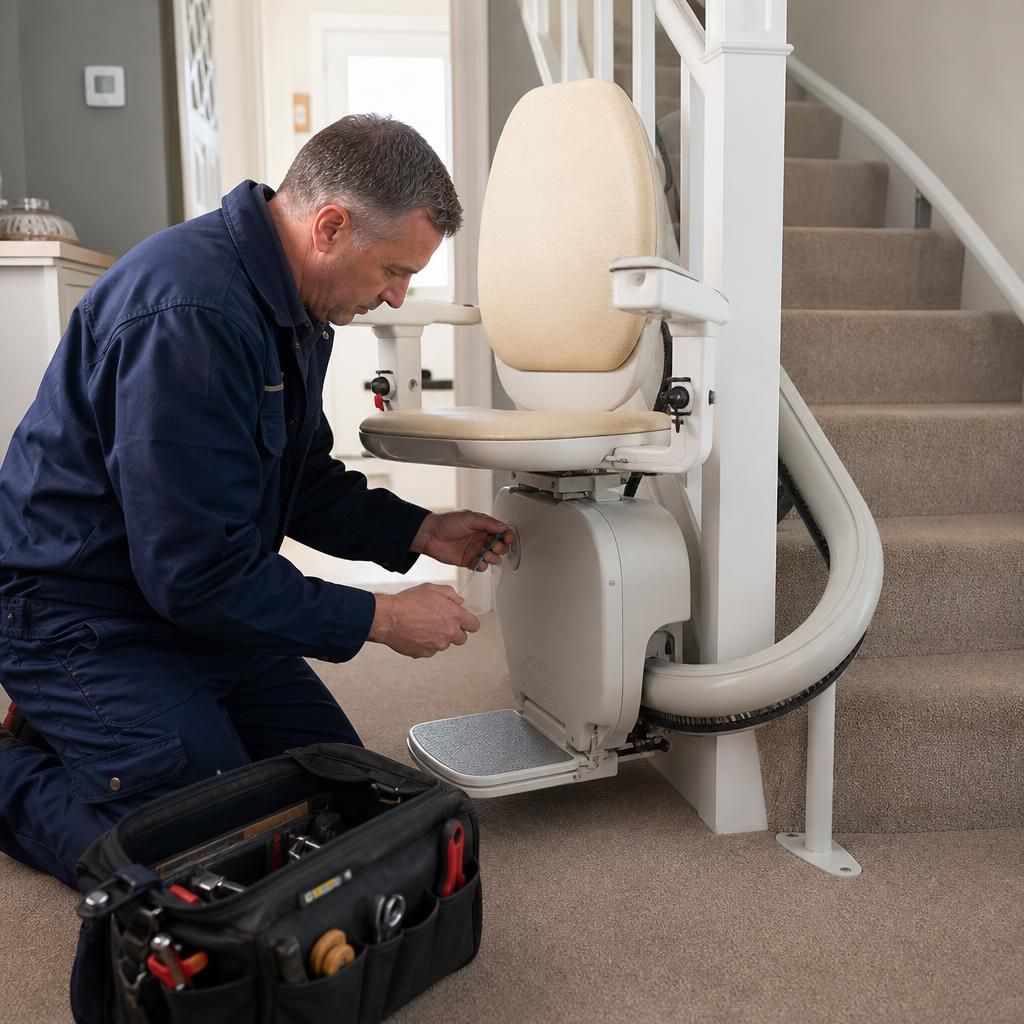
Discuss your stairlift maintenance options
Discuss your stairlift maintenance options with our team to clarify servicing, repair cover, call-out charges and replacement parts for your specific model. We can help you review the available arrangements and identify what is already included in your warranty or service agreement.