
What is the typical timeframe for installing a stairlift?
A straight stairlift can often be installed within a few hours once a suitable model is available, while curved or outdoor stairlifts usually take longer because they require more bespoke preparation. The exact timeframe is confirmed after your home assessment and depends on the staircase layout, product availability and any necessary adaptations.
A straight stairlift can often be installed in a few hours, usually during a single visit, once the appropriate equipment is available. Curved and outdoor stairlifts generally require more preparation and may take longer to arrange because they are selected or made to suit the staircase and installation environment. Your confirmed timeframe will be provided after the home assessment, when the staircase, access arrangements and any required adaptations have been reviewed.
Typical installation timeframes by stairlift type
- Straight stairlifts: These are usually the quickest to fit because the rail follows a standard, uninterrupted staircase. If the model is available and no building work is needed, installation may be completed within a few hours.
- Curved stairlifts: These take longer to arrange because the rail is designed around the individual staircase. The manufacturing or preparation period is separate from the installation itself. Once the equipment is ready, the fitting time depends on the number of bends, landings, changes in stair width and any parking positions.
- Outdoor stairlifts: These may be fitted relatively quickly where the steps and access are straightforward, but the installer must account for weather exposure, drainage, electrical supply, ground conditions and suitable weather-resistant equipment. Additional preparation can extend the appointment.
- Reconditioned stairlifts: A suitable reconditioned straight stairlift may be available for prompt installation. Availability is more dependent on finding a safe, compatible model that matches the staircase and the user’s requirements.
What happens before installation?
The home assessment is used to confirm whether a stairlift is suitable and what is needed to install it safely. The assessor will consider the staircase layout, available space at the top and bottom, bends or intermediate landings, nearby doors, radiators and furniture, the position of electrical sockets, and how the user will get on and off the seat. They will also discuss the most suitable controls, seat arrangement and any access requirements.
This assessment helps avoid delays caused by unsuitable equipment or unexpected obstacles. It also identifies whether minor preparation is required, such as moving an item of furniture, improving access to the electrical supply or allowing sufficient clearance at a landing. Most stairlifts are fixed to the stairs rather than the wall, so extensive structural work is not normally required, but every staircase must be checked individually.
Why can the timeframe vary?
- The type and availability of the stairlift selected.
- Whether the staircase is straight, curved, narrow, split-level or unusually shaped.
- Whether a curved rail needs to be measured, manufactured or prepared specifically for the property.
- Any electrical, access or building adaptations identified during the assessment.
- Whether the installation is indoors or exposed to outdoor conditions.
- Whether the property is ready for the installation appointment.
- Whether an existing stairlift needs to be removed before the new one is fitted.
Product availability and bespoke preparation can affect the waiting period more than the physical fitting time. For example, a curved stairlift may require a longer interval between assessment and installation, even though the installation team may complete the fitting during one scheduled visit. The installer should explain which parts of the timeframe relate to preparation, delivery and fitting.
How long should you allow on installation day?
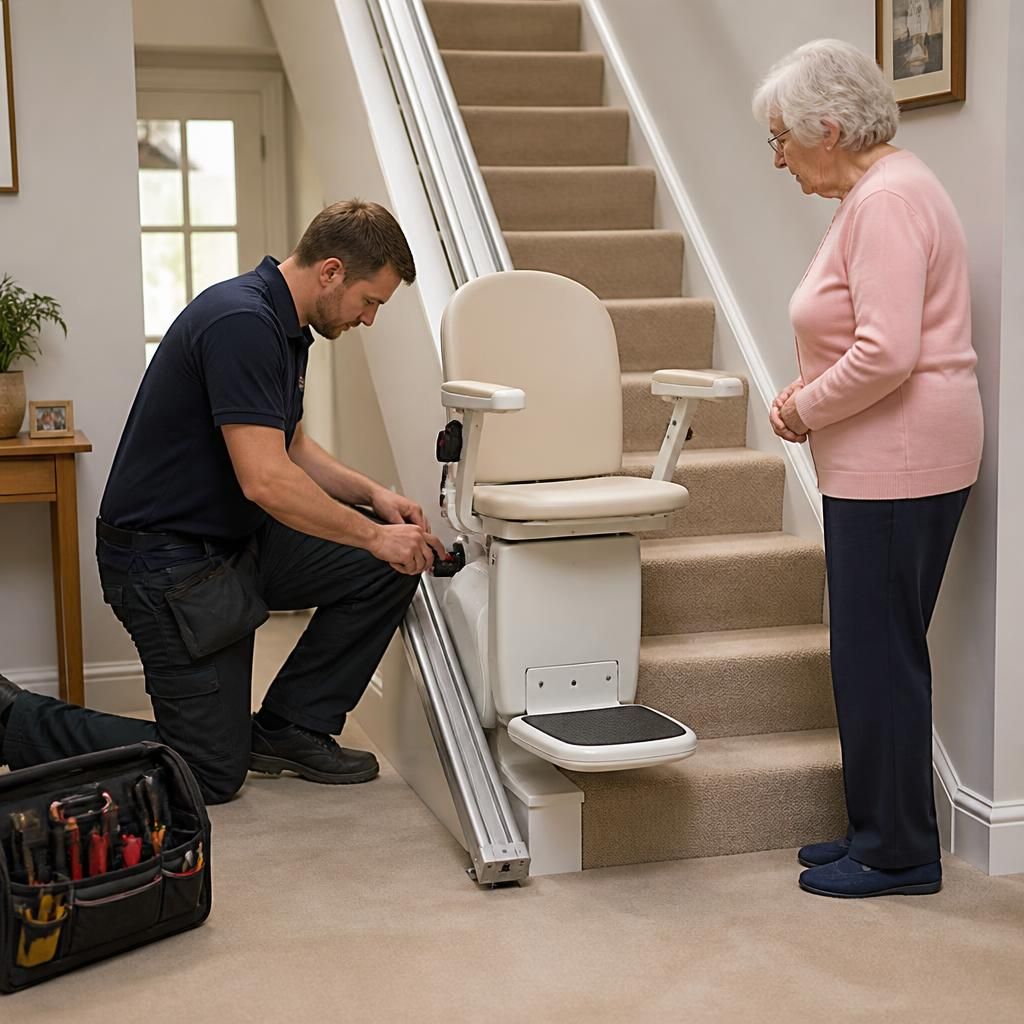
Allowing several hours is sensible for a straightforward installation, although the exact duration depends on the staircase and the equipment. The installer will need time to bring the components into the property, assemble and secure the rail, fit the carriage and seat, connect the charging system, test the controls and check the safety features. The customer should not judge the job solely by the time taken: correct positioning, testing and handover are essential parts of the installation.
At the end of the visit, the installer should demonstrate how to use the stairlift safely, including the controls, seat belt, swivel seat, charging points, remote controls and emergency procedures where fitted. They should also explain basic care and what to do if the stairlift stops or displays a fault. It is useful for the person who will use the stairlift, and a family member or carer if appropriate, to be present for this handover.
How to help prevent delays
- Ensure the assessor can access the full staircase, landings and relevant electrical points.
- Tell the assessment team about doors, furniture, pets, carers and any regular movement around the staircase.
- Discuss whether an existing stairlift must be removed and whether it belongs to another supplier.
- Keep the stairs and landing as clear as possible before the fitting appointment.
- Make sure someone is available to receive the installation demonstration and ask questions.
- Raise any change in mobility, discharge arrangements or required installation date as early as possible.
If the stairlift is needed urgently, explain the circumstances during the initial contact and assessment. A suitable straight or reconditioned model may be easier to arrange quickly when it is available and compatible, whereas a bespoke curved installation may require more planning. The safest timeframe is one that allows the equipment to be correctly matched, securely installed and fully tested rather than fitted before the staircase and the user’s needs have been properly assessed.
The stairlift installation timeframe is determined by the staircase assessment, product availability and any preparation needed before fitting. The physical installation may be completed during one visit, but a curved or less standard staircase can require additional time for the rail to be measured, prepared or manufactured.
During the assessment, the installer checks the staircase layout, landing space, access points, electrical supply and the user’s preferred seating and controls. This helps identify potential delays in advance, such as an existing stairlift needing removal, restricted access or minor adaptations. A confirmed timeframe can then be provided once the correct stairlift has been selected and is ready for installation.
Arrange Your Stairlift Assessment and Confirm Your Installation Timeframe
Arrange your stairlift assessment with Independent Stairlifts to confirm the most suitable option and expected installation timeframe for your home. We can discuss any access requirements, existing equipment or urgent fitting needs before installation is scheduled.