
What factors should I consider when determining the overall cost of a stairlift in my home?
The overall cost of a stairlift depends mainly on your staircase layout, the type of lift required, installation needs and any additional features selected. A home assessment provides the most accurate price by identifying the right solution for your stairs, mobility needs and property.
The overall cost of a stairlift is determined by the staircase itself, the type of equipment required, the complexity of installation and the level of support you choose. A straight indoor stairlift is usually less involved to supply and install than a curved or outdoor model, but the most accurate price can only be established after assessing your stairs, access requirements and property.
The main factors to consider are:
- Staircase layout: The shape and configuration of your stairs have a significant effect on the price. A straight flight generally uses a standard rail, whereas a curved, split-level, half-landing or multi-flight staircase requires a rail made to follow the individual route. Narrow sections, unusual angles, intermediate landings and limited parking space can also affect the equipment selected and the installation work.
- Indoor or outdoor use: An external stairlift must withstand rain, damp, temperature changes and exposure to sunlight. It may therefore require weather-resistant materials, protective covers and suitable outdoor controls. The condition of the steps, wall, handrail and electrical supply should also be considered when assessing an external installation.
- New or reconditioned equipment: A reconditioned stairlift can reduce the initial purchase cost, particularly where a suitable straight model is available. However, availability and compatibility depend on the staircase and the required specification. A new stairlift may provide more choice of upholstery, controls, safety options and rail design. The comparison should include the warranty, servicing arrangements, installation and future parts support, rather than focusing only on the purchase price.
- Rail and installation requirements: The rail is one of the central components of a stairlift. A bespoke curved rail requires more design and manufacture than a standard straight rail. Installation may also involve securing equipment to the stairs, adapting controls, arranging charging points or dealing with restricted access. If electrical work, removal of an existing lift or additional preparation is needed, this should be identified in the quotation.
- Seat and user requirements: The lift needs to suit the person using it, not simply fit the staircase. Seat width, weight capacity, transfer ability, posture, leg strength and balance may influence the appropriate model. Options such as a swivel seat, powered swivel, powered footrest, adjustable arms or a perch-style seat can make transfers safer or more manageable, but may add to the overall cost.
- Additional features: Controls, remote call/send units, folding rails, hinged rails, powered swivel seats, powered footrests, upgraded upholstery and enhanced safety features can affect the price. Some features are particularly useful where a doorway, narrow passage or obstruction is close to the bottom or top of the stairs. The best approach is to select features that address a specific access or safety need rather than adding options without considering their purpose.
- Property and access conditions: The installer must consider how equipment will be brought into the property, where the stairlift can park, and whether doors, radiators, furniture or other fixtures affect the route. A suitable power supply and safe clearance around the lift are also important. In some homes, minor adjustments or additional installation work may be required to achieve a practical and safe result.
- Removal or relocation: If an old stairlift is already installed, its removal may be included or charged separately depending on the agreement. A stairlift that is being moved from another property may not be suitable for the new stairs, even if both staircases appear similar. Curved rails are normally made for a particular staircase and cannot usually be transferred in the same way as standard straight equipment.
- Warranty and aftercare: The quoted price should be considered alongside the length and scope of the warranty, access to technical support, call-out arrangements and the availability of replacement parts. A lower initial price may not represent the best value if essential servicing, repairs or cover are excluded. Ask which services are included, how faults are reported and whether any ongoing plan is optional or required.
- Tax and funding eligibility: Some customers may qualify for VAT relief on eligible mobility equipment where the relevant conditions are met. Eligibility depends on the individual’s circumstances and the nature of the supply, so it should be confirmed with the supplier before relying on a reduced price. Local authority assistance or charitable funding may also be available in some situations, although application criteria vary.
Why a home assessment matters
A home assessment brings these factors together. The assessor can measure the staircase, check clearances, identify possible obstructions, discuss how the user transfers on and off the seat, and consider how other household members will use the stairs. This helps determine whether a standard, curved, outdoor, perch or other configuration is appropriate.
The assessment should also cover where the lift will be parked, whether the seat needs to swivel at the top or bottom, which controls are easiest to operate and how the lift will work alongside doors and furniture. If more than one solution is suitable, you can compare the practical advantages and costs of each rather than choosing on price alone.
What to check in a quotation
- Whether the price covers the stairlift, rail, batteries, installation and demonstration.
- Whether delivery, removal of existing equipment or minor electrical work is included.
- Which features and accessories have been included and which are optional.
- The warranty period, exclusions and arrangements for repairs or call-outs.
- Any ongoing servicing, battery replacement or maintenance costs.
- Whether VAT relief, funding or other price adjustments have been applied correctly.
It is also worth considering future needs. A lift that meets today’s requirements may need to remain usable if walking, balance or transfer ability changes. Discussing likely changes with a stairlift specialist can help avoid paying for unsuitable equipment or replacing the lift prematurely. Once the staircase and user requirements have been assessed, Independent Stairlifts can provide tailored advice on the most appropriate solution and explain which elements are included in the overall cost.
A home assessment is the most reliable way to establish the overall cost of a stairlift because it confirms the staircase layout, installation requirements and the user’s practical needs. A surveyor can identify whether a standard straight model is suitable or whether the stairs require a bespoke curved rail, folding rail or other specialist arrangement.
The assessment should also consider parking positions, doorways, handrails, furniture, power access and how the user will transfer on and off the seat. These details may affect both the equipment selected and the installation work. It also provides an opportunity to separate essential safety or access features from optional upgrades, so the quotation reflects a suitable solution rather than an unsuitable low-cost specification.
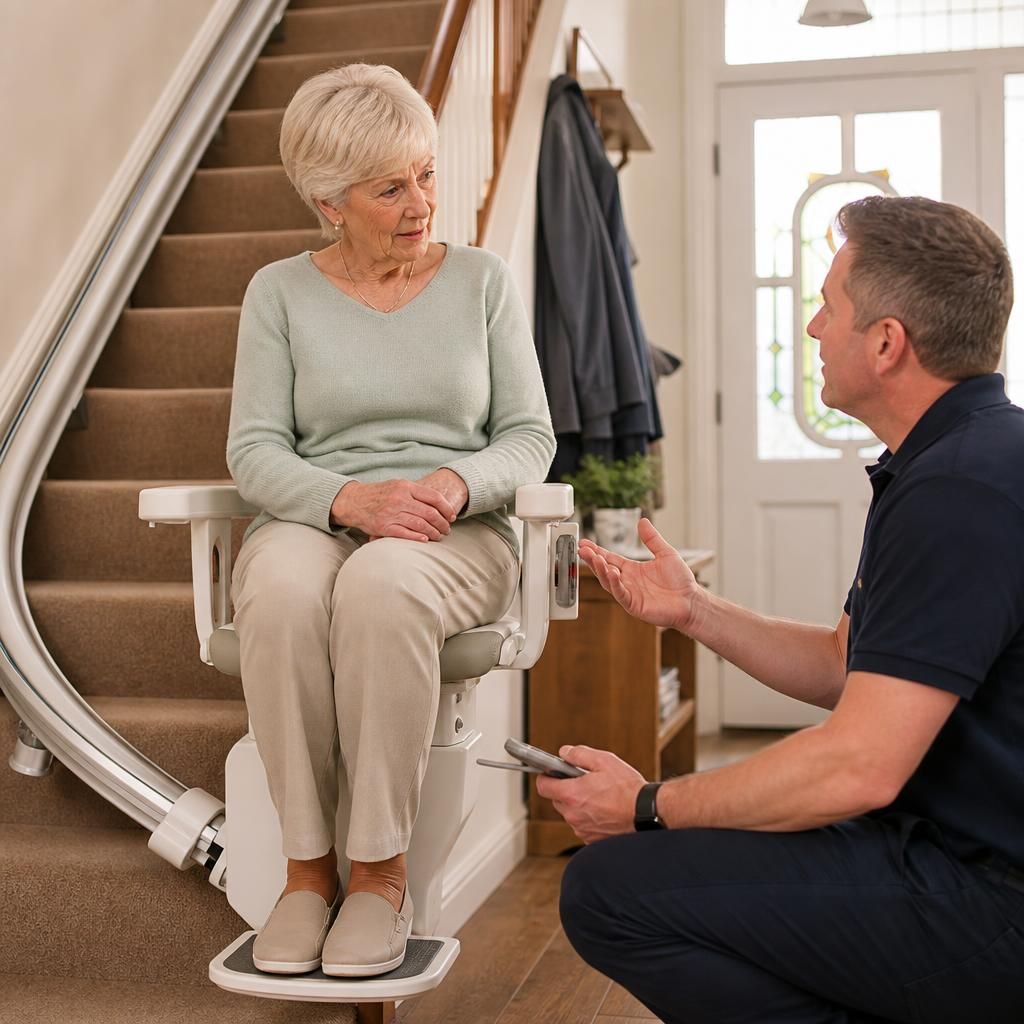
Arrange a Home Assessment for an Accurate Stairlift Cost
Arrange a home assessment with Independent Stairlifts to confirm the right stairlift, installation requirements and overall cost for your property. Our specialist can explain the available options and provide tailored advice based on your staircase and mobility needs.