
What additional features might increase the cost of a stairlift?
Additional stairlift features that may increase the price include powered swivel seats, powered folding or hinged rails, upgraded upholstery, adjustable footrests, and enhanced safety controls. The cost depends on the feature selected, the stairlift model, and whether extra installation work is needed in your home.
Additional stairlift features can increase the purchase price because they add powered mechanisms, specialist components, upgraded materials or installation work. The most common cost-increasing options include powered swivel seats, powered folding or hinged rails, powered footrests, upgraded seating, enhanced controls and accessories designed for particular mobility or access requirements. The final price depends on the stairlift model, the layout of your staircase and whether the feature is essential for safe use.
Powered swivel seats
A standard stairlift seat may swivel manually at the top of the stairs, allowing the user to turn towards the landing before standing. A powered swivel seat performs this movement using a motor and controls. It can be useful for someone with limited upper-body strength, reduced balance or difficulty twisting while getting off the stairlift. Because it includes additional electrical and mechanical components, it generally costs more than a manual swivel seat.
Some seats also include powered lifting or lowering functions. These can help a user move between the seated and standing positions, but they are more specialised and may add further cost. An assessment is important to establish whether the feature provides a practical benefit and whether there is enough room at the top and bottom of the stairs to use it safely.
Powered folding and hinged rails
A standard rail may finish before a doorway, corridor or other obstruction. Where the rail needs to extend beyond the bottom step, a manual folding rail can help keep the access route clear. A powered folding rail performs this movement from the stairlift controls, which may be more suitable where the user cannot safely bend down or operate a manual mechanism.
A hinged rail can be used where the rail would otherwise obstruct a door, passageway or entrance. Powered versions usually cost more than manual alternatives. The price may also be affected by the amount of additional rail required and the complexity of connecting the folding mechanism to the stairlift.
Powered footrests
A powered footrest folds or unfolds using a control rather than requiring the user or another person to operate it by hand. This can make transfers easier and reduce the need to reach down. It may be particularly helpful where flexibility, strength or balance is limited. The extra motor and control system can increase the price compared with a manually folding footrest.
Upgraded seats and upholstery
Some stairlift models offer wider or more supportive seats, additional cushioning, adjustable armrests and different upholstery finishes. These options may improve comfort or accommodate a particular body shape, but they can increase the cost. A larger seat may also require more clearance on a narrow staircase, so the choice should be checked during the home assessment rather than made on comfort alone.
Water-resistant or easier-clean upholstery may be useful for an outdoor stairlift or for users who need a surface that can be cleaned frequently. More durable materials and specialist finishes can carry a higher price than standard upholstery.
Adjustable and powered seat features
Adjustable seat height, slide or swivel functions and powered seat movement can help with positioning and transfers. These features are not necessary for every user, but they may be appropriate where a fixed seat makes it difficult to sit down, stand up or maintain a safe posture. More adjustment usually means a more complex seat base and control system, which can affect the purchase price and future servicing requirements.
Enhanced controls
Most stairlifts include controls on the armrest and a remote control. Additional control options may include larger buttons, illuminated controls, alternative handset positions or simplified controls for users with restricted dexterity or vision. These changes may add to the cost, particularly where they require a different control system rather than a simple handset.
Some stairlifts can be specified with call-and-send controls so the lift can be brought to another level when it is not being used. This is convenient in a multi-user household, although it may not be necessary if only one person uses the stairlift or if the lift is normally left on the required floor.
Safety and positioning features
Safety sensors, obstruction detection, seat belts and swivel-seat interlocks are commonly included as standard or model-specific equipment. Additional safety options, such as a more substantial harness, a different belt arrangement or extra positioning support, may increase the price where they are not part of the standard specification.
These features should be selected according to the user’s needs rather than added simply because they are available. A specialist should check that any restraint or positioning aid is suitable, comfortable and compatible with the way the user transfers on and off the lift.
Outdoor protection and weather-resistant components
Outdoor stairlifts require materials and electrical components that can withstand exposure to rain, damp, temperature changes and sunlight. Weather-resistant upholstery, protective covers, sealed controls and corrosion-resistant components may therefore cost more than comparable indoor equipment. The installation location also matters: a lift exposed to the elements may need additional protection or a suitable power arrangement.
Longer rails and bespoke track options
A stairlift fitted to a straightforward staircase may use a standard rail. A longer staircase, intermediate landing, doorway obstruction or unusual change in direction may require extra rail, a hinged section or a bespoke curved track. These are not always optional extras; they may be necessary for the stairlift to fit and operate safely. Bespoke track work generally costs more because it is designed and manufactured for the individual staircase.
Charging, power and electrical adaptations
Most stairlifts use rechargeable batteries and charge through points on the rail. If the existing electrical supply is unsuitable, additional electrical work may be needed. Relocating a socket, protecting a cable or adapting the charging arrangement can add to the installation cost. These requirements should be identified during the home assessment so that the quotation reflects the actual work involved.
Accessories and additional equipment
Optional accessories may include a spare remote control, a protective cover, a cushion, a walking-stick holder or a carrying attachment. Individually, these may have a relatively modest effect on the total price, but selecting several extras can make the overall package more expensive. Ask which items are included in the quoted specification and which are charged separately.
Which features are worth paying for?
The most appropriate specification is the one that addresses a genuine safety, access or comfort requirement. A powered swivel seat may be worthwhile if turning and standing are difficult, while a powered folding rail may be important where a manual rail cannot be operated safely. Conversely, a decorative upholstery upgrade may provide little practical value if the standard finish is already comfortable and easy to maintain.
When reviewing the quotation, compare the standard specification with the proposed upgrades and ask:
- Is the feature necessary for safe use or mainly a convenience?
- Is it included as standard on another suitable model?
- Will it require additional installation work or electrical changes?
- Could it affect servicing, battery replacement or future repairs?
- Does it suit the user’s strength, balance, dexterity and transfer method?
- Will the feature remain useful if the user’s mobility changes?
A home assessment should confirm which features are compatible with the staircase and the person using the lift. It should also identify whether a lower-cost alternative, such as a manual mechanism or a different seat configuration, would provide the same practical benefit. Independent Stairlifts can explain these differences clearly so that the specification reflects the user’s needs rather than including unnecessary additions.
Additional stairlift features usually increase the price when they add powered movement, specialist components or extra installation work. The most worthwhile options are those that address a specific difficulty, such as turning safely at the top of the stairs, operating a manual rail or transferring from the seat.
For example, a powered swivel seat may be more suitable than a manual swivel seat if strength or balance is limited. A powered folding rail can also be valuable where the user cannot safely reach down to operate a manual mechanism. During the home assessment, compare each upgrade with a simpler alternative and confirm whether it could affect servicing, electrical work or future repairs. This helps ensure the quotation reflects genuine mobility needs rather than unnecessary additions.
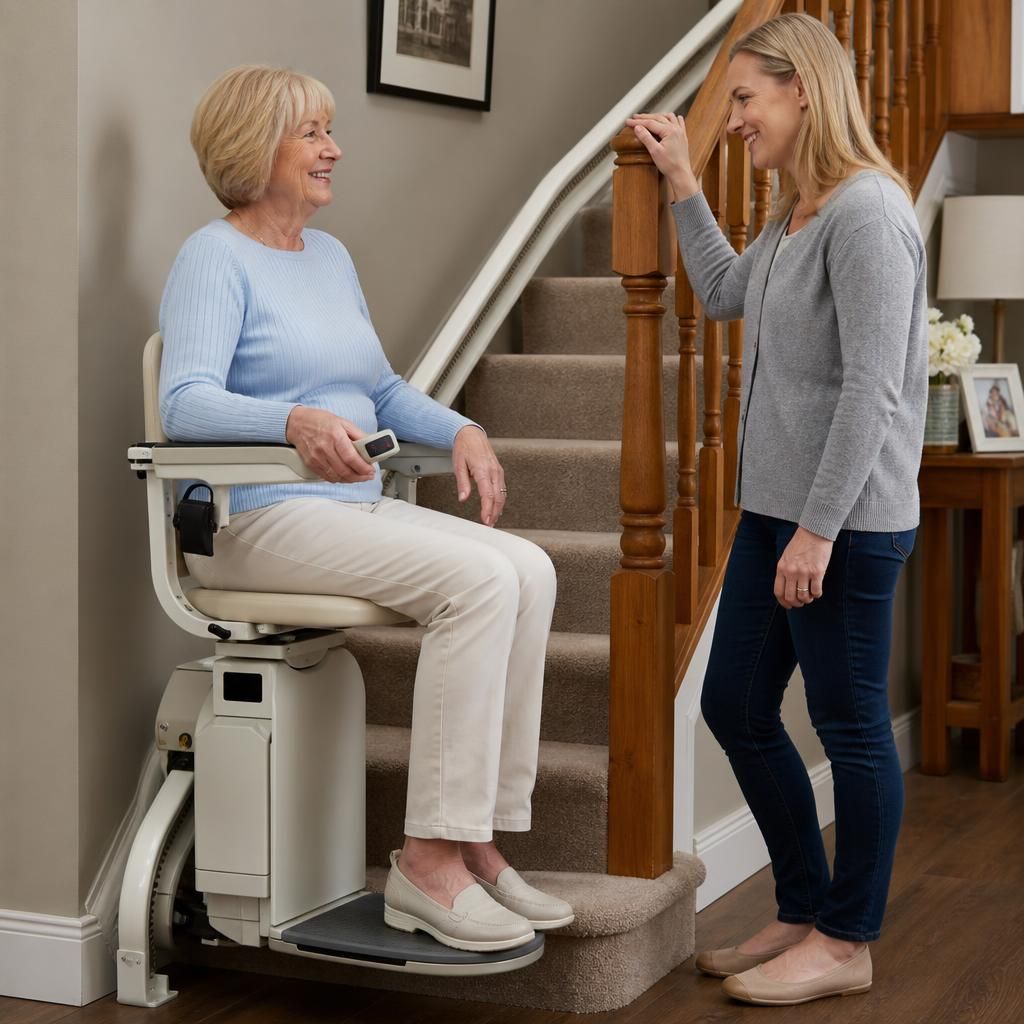
Discuss the right stairlift features for your needs
Discuss the right stairlift features for your needs with Independent Stairlifts. We can help you compare practical options during your home assessment and identify which upgrades are appropriate for your mobility, staircase and budget.