
How does the choice between new and reconditioned stairlifts affect the price?
A new stairlift usually costs more than a reconditioned model because it includes new components and the latest available features. Reconditioned stairlifts are typically more affordable, although the final price for either option depends on the staircase, installation requirements, specification, warranty and aftercare included.
Choosing a new or reconditioned stairlift can make a substantial difference to the purchase price. A reconditioned stairlift is usually the lower-cost option because key components have been previously used and prepared for resale, while a new stairlift includes new parts, the latest available specification and a manufacturer’s new-product warranty. However, the price of either option is also determined by the staircase, installation work, features, warranty and aftercare included.
How the two options differ in price
A new stairlift is supplied specifically as a new installation. Its price generally covers the lift, the rail, installation and the manufacturer’s warranty, with the opportunity to select from the current range of seats, controls, upholstery and safety features. New models may therefore cost more initially, particularly where the specification includes powered options or enhanced comfort features.
A reconditioned stairlift has normally been removed from a previous installation, inspected, cleaned, tested and refurbished before being offered for reuse. Parts that do not meet the required standard should be replaced or repaired, but the available choice of model, colour and features can be more limited. This lower purchase price does not mean that the stairlift should be unsuitable or unsafe; the important point is to establish what inspection, refurbishment and testing have been carried out.
The staircase still has a major influence on the quote
The difference between new and reconditioned pricing is often more noticeable on a straightforward staircase than on a technically complex one. A straight stairlift usually uses a standard rail, so a reconditioned model may provide a cost-effective solution where its dimensions and specification are suitable.
Curved stairlifts are designed around the individual staircase. The rail may need to be manufactured or adapted to follow bends, landings and changes in direction. As a result, the cost of the rail, surveying, design and installation can be more significant than the choice between a new and reconditioned carriage. A reconditioned curved stairlift may still reduce the overall cost, but it must have a rail that is appropriate for the staircase or be compatible with a suitable replacement rail.
Outdoor installations can also require weather-resistant materials, protective covers and additional installation considerations. These requirements may affect the price of both new and reconditioned equipment.
What is included matters as much as the headline price
When comparing quotations, check whether both options include:
- A home assessment and measurement of the staircase.
- Delivery, installation and testing.
- Removal or disposal of an existing stairlift, if required.
- New or replacement batteries and other essential consumable parts.
- A clear warranty covering parts, labour and call-outs.
- Demonstration of the controls and safe operation.
- Access to servicing and technical support after installation.
A lower initial quote may not represent better value if it provides a shorter warranty, excludes installation work or leaves servicing and repairs outside the agreed price. Conversely, a new stairlift is not automatically the most suitable choice if a properly assessed and warranted reconditioned model meets the user’s needs.
Features can change the price of either option
Features such as a powered swivel seat, powered footrest, hinged rail, adjustable seat, remote controls or a folding mechanism can increase the cost. These features may be particularly useful where the user has reduced strength, limited balance or difficulty turning at the top or bottom of the stairs. Some features may only be available on certain reconditioned models, while others may require a new model to achieve the preferred specification.
The right comparison is therefore between two stairlifts that provide a similar level of safety, comfort and usability, rather than simply comparing whether each one is new or reconditioned.
Warranty and aftercare should be considered in the total cost
New stairlifts commonly come with a new-product warranty. A reconditioned stairlift may have a different warranty period or different terms, depending on the supplier, the age of the equipment and the work completed during refurbishment. Ask specifically what is covered, how faults are reported and whether labour, replacement parts and call-outs are included.
Battery replacement and servicing are also part of the longer-term cost. Batteries are consumable items and their condition should be checked before a reconditioned stairlift is installed. A reputable assessment should identify any expected maintenance needs rather than treating the purchase price as the complete cost of ownership.
How to decide which option is suitable
- Start with the user’s mobility needs, including transfers, balance, seating position and ability to operate controls.
- Confirm that the stairlift can be installed safely and comfortably in the available space.
- Compare new and reconditioned models with equivalent features wherever possible.
- Check the condition of the equipment, the refurbishment process and the warranty.
- Consider likely servicing, battery and repair costs over the period you expect to use the stairlift.
A reconditioned stairlift may be appropriate when keeping the initial cost down is important and a suitable model is available for the staircase. A new stairlift may be preferable when a particular configuration or feature is needed, when the staircase is complex, or when the reassurance of a new-product warranty and current specification is a priority.
The most reliable way to compare the options is through a home assessment and a written quotation that explains the equipment, installation, warranty and aftercare included. This allows the price to be considered alongside suitability, rather than choosing solely on whether the stairlift is new or reconditioned.
The staircase can affect the price of a stairlift as much as, or more than, the choice between a new and reconditioned model. A straight stairlift normally uses a standard rail, so a suitable reconditioned unit may offer a meaningful saving. On a curved staircase, the rail must be designed to follow the bends, landings and changes in direction, making the survey, design and installation more significant parts of the quotation.
A reconditioned curved stairlift can still be a cost-effective option, but its existing rail must be suitable for the staircase or the quotation must include an appropriate replacement or adaptation. For this reason, compare the complete installed solution rather than the carriage price alone. The assessment should confirm:
- Whether the rail fits the staircase safely and comfortably
- Which parts are new, refurbished or replaced
- What installation, testing and removal work is included
- What warranty and aftercare apply to the finished installation
This gives a more accurate comparison between new and reconditioned stairlifts and helps prevent a lower headline price from leading to unexpected costs.
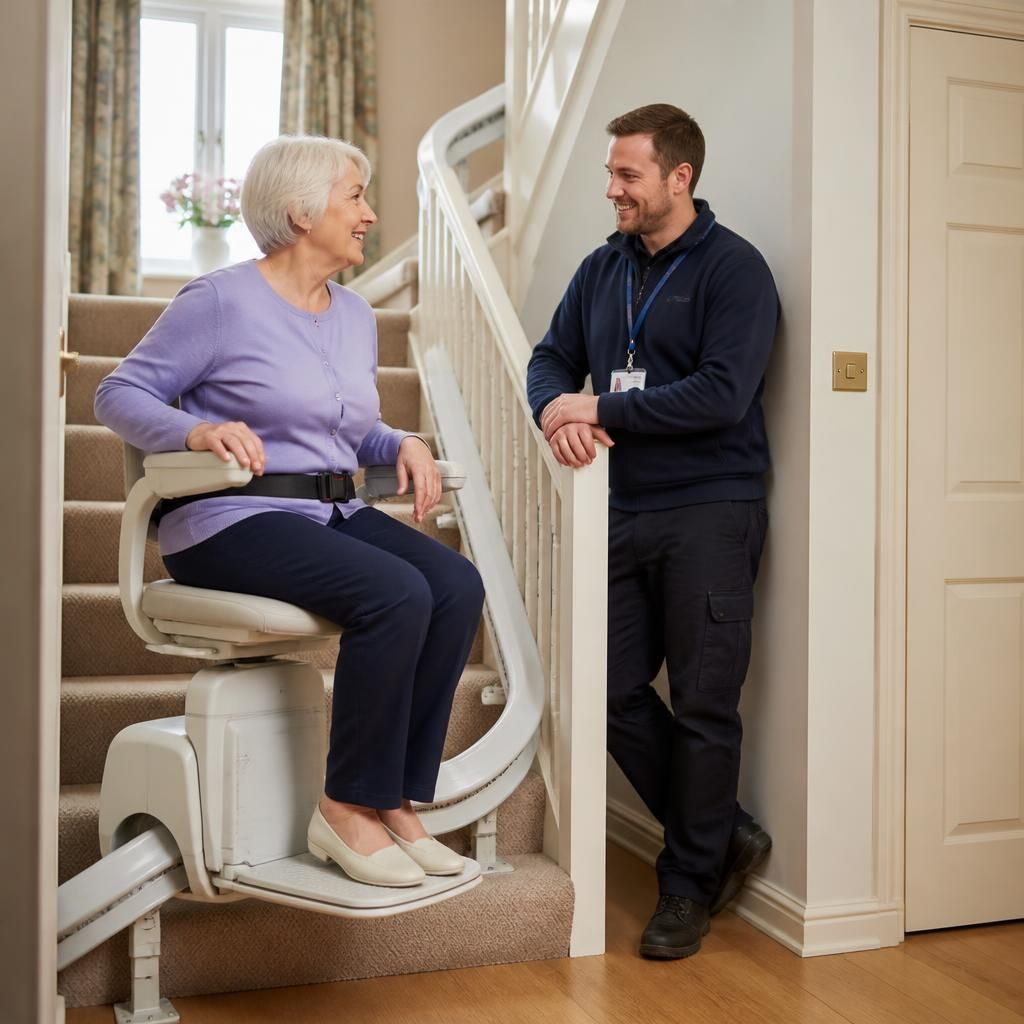
Compare your new and reconditioned stairlift options
Arrange a home assessment to compare suitable new and reconditioned stairlifts, including installation, warranty and aftercare costs. We can provide a clear quotation based on your staircase and mobility needs.