
How can I ensure a stairlift is the right investment for my mobility needs?
A stairlift is usually a worthwhile investment when stairs are restricting your safe, independent access around the home, but the right choice depends on your mobility, stair layout, expected usage and budget. A professional home assessment can confirm whether a stairlift is suitable, identify the most appropriate model and explain the full purchase, installation and ongoing maintenance costs before you decide.
A stairlift is generally the right investment when stairs are limiting your safe, reliable access between floors and are likely to remain difficult for the foreseeable future. The decision should be based on more than the purchase price: your current and expected mobility, the layout of your staircase, how often you will use the lift, the suitability of other solutions and the full cost of ownership should all be considered.
Start with the mobility problem you need to solve
Consider what is currently preventing you from using the stairs confidently. Pain, weakness, breathlessness, poor balance, reduced grip, difficulty bending the knees or recovering from a fall can all make stairs unsafe. You may still manage them occasionally, but that does not necessarily mean they are a suitable everyday route.
A stairlift may be a sensible investment if you are:
- Avoiding an upper or lower floor because the stairs are too difficult or tiring.
- Relying on another person to help you use the stairs.
- Carrying essential items between floors and losing your balance or confidence as a result.
- Finding that your mobility is gradually changing because of age, an illness, an injury or a long-term condition.
- Concerned that a temporary improvement may not provide a dependable long-term solution.
Think about your normal routine rather than your best day. A stairlift should support safe, independent access when you are tired, in pain or less steady than usual, as well as when you feel relatively well.
Consider how your needs may change
The most suitable stairlift is not always the one that solves only today’s difficulty. If your mobility is deteriorating, a model with appropriate seating support, simple controls and enough space for your posture may remain useful for longer. If you use a walking stick, frame or other mobility aid, consider where it will be left at each end of the staircase and whether you can sit down and stand up safely.
Discuss relevant health conditions during the assessment. Limited knee movement, hip problems, tremors, reduced hand strength, visual impairment and memory difficulties may affect the choice of controls, seat position, armrests, footrest or safety features. These details are not obstacles to installation; they help the assessor identify a safer configuration.
Check that your staircase and home are suitable
A professional home assessment is essential because suitability depends on the actual staircase, not just whether it is described as straight or curved. The assessor should examine the available space, steps, landings, bends, doors, radiators, electrical access and the areas where you will get on and off the lift.
A straight stairlift may be appropriate for a single uninterrupted flight. A curved stairlift is usually considered where the staircase has bends, intermediate landings or more than one flight. Outdoor stairlifts require equipment designed for exposure to weather and suitable protection when not in use. In some homes, a different arrangement or a small change to the surrounding space may be more practical than installing a lift across the entire route.
Ask specifically about the parking position at the top and bottom. A lift that stops in a narrow doorway or obstructs a passage may not provide the safe access you expect. Folding rails, powered swivels or alternative parking positions can sometimes address these issues, although they may affect the overall price.
Compare the stairlift with realistic alternatives
A stairlift is not automatically the best answer for every mobility problem. If your main difficulty is getting in and out of the bath, a bath lift or level-access bathing solution may be more relevant. If standing from a chair is difficult, a riser recliner may help with that specific activity. If you need access to several floors and have sufficient space, other adaptations may also be considered.
These options do not necessarily replace a stairlift. A person may need more than one mobility aid because each addresses a different part of daily life. The important point is to identify the main restriction and avoid paying for equipment that does not solve it. An assessment should consider how different aids would work together in your home.
Calculate the complete investment
Compare the full cost rather than focusing only on the advertised starting price. A written quotation should make clear whether it includes:
- The stairlift and the specification of the model supplied.
- The survey, fitting and any necessary installation work.
- Removal or disposal of an existing lift, if applicable.
- Additional components required for your staircase, such as a longer rail or powered option.
- Demonstration, handover and user instruction.
- The warranty terms and what is excluded.
- Future servicing, call-outs, battery replacement and other maintenance costs.
New stairlifts normally provide the latest specification and a manufacturer’s warranty. A reconditioned stairlift may reduce the initial cost, but its suitability depends on the staircase, the condition of the equipment, the warranty provided and the availability of replacement parts. It should be inspected, prepared and installed by a competent specialist rather than treated as an informal second-hand purchase.
Ask whether the quotation is fixed and how long it remains valid. If work may be needed to the staircase or surrounding area, ask for those costs to be explained separately. You should also understand the payment terms, cancellation rights and what happens if the assessment finds that the proposed equipment is unsuitable.
Include ongoing ownership costs
A stairlift is a mechanical and electrical product, so future servicing should form part of the decision. Find out how routine maintenance is arranged, what support is available if the lift stops working and whether an engineer can attend your area. Batteries and other wear items may eventually need replacement, and the cost can vary by model and usage.
Follow the operating and charging instructions and report unusual noises, jerky movement, poor braking, failure to charge or repeated error messages. Do not attempt repairs yourself. Keeping the rail, seat and footrest clear and arranging appropriate servicing can help maintain safe operation, but it does not remove the need for professional support.
Use the assessment to test practical suitability
During the assessment, demonstrate how you normally approach the stairs, sit down, stand up and use any walking aid. Try the proposed controls and ask to practise starting, stopping, folding the seat and using the swivel mechanism. Make sure you can reach the controls without stretching and that the seat feels stable and supportive.
If another person will use the stairlift, their height, weight, balance and dexterity should also be considered. A shared lift may need a configuration that is safe and comfortable for everyone, or separate arrangements may be more appropriate.
A useful assessment should also cover what happens during a power cut, how the batteries are charged, how to use the emergency stop or alarm and how to keep the staircase usable for other household members. Ask for written information that you can refer to after installation.
Make the decision using clear evidence
A stairlift is more likely to be a worthwhile investment when it solves a specific and ongoing access problem, can be installed without creating new hazards, is comfortable enough for regular use and remains affordable after installation and maintenance are included. It may be less suitable if your mobility needs are changing rapidly, you cannot transfer safely to the seat, the staircase cannot accommodate the required equipment or you are unlikely to use the lift regularly.
Before agreeing to proceed, ask for a written recommendation, a complete quotation and an explanation of the alternatives considered. Take time to discuss the decision with anyone involved in your care, but ensure the final choice reflects your own routine, comfort and independence. A thorough home assessment is the most reliable way to confirm whether a stairlift is appropriate and which specification represents good value for your particular home.
A professional home assessment is the most reliable way to establish whether a stairlift is the right investment for your mobility needs. It considers how you use the stairs, your ability to transfer safely onto the seat and the physical layout of your home, rather than relying on a general price or standard model.
During the assessment, discuss your usual mobility difficulties, including balance, joint movement, grip strength, fatigue and the use of walking aids. You should be able to try the controls, seat, swivel mechanism and footrest, while the assessor checks access at the top and bottom of the staircase. Parking position, doorways, landings and space for other household members are also important.
Ask the assessor to explain the recommended specification, suitable alternatives and the complete cost of ownership. This should include installation, warranty cover, servicing and likely maintenance. A stairlift is more likely to represent good value when it provides dependable access, remains comfortable to use and addresses your expected mobility needs as well as your current difficulties.
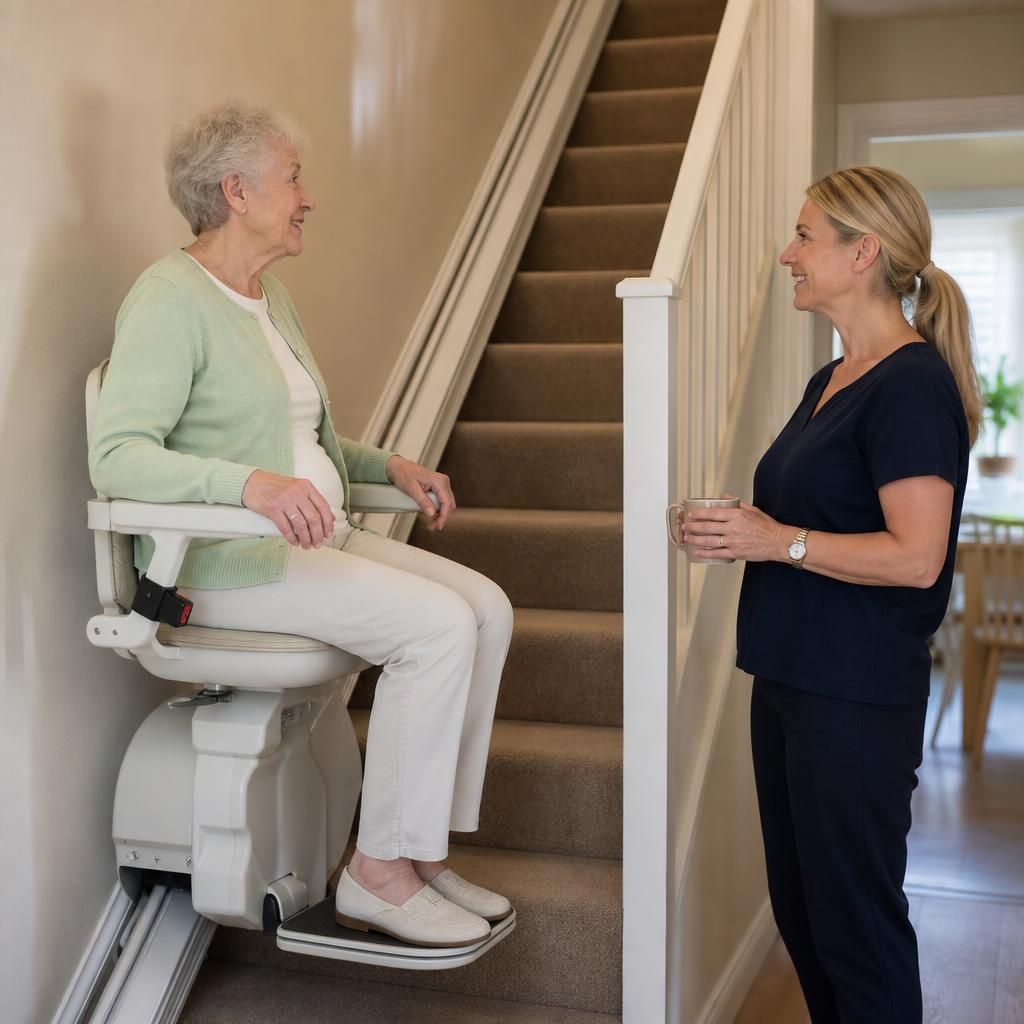
Arrange Your Professional Stairlift Assessment
Arrange a professional stairlift assessment to discuss your mobility needs, staircase layout and the most suitable options for your home.
We can explain the recommended specification, installation requirements and full ongoing costs before you decide.