
What should I consider when budgeting for a stairlift installation to ensure it aligns with my accessibility requirements?
When budgeting for a stairlift installation, consider the full cost of the lift, survey, installation, any required stair or electrical adaptations, and ongoing servicing, while prioritising the user’s mobility, safety and comfort requirements. A home assessment and detailed quotation should confirm whether a straight, curved, outdoor or reconditioned stairlift is suitable and identify any additional costs before you commit.
Budget for the complete stairlift solution rather than the lift alone. The total should allow for the most suitable stairlift, a professional assessment, installation, any necessary adaptations, safety features, and future servicing. Your accessibility requirements should determine the specification first; the price can then be assessed against the safety, comfort and reliability the installation needs to provide.
Start with an in-home assessment. A survey should establish the staircase layout, available space, electrical supply, access at the top and bottom of the stairs, and any practical installation constraints. It should also consider the user’s mobility, balance, transfer ability, weight, height, joint movement, eyesight and confidence when using the lift. This is important because a lower initial price may not represent good value if the seat, controls or support features are unsuitable.
Ask for a written quotation that separates the main elements of the work. Depending on the property and the stairlift selected, these may include:
- the stairlift, rail, seat and charging equipment;
- the site survey and design work, particularly for a non-standard staircase;
- delivery and professional installation;
- removal or disposal of an existing stairlift, where applicable;
- minor electrical work or other adaptations required for safe operation;
- additional controls, hinges, rail alterations or parking arrangements; and
- warranty cover, servicing plans and any applicable call-out charges.
Match the stairlift type to the staircase. A straight stairlift is generally simpler to design and install where the stairs run in one uninterrupted flight. A curved stairlift is made to follow bends, landings or changes in direction and normally involves more detailed design and bespoke rail work. A narrow staircase, limited landing space, unusual steps or a need to keep a doorway clear can also affect the specification and the installation work.
For external steps, the budget should account for weather-resistant equipment, suitable charging arrangements, secure mounting and protection from the conditions at the property. If the staircase is used by other household members, discuss whether the rail, seat and parking position will leave enough usable access. Keeping the stairs available for walking may require a different rail design or additional features.
Prioritise features that address a specific need. Useful options can include powered swivelling or lifting seats, adjustable seat height, different armrest widths, a powered footrest, folding components, remote controls, safety sensors and a retractable or hinged rail. These features can improve transfers, reduce bending or help with limited strength, but they can also change the price. Include an option when it solves a clear accessibility or space problem, rather than choosing features solely because they are available.
Consider the user’s likely needs over the expected period of use. For example, someone who has difficulty standing from a low seat may need a seat position that supports safer transfers. Someone with reduced hand strength may benefit from controls that are easier to operate. If more than one person will use the stairlift, check that the dimensions, controls and safety arrangements are appropriate for all intended users. A home assessment is the best way to identify these requirements before a quotation is finalised.
Include the condition of the property. A sound staircase and suitable power supply may require little preparation, whereas restricted access, uneven surfaces, difficult parking areas or the need to route an electrical connection can add work. Ask whether the quoted price includes all standard installation materials and whether any remedial building or electrical work has been excluded. A clear explanation of exclusions helps prevent unexpected costs after the survey.
Compare new and reconditioned options carefully. A reconditioned stairlift may reduce the initial outlay, but suitability, availability of parts, warranty terms, age, condition and future servicing should be confirmed. The rail for a curved staircase is usually designed for a particular property, so reusing equipment is not always practical. A new stairlift may provide a longer warranty or a wider choice of seating and controls. Compare the complete package and expected support, not just the equipment price.
Allow for costs after installation. Check what is covered during the warranty period, how faults are reported, whether servicing is included, and what charges may apply once the warranty ends. Batteries and other components may eventually need replacement. Ask how quickly support is available and whether an ongoing service plan is optional or required. These details help you judge the likely cost of ownership rather than focusing only on the installation date.
You may also be able to reduce the amount you pay through VAT relief if the user and installation meet the relevant eligibility rules. Local authority assistance, including a Disabled Facilities Grant, may be available in some circumstances, subject to assessment and means testing. Eligibility and application arrangements can change, so confirm the current requirements with the relevant authority or an appropriately qualified adviser before relying on financial assistance in your budget.
When reviewing quotations, check that each provider has priced the same specification. Compare the stairlift type, seat and controls, installation scope, warranty, servicing, removal arrangements and any adaptations. Ask whether the quotation is fixed, how long it remains valid, and under what circumstances the price could change. Do not choose an option that leaves out a feature essential to safe use simply because its headline price is lower.
A practical budget should therefore contain the quoted installation cost, any identified adaptations, likely ongoing servicing, and a sensible allowance for work that cannot be confirmed until the survey is complete. The final choice should be the safest suitable solution for the user and the property, with all included and excluded costs explained in writing.
Budgeting for a stairlift installation means pricing a safe, suitable solution for the user and staircase, not simply choosing the lowest equipment price. The quotation should reflect the stairlift type, seating and controls needed for safe transfers, installation work, adaptations and ongoing support.
A home assessment helps identify requirements such as a powered swivel seat, adjustable seat height, easier-to-use controls, a hinged rail or a suitable parking position. Ask for these items to be listed separately in a written quotation, together with warranty cover, servicing, removal of an existing lift and any electrical or building work. Comparing complete specifications makes it easier to avoid an apparently cheaper option that does not meet the user’s accessibility needs.
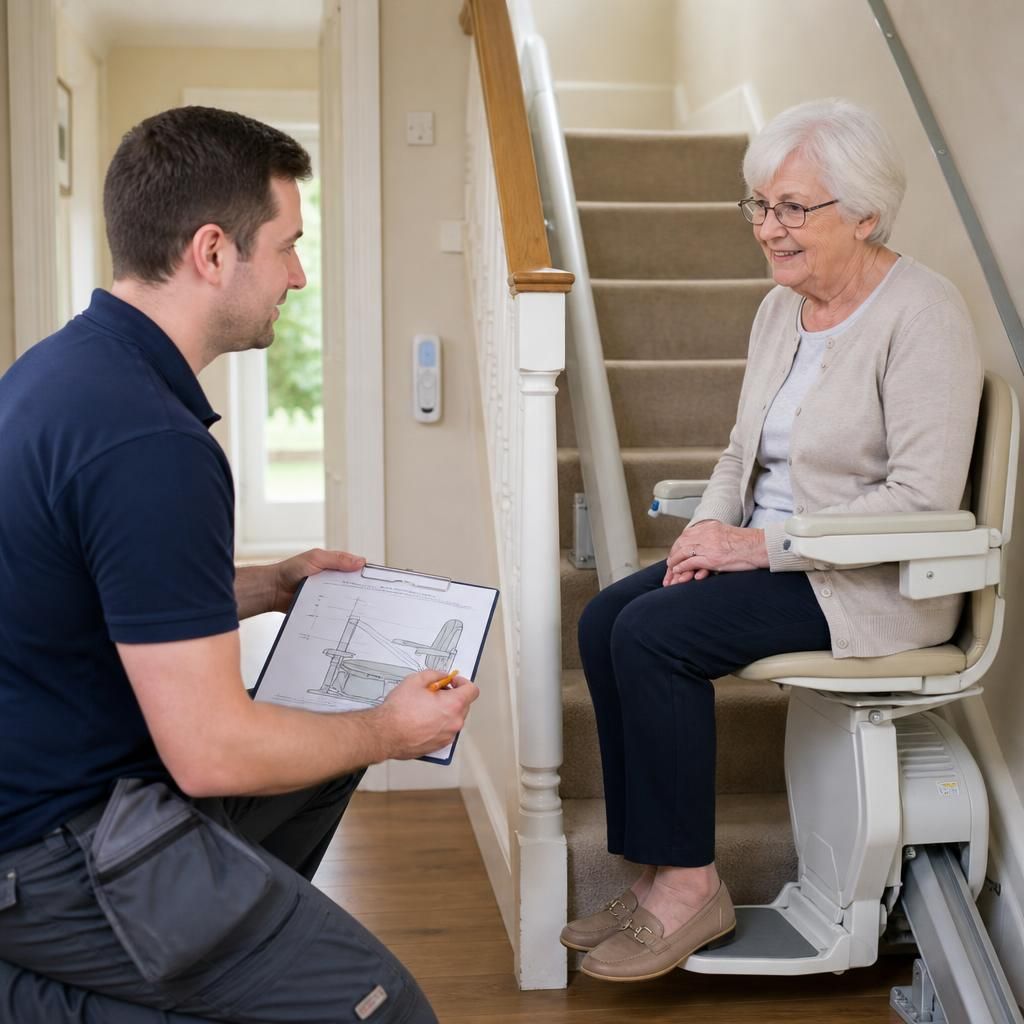
Arrange your stairlift assessment and quotation
Arrange your in-home stairlift assessment and request a detailed quotation covering the equipment, installation, adaptations and ongoing support required for your accessibility needs. This will help confirm the most suitable solution and clarify the full cost before you proceed.