
What factors contribute most to the total cost of installing a stairlift in a home environment?
The total cost of installing a stairlift is influenced mainly by the type and design of the staircase, whether the lift is new or reconditioned, the complexity of fitting, and any additional features required. Straight stairlifts are generally less costly to install than curved models, while access difficulties, outdoor settings, customised rails and ongoing servicing can also affect the final price.
The total cost of installing a stairlift is determined primarily by the staircase layout, the type of stairlift required, the amount of customisation, and the complexity of the installation. A straight indoor stairlift is usually the simplest option, while a curved, outdoor or heavily customised installation generally requires more assessment, equipment and fitting time. The final price should reflect the complete installation rather than the lift alone.
Staircase design and layout
The shape and dimensions of the staircase have the greatest influence on cost. A straight staircase normally uses a standard rail and involves a relatively straightforward installation. A staircase with one or more bends, intermediate landings, changes in gradient or multiple flights requires a rail designed to follow its exact route. This bespoke work makes a curved stairlift more complex to manufacture and install.
Other layout details can also affect the specification. These include narrow stairs, restricted headroom, unusual step dimensions, doorways near the top or bottom, and limited space for parking the chair. Where the stairlift needs to fold or park away from a landing, an alternative rail arrangement or powered feature may be needed.
Type of stairlift
The choice between a straight, curved, outdoor or reconditioned stairlift affects both the equipment price and the fitting requirements. Straight models are generally the least expensive to install when the staircase is suitable. Curved models require a made-to-measure rail and careful positioning around corners and landings. Outdoor stairlifts must be suitable for exposure to rain, temperature changes and other environmental conditions, which can affect the specification and installation method.
Where a domestic layout includes more than one staircase or a split-level arrangement, the most suitable solution may involve more than one lift or a different access plan. This should be assessed in relation to the routes used most often, rather than choosing equipment based only on the shortest staircase.
New or reconditioned equipment
A reconditioned stairlift can reduce the initial equipment cost, particularly where a suitable standard model is available. However, the available choice may be more limited, and the rail and components must still be compatible with the staircase and the user’s needs. A curved rail is usually specific to the original staircase, so it may not be suitable for reuse elsewhere unless it can be adapted appropriately.
A new stairlift may provide a wider choice of seat design, controls, finishes and powered options. The relevant comparison is not simply the purchase price: check what is included in the survey, delivery, installation, warranty and aftercare for each option.
Installation complexity and access to the property
Fitting costs can increase when the installation requires additional preparation or more time on site. Examples include difficult access to the property, several flights of stairs, restricted working space, unusual fixing positions or the need to coordinate installation with other adaptations. Installers may also need to remove or refit parts of the staircase environment, such as a handrail, where this is necessary and appropriate.
A professional assessment identifies whether the rail can be fixed securely to the stairs or wall, whether the lift will obstruct doors or walkways, and where it can be parked safely. The condition and construction of the stairs are relevant too. Any repairs or building work required before fitting should be identified separately so that the quotation is clear.
Seat design and additional features
The user’s mobility, balance, height and transfer ability can influence the specification. Features such as a powered swivel seat, powered folding footrest, hinged rail, upgraded controls, harness or different seat configuration may add to the cost. These options can be valuable where a standard seat does not provide a safe or manageable transfer, but they should be selected because they meet a specific need.
Controls may be required on the armrest, at the top and bottom of the stairs, or in a form that is easier to operate. The position of the controls, the direction in which the seat swivels and the amount of space available at each landing should all be considered during the assessment.
Electrical work and associated alterations
Most stairlifts can use the home’s existing electrical supply, but the installation may require an accessible socket or other minor electrical work. If the supply is unsuitable or the property needs additional wiring, this can contribute to the total cost. Any proposed electrical alteration should be explained before work begins and completed in accordance with applicable safety requirements.
Further costs may arise if the installation affects flooring, skirting boards, door access or another mobility adaptation. These are not always part of the stairlift price, so confirm whether making good, removal of an existing lift and disposal of packaging or old equipment are included.
Survey, delivery, fitting and aftercare
A complete quotation may include the initial survey, measuring or design work, manufacture of a bespoke rail, delivery, installation, testing and user instruction. For a curved stairlift, the survey and rail design are particularly important because the equipment must match the staircase accurately.
After installation, consider the cost and extent of warranty cover, servicing, call-outs, replacement batteries and repairs. Batteries and other wear items may eventually need attention, although the timing depends on usage and equipment condition. A lower initial price may not represent the best value if important installation or aftercare services are excluded.
How to compare quotations
- Confirm whether the quotation is for a straight, curved, outdoor or reconditioned stairlift.
- Check whether the rail is standard or made to measure.
- Ask which seat and powered features are included and which are optional.
- Confirm that the survey, delivery, installation, testing and demonstration are covered.
- Check for additional charges relating to electrical work, difficult access, removal or making good.
- Review the warranty, servicing arrangements and potential call-out costs.
The most reliable way to establish the total cost is to arrange an assessment at the property. A site survey allows the staircase, landing space, electrical position and user requirements to be considered together, producing a specification and quotation based on the actual home rather than a general price guide.
The staircase layout is usually the most significant factor in the total cost of a stairlift installation. A straight staircase can generally use a standard rail, whereas a staircase with bends, landings or changes in direction requires a rail designed to follow its exact route.
Curved installations involve detailed measuring, bespoke rail manufacture and careful positioning around corners and landings. Narrow stairs, restricted headroom, nearby doorways and limited parking space can also affect the specification. A property assessment confirms what equipment and fitting work are needed, so the quotation reflects the actual staircase rather than an estimated price for the lift alone.
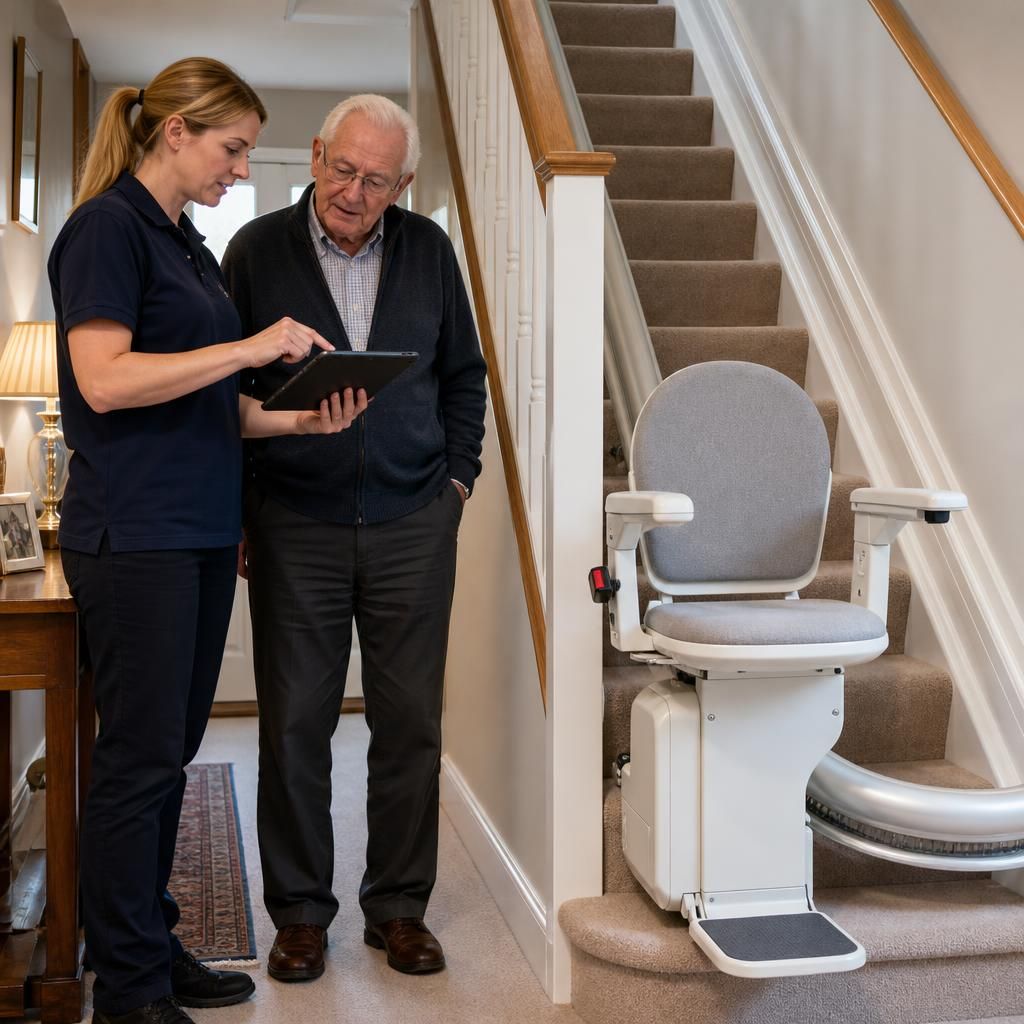
Arrange Your Stairlift Installation Cost Assessment
Arrange a stairlift installation cost assessment with Independent Stairlifts to review your staircase, access requirements and preferred options. We can then provide a clear quotation based on the equipment and fitting work your home requires.