
What are the ongoing costs associated with maintaining a stairlift after installation?
Ongoing stairlift costs can include routine servicing, replacement batteries and repairs once the warranty ends, although day-to-day electricity use is usually minimal. Keeping the lift maintained and arranging prompt repairs helps protect its safety, reliability and working life.
After installation, the main ongoing stairlift costs are servicing, replacement batteries, repairs outside the warranty period and a small amount of electricity. The actual cost depends on the lift model, how frequently it is used, the staircase environment, the warranty or service agreement, and the condition of its components. A well-maintained stairlift generally needs relatively little routine attention, but budgeting for eventual battery replacement and occasional repairs is sensible.
Routine servicing
Regular servicing is intended to identify wear before it affects safety or reliability. A service typically includes checking the rails, drive system, seat, armrests, footrest, safety sensors, charging points, controls and battery condition. The engineer may also clean and lubricate components where appropriate, test the lift under load and confirm that safety features operate correctly.
The recommended service interval should follow the manufacturer’s guidance and the advice given at installation. A lift used several times a day may need closer monitoring than one used occasionally. Outdoor stairlifts can also require more attention because rain, temperature changes, dirt and exposure to the elements may affect electrical connections and moving parts.
Servicing may be included within an existing warranty or service plan, or it may be charged separately. Before agreeing to cover, check what is included: some plans cover labour only, while others include parts, call-outs or breakdown repairs. Ask whether there are exclusions for accidental damage, misuse, water ingress or consumable items.
Replacement batteries
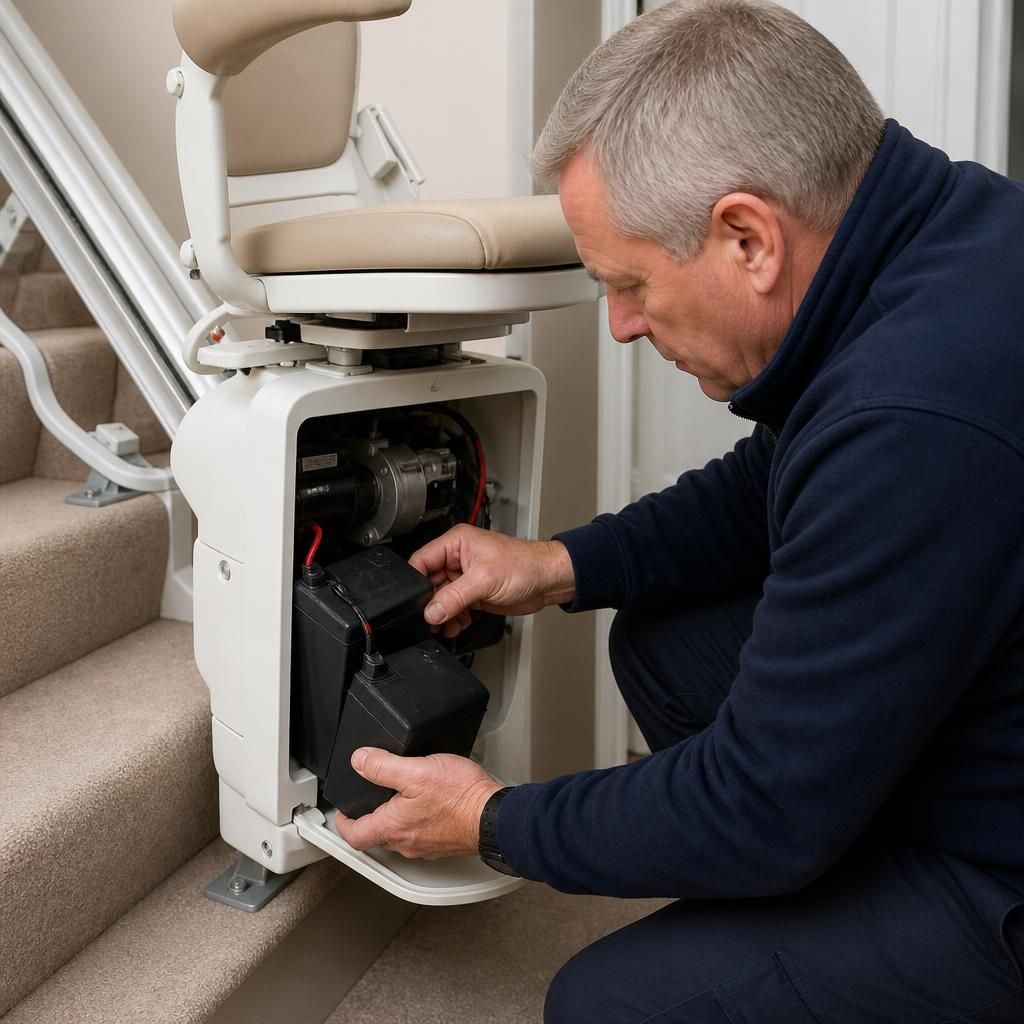
Most modern stairlifts use rechargeable batteries so that the lift can continue operating during a power cut. These batteries recharge automatically when the lift is parked correctly on a charging point. They do not usually require daily maintenance, but they are wear items and will eventually lose capacity.
Signs that batteries may need attention include the lift travelling more slowly, failing to complete its usual journey, giving repeated low-battery warnings or stopping away from a charging point. A battery problem can sometimes be caused by a charging fault, a poor electrical connection or the lift not being left in its designated charging position, so the system should be checked before batteries are replaced.
Battery replacement is normally an additional cost once the warranty has ended. The price depends on the battery specification, access, labour and the lift model. Use the correct replacement batteries supplied or approved for the stairlift; fitting unsuitable batteries can reduce reliability and create a safety risk.
Repairs and replacement parts
As a stairlift is used over time, components such as rollers, sensors, switches, arm controls, remote controls, charging contacts and drive parts may require adjustment or replacement. A repair bill can include the engineer’s call-out, diagnosis, labour and parts. The cost is usually higher where the lift is difficult to access, requires a specialist part or has more than one fault.
Common causes of avoidable faults include obstructions on the stairs, impact damage, liquid entering controls, leaving items against the rail and continuing to use the lift after an error or unusual noise appears. Keep the track and landing areas clear, follow the operating instructions and report changes in performance promptly. Delaying a small repair can allow additional components to wear.
Do not attempt to bypass safety sensors, open electrical covers or carry out repairs without the appropriate training. If the lift stops, isolate it only as described in the user instructions and contact the appropriate service team. If someone is left in an unsafe position, follow the emergency guidance provided with the lift.
Warranty and service cover
The warranty is an important part of the overall ownership cost. It may cover specified parts and labour for a defined period, but the terms differ between suppliers and models. Confirm when the warranty starts, whether call-outs are included, which parts are excluded and whether regular servicing is required to keep the cover valid.
Batteries, cosmetic damage and damage caused by misuse are often treated differently from mechanical or electrical faults. A service agreement or extended breakdown plan may provide more predictable costs after the initial warranty, but it is only worthwhile if the cover matches the lift’s age, usage and likely repair needs. Compare the annual or recurring charge with the exclusions, excesses, response arrangements and parts included.
Electricity use
A stairlift normally uses a relatively small amount of electricity because its batteries charge when the lift is parked and then supply power to the motor. The exact running cost depends on the model, charging system, electricity tariff and frequency of use. Keeping the lift switched on as instructed is usually important, as turning off the power may prevent the batteries from charging and can shorten their useful life.
If the lift is not being used for an extended period, follow the manufacturer’s storage or isolation instructions rather than simply unplugging it. A service engineer can advise how to protect the batteries during a prolonged absence.
Other costs to consider
- Call-outs outside a service plan: A breakdown visit may be charged separately, particularly outside normal working hours or when the fault is not covered.
- Parts affected by the environment: Outdoor lifts may need weather-related components, protective covers or additional cleaning and inspection.
- Remote controls: Handset batteries and damaged or lost remotes may not be included in warranty cover.
- Relocation or removal: If you move home, the cost of removing, transporting, adapting and reinstalling a stairlift is separate from normal maintenance. A curved lift is usually designed for its original staircase and may not transfer easily.
- Insurance and household cover: Check whether your home insurance covers accidental damage or theft, particularly for an outdoor installation. Policies and exclusions vary.
How to budget for maintenance
For a realistic ownership budget, check the written warranty terms, identify the recommended servicing interval and ask for the current price of a service, a standard call-out and common replacement parts. It is also sensible to allow for eventual battery replacement, even if the lift is currently working normally. A service plan can make expenditure more predictable, whereas pay-as-you-go maintenance may be suitable where the lift is lightly used and the warranty provides adequate protection.
Keep the installation paperwork, model details and service records in an accessible place. Record any warning codes, unusual noises or changes in speed before contacting support. Providing this information can help the engineer identify the likely fault and may avoid unnecessary delays.
Continued maintenance is not only about controlling costs. It helps ensure that the stairlift remains safe, available and suitable for the person relying on it. If you are unsure whether a problem is covered by your warranty or service agreement, check the terms supplied at installation or contact Independent Stairlifts before arranging work from an unauthorised provider.
Replacement batteries are one of the main ongoing stairlift costs after installation. Stairlift batteries recharge automatically while the lift is parked on its charging point, but they gradually lose capacity and will eventually need replacing.
Warning signs include slower travel, repeated low-battery alerts or the lift failing to complete its usual journey. Before replacing the batteries, an engineer should check the charging points and electrical connections, as a charging fault can produce similar symptoms. Use only the correct batteries approved for the stairlift model, and keep the lift powered as instructed so the batteries remain charged and ready for use.
Discuss Your Stairlift Maintenance Needs
Contact Independent Stairlifts to discuss servicing, battery replacement, warranty cover or any repair concerns relating to your stairlift. We can help you understand the appropriate maintenance support for your model and usage.