
What additional features can influence the cost of a stairlift installation?
Additional stairlift features can increase the installation cost by adding equipment, electrical work or fitting time. Options such as powered swivel seats, hinged or powered rails, folding footplates, upgraded upholstery, outdoor protection and enhanced controls may improve usability, but their suitability and price depend on the staircase and the user’s needs.
Additional stairlift features can increase the total installation cost because they may require extra components, a different rail design, more fitting time or electrical work. The most influential options are powered swivel seats, powered or hinged rails, upgraded controls, folding mechanisms, weather protection and seating adaptations. Their value depends on the user’s mobility, the staircase layout and whether the lift is intended for indoor or outdoor use.
A feature should not be selected simply because it is available. During an assessment, the important question is whether it makes the stairlift safer, easier or more practical for the person using it. Some options add only a modest amount to the equipment price, while others can affect both the stairlift specification and the complexity of installation.
Powered swivel seats
A standard swivel seat may be turned manually at the top or bottom of the stairs to help the user get on and off more safely. A powered swivel seat performs this movement using a motor and control, which can be particularly useful for someone with limited upper-body strength, restricted movement or difficulty twisting in the seat.
The powered mechanism adds equipment and may require additional fitting and testing. The final cost can also depend on the seat design, the position of the controls and whether the user needs other seating adjustments. A manual swivel seat may be sufficient for someone who can operate it independently, whereas a powered option may be more suitable where a carer is assisting or the user cannot safely turn the seat by hand.
Powered and hinged rails
A rail that extends beyond the bottom stair can make it easier to get on and off the stairlift away from the narrowest part of the staircase. If the extended rail would obstruct a doorway, hallway or walkway, a hinged rail can allow part of it to be folded out of the way. A powered hinge operates from the stairlift or a control rather than requiring the user to bend down and move it manually.
Powered rails generally cost more than manual hinges because they include a motor, controls and additional installation work. The staircase layout is also important: the position of doors, available landing space and nearby circulation routes may determine whether a rail extension or hinge is needed at all. In some homes, a different rail arrangement can avoid an obstruction without requiring the most expensive powered option.
Folding seats, arms and footplates
Folding components help keep the staircase usable when the stairlift is parked. A folding seat, armrest or footplate can reduce the amount of space occupied by the equipment, which is useful on narrow stairs or in a busy hallway. Some stairlifts also offer powered folding footplates, allowing the user to fold or unfold the footplate without reaching down.
Manual folding parts are usually simpler. Powered folding mechanisms add motors, switches and wiring, so they can increase the equipment and installation cost. They may nevertheless be appropriate when the user cannot safely lean forward or use their hands to operate a manual mechanism. The required clearance should be checked with the lift installed, rather than judged from the staircase width alone.
Seat size, upholstery and positioning
Seat options can influence the price where the user needs a wider, more supportive or specially positioned seat. Padded upholstery, increased back support, adjustable armrests and a different seat height may improve comfort and transfers. A perch-style seat can be helpful where bending the knees is difficult, although it is not suitable for every user and requires an appropriate level of balance and standing ability.
Changes to the seat can affect how the user enters and leaves the stairlift, how much room is available on the staircase and whether the lift remains compatible with the rail and charging points. Seat upgrades should therefore be assessed alongside the user’s height, weight, posture, transfer ability and any relevant clinical or occupational therapy advice.
Controls and remote operation
Most stairlifts have controls on the armrest and call-and-send controls at the top and bottom of the stairs. Alternative control arrangements, larger buttons, illuminated switches or simplified hand controls can make the lift easier to operate for someone with reduced dexterity, poor vision or cognitive difficulties.
Remote controls may add to the cost, particularly where they need to be paired with the stairlift or supplied in a different format. A second control can also be useful when more than one person uses the lift or when a carer needs to bring it to another floor. The control should be positioned so that it can be reached without leaning dangerously from the seat.
Safety and usability upgrades
Safety features such as obstruction sensors, seat belts, swivel-seat interlocks, diagnostic displays and improved charging indicators are often integrated into the stairlift specification. Some may be standard on a particular model, while others are optional upgrades. The price should be considered in relation to the user’s circumstances rather than by comparing feature lists alone.
For example, a clear display and audible alerts may help someone who has difficulty seeing indicator lights, while a different belt arrangement may be more suitable for a person who needs additional support when seated. Any safety feature must be compatible with the user’s abilities and should be demonstrated during handover.
Outdoor protection and weather-resistant components
Outdoor stairlifts usually require weather-resistant materials, protected controls, sealed electrical components and finishes designed to withstand moisture and temperature changes. A cover may also be needed when the lift is parked. These requirements increase the cost compared with an indoor stairlift because the equipment has to be specified for a more demanding environment.
Outdoor installation can also involve additional preparation, such as fixing to external steps, improving drainage or routing power safely to the charging point. The condition and construction of the steps must be checked, since a suitable fixing method may be needed where the surface is uneven or exposed.
Rail and charging adaptations
Features such as extra charging points, automatic charging at more than one parking position or a rail that follows a more complicated route can affect the final price. These options may be relevant where the stairlift needs to be parked in a particular location or where the user regularly travels only part of the staircase.
Curved stairlifts are especially dependent on the rail design. A bespoke rail may need to accommodate bends, changes in angle, intermediate landings or changes in stair width. Additional features can add to the cost of an already individually manufactured installation, although the effect varies according to the staircase and the required specification.
Power supply and electrical work
Most stairlifts charge from a domestic electrical supply, but the position and condition of the available socket can affect installation. If the charging point cannot be reached safely, an electrician may need to install or alter a socket, route cabling discreetly or make other minor electrical adjustments. This work is separate from the price of the feature itself and should be identified before installation.
Battery type and charging equipment can also affect the long-term running and maintenance requirements. A battery-powered stairlift is normally designed to continue operating during a power cut, but battery replacement is an eventual maintenance cost rather than usually being an optional installation feature.
How to assess the extra cost
Ask for the quotation to separate the base stairlift, the selected features, installation work and any electrical or building preparation. This makes it easier to see whether an apparent upgrade is adding genuine practical value or simply increasing the specification.
Independent Stairlifts can assess the staircase and discuss how the user gets on and off, operates controls and moves around the landing. The assessment should also consider who may assist the user, whether the staircase must remain accessible to others and whether the lift is new or reconditioned. A reconditioned stairlift may offer a suitable lower-cost option, but compatibility with the required seat, rail and control features must be confirmed.
The most cost-effective installation is not necessarily the one with the fewest features. It is the specification that provides the necessary safety and independence without paying for adaptations the user cannot or will not use. A written, tailored quotation should confirm which features are included, what installation work is required and whether future maintenance or replacement parts may be affected by the chosen options.
Additional stairlift features influence installation cost when they require extra motors, controls, wiring, rail components or fitting time. Powered swivel seats, powered folding footplates and powered hinged rails usually cost more than manual alternatives because they add mechanical and electrical parts.
The most suitable option depends on how the user transfers, operates controls and moves around the staircase. For example, a powered swivel seat may be worthwhile if turning manually is difficult, while a powered hinge can help where a rail extension would obstruct a doorway or walkway. Ask for the quotation to show the base stairlift, selected features and any electrical or building work separately.
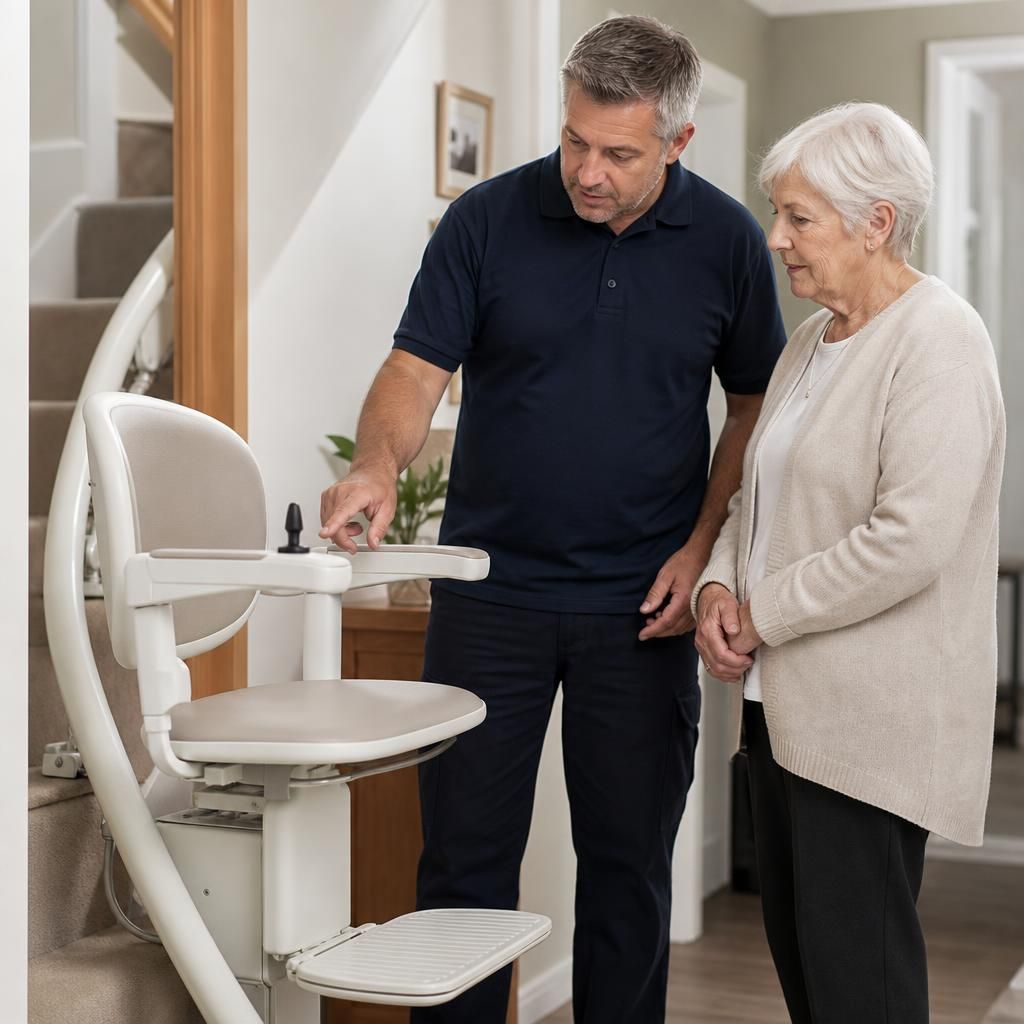
Discuss the right stairlift features for your home
Discuss your staircase, transfer needs and preferred stairlift features with Independent Stairlifts to identify the most suitable specification. We can explain how each option may affect the installation cost and provide a tailored quotation.