
What factors should I consider when estimating the total cost of an outdoor stairlift installation?
When estimating the total cost of an outdoor stairlift installation, consider the staircase layout, lift type, weather-resistant features, power supply, installation requirements and any structural or access work needed. You should also allow for assessment, delivery, warranty cover and ongoing maintenance, as outdoor conditions can affect long-term servicing needs.
The total cost of an outdoor stairlift installation depends on more than the price of the lift itself. The main factors are the staircase layout, the length and condition of the route, the level of weather protection required, the available power supply, installation access, optional features and the likely cost of future servicing. A proper survey is the most reliable way to turn these factors into an accurate, itemised quotation.
Staircase design and route
The shape and length of the stairs have a direct effect on the installation cost. A straightforward flight with a suitable landing is usually less complex than a route with several changes of direction, intermediate landings, tight bends or limited space at the top and bottom. Curved outdoor stairlifts require a rail made to follow the staircase, so the rail design and manufacturing requirements need to be included in the estimate.
Measure the complete route rather than only the visible stair treads. The survey should consider the approach to the stairs, the distance needed to park the seat safely, the available space for transfers and whether the user needs to get on or off at a different angle. A lift may need a hinged rail, a parking extension or a different seat position where a doorway, gate or narrow landing limits access.
The type and specification of stairlift
A straight outdoor stairlift generally has a simpler rail and installation process than a curved model. However, the most suitable model still depends on the user’s mobility, weight, posture and ability to transfer safely. A curved lift may cost more because it is individually configured, but it can be more appropriate where a standard straight lift would stop short of the required destination.
Check what is included in the quoted specification. Important points include the seat size, swivel or powered swivel seat, armrest controls, footrest design, safety sensors, remote controls, folding components and the maximum user weight. Choosing features solely because they are available can increase the initial cost unnecessarily; they should be matched to the user and the property.
Weather-resistant construction
Outdoor equipment must withstand rain, damp, sunlight, temperature changes and airborne dirt. The estimate should therefore allow for weather-resistant materials, protected electrical components, suitable finishes and covers for the seat, controls and charging points. Outdoor stairlifts may use more robust components than comparable indoor models, which can affect the purchase price.
Ask how the proposed lift is protected when it is not being used and whether the warranty covers exposure to the local conditions. A covered stairway may need less protection than an open, coastal or particularly exposed installation, but this should be established during the survey rather than assumed.
Power supply and electrical work
Most outdoor stairlifts use rechargeable batteries, with charging points positioned at one or both ends of the rail. The quotation should state whether a suitable power supply already exists and whether any new wiring, external sockets, protective devices or weatherproof enclosures are needed.
Additional electrical work may be required where the stairs are remote from the house, the existing circuit is unsuitable or the cable route must pass through walls, paving or other structures. Confirm whether testing, certification and making good after the work are included. Battery replacement is also a future running cost, although the timing depends on usage, battery condition and the equipment fitted.
Installation access and site preparation
Installation can become more involved if the staircase is difficult to reach, access is restricted or equipment cannot be brought directly to the site. The installer may need to work around gates, planting, uneven ground, shared paths or neighbouring boundaries. Where the route is exposed, temporary protection or additional measures may be required to complete the work safely.
Consider the condition of the stairs and surrounding surfaces. Loose paving, damaged steps, weak handrails, poor drainage or an unstable wall may need attention before the stairlift can be installed. If posts, brackets or support structures are required, the cost may include drilling, anchoring, concrete work or other structural preparation. These items should be identified clearly rather than added unexpectedly after installation begins.
Safety and access features
Features that improve safe use can affect the total price. Depending on the layout, these may include a powered swivel seat, a powered or manual hinge, an extended rail, additional charging points, weatherproof remote controls, a folding seat or a different operating control. A specialist assessment should establish which features are necessary for safe transfers and reliable access.
For an outdoor route, also consider whether the user can reach the controls in wet or cold conditions, whether the footrest provides adequate support and whether the seat can be parked under cover. A lower-priced installation may not represent good value if it does not allow the user to use the whole route safely and independently.
Assessment, delivery and installation charges
Check whether the quotation includes the initial survey, design work, manufacture of a curved rail where applicable, delivery, installation, commissioning and user instruction. Some quotations show only the equipment price, while others combine the complete project. Comparing like-for-like totals avoids overlooking labour or site costs.
Ask whether removal of an existing stairlift, disposal of packaging, return visits and remedial work are included. If the installation involves a bespoke rail, confirm the expected process for checking measurements and approving the design before manufacture.
Warranty and ongoing maintenance
Outdoor stairlifts are exposed to conditions that can increase wear and servicing requirements. Allow for routine inspections, cleaning, lubrication where appropriate, battery checks and the replacement of weather-affected parts over time. The likely maintenance cost depends on the model, exposure, frequency of use and the availability of a service plan.
Read the warranty terms carefully. Establish what is covered, how long cover lasts, whether batteries and call-outs are included, and whether maintenance must be carried out at specified intervals. A warranty may exclude damage caused by flooding, misuse or inadequate protection, so the proposed care arrangements should be understood before installation.
Permissions and VAT
Most domestic stairlift installations do not normally require planning permission, but unusual structures, listed properties, shared access routes or rented accommodation may require permission from the relevant authority, landlord or management body. It is sensible to identify these issues during the survey, particularly where the rail or supports extend close to a boundary or communal area.
Some stairlift purchases and installations for disabled or chronically ill people may qualify for VAT relief when the relevant conditions are met. Eligibility depends on the circumstances and the supplier should confirm what evidence is required. Do not assume that every outdoor installation automatically qualifies.
How to obtain a realistic estimate
Provide accurate information about the staircase, the user’s mobility, the intended start and finish points, exposure to weather and any access restrictions. During the assessment, ask for a written breakdown covering:
- the stairlift and rail specification;
- weatherproofing and protective covers;
- electrical work and charging arrangements;
- structural preparation and making good;
- delivery, installation and commissioning;
- warranty, servicing and battery replacement; and
- any applicable VAT treatment or optional features.
The most dependable estimate is based on an in-person assessment rather than a price calculated from photographs or stair length alone. Comparing itemised quotations on the same specification will show whether a lower headline price excludes essential preparation, weather protection or aftercare.
An in-person survey is the most reliable way to estimate the total cost of an outdoor stairlift installation. It allows the installer to assess the stair layout, weather exposure, access for fitting, electrical supply and any preparation needed around the route.
Ask for a written quotation that separates the stairlift, weatherproofing, electrical work, structural preparation, installation, VAT, warranty and ongoing servicing. This makes it easier to compare quotations and identify whether essential work or aftercare has been left out of the headline price.
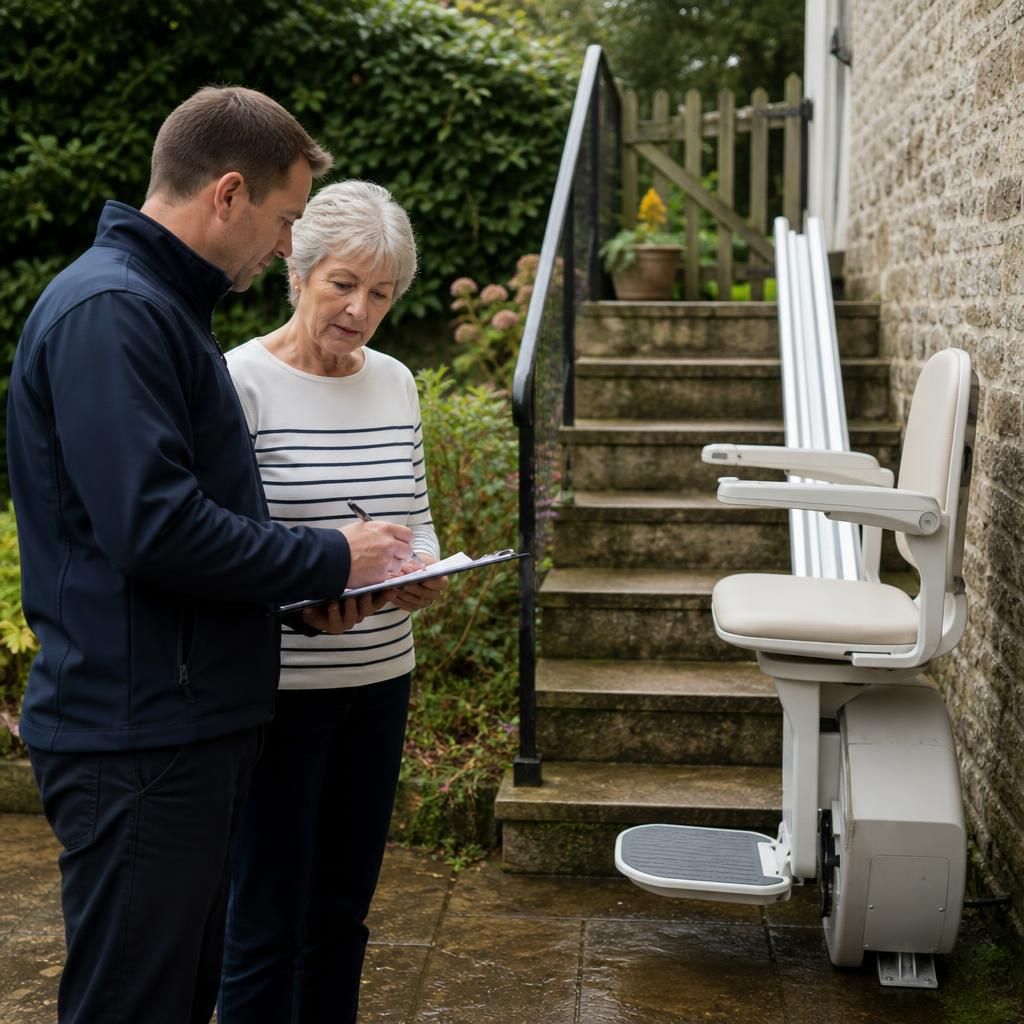
Request Your Outdoor Stairlift Cost Assessment
Request an outdoor stairlift cost assessment for an itemised quotation based on your staircase, weather exposure, power supply and installation requirements.