
How can I ensure the outdoor stairlift I choose will be durable and reliable throughout the year?
Choose an outdoor stairlift specifically designed for year-round exposure, with weather-resistant components, suitable safety features and a secure installation tailored to your staircase. Confirm that the supplier provides appropriate servicing, inspections and advice on protecting the lift from rain, frost, dirt and prolonged sunlight.
A durable, reliable outdoor stairlift is one specifically engineered for external use, rather than an indoor model adapted for occasional exposure. Year-round reliability depends on weather-resistant construction, suitable safety systems, correct installation, regular servicing and sensible protection from water, frost, dirt and strong sunlight.
When comparing outdoor stairlifts, check that the complete lift is rated for outdoor environments. This includes the rail, seat, controls, motor, batteries, charging equipment and electrical connections. Ask which parts are protected against rain, humidity, dust and temperature changes, and whether the manufacturer provides an appropriate ingress protection rating for the equipment. A lift should be suitable for the actual conditions at your property, including an exposed coastal position, a shaded damp staircase or an area that receives direct sunlight.
Look for construction that can withstand the local environment. Useful features may include:
- Corrosion-resistant rails, fixings and exposed metalwork, particularly where the property is near the coast or road salt may be present.
- Weatherproof covers and sealed controls to reduce the risk of water entering electrical components.
- UV-resistant plastics and finishes that are less likely to become brittle or fade after prolonged exposure to sunlight.
- Drainage and design details that prevent water collecting around the seat, footrest, motor or charging points.
- A secure, weather-resistant charging arrangement that is positioned where it can remain accessible without being unnecessarily exposed.
Outdoor conditions can affect performance even when there is no obvious damage. Frost, standing water, mud, leaves and grit can interfere with the rail, footrest or swivel mechanism. Snow and ice can also create a slip risk on the steps, separate from the operation of the stairlift itself. Ask how the lift should be used in freezing or wet conditions and whether it must be cleared before operation. Do not operate it if ice, debris or another obstruction could affect the rail, seat, footrest or safety sensors.
Battery performance is another important consideration. Batteries can lose capacity in cold weather and may not recharge correctly if the lift is left away from its charging point. Use the charging points as instructed and leave the lift parked in its recommended position when it is not in use. If the lift is used infrequently, regular charging is still important because batteries can discharge while idle. Ask what signs indicate that the batteries need attention and how replacement is handled.
Safety features should be appropriate to the layout and conditions of the staircase. Depending on the installation, these may include obstruction sensors, a reliable seat belt, swivel or folding-seat safety mechanisms, safe armrest controls, remote controls and a manual lowering or emergency procedure. Outdoor steps may be uneven, narrow, steep or exposed to poor lighting, so the lift should be assessed alongside the staircase rather than selected from specifications alone.
Installation quality has a direct effect on long-term reliability. The installer should assess the condition and strength of the steps, the fixing points, drainage, access around the top and bottom landings, the position of charging points and any nearby walls, gates or paths. The rail must be aligned securely without creating avoidable contact with standing water, foliage or other obstacles. On a shared or public access route, the installation should also avoid creating a trip hazard or reducing safe passage.
A bespoke assessment is particularly valuable where the staircase is curved, has intermediate landings, changes direction or follows an uneven external path. The solution may need a carefully positioned rail, weather protection, modified parking arrangements or controls located for safe access. The installer should explain how the lift will operate in every section of the route, including where the user will get on and off.
Before choosing a model, ask the supplier the following practical questions:
- Is the lift designed and warrantied for permanent outdoor use in the UK?
- Which components are weatherproof, and what protection is provided for electrical connections and charging equipment?
- How does the lift perform in heavy rain, frost, snow, strong sunlight and coastal conditions?
- What cleaning, covering and parking routine is recommended?
- How often should the lift be serviced, and are outdoor inspections different from indoor servicing?
- What should you do if the lift becomes wet, stops charging or is affected by ice or debris?
- What is covered by the warranty, and are environmental damage, battery replacement and call-outs treated separately?
Regular maintenance should include checking the rail, fixings, seat, footrest, safety sensors, controls, batteries and charging contacts. The service engineer can identify corrosion, loose components, unusual noise, reduced battery performance or water ingress before these issues cause a breakdown. Keep the rail and surrounding steps clear, clean away dirt using the method recommended for the model and avoid pressure-washing the lift or applying unapproved lubricants and cleaning products.
Protective covers can help when the lift is parked, but only use a cover approved or recommended for that model. A cover that traps condensation, interferes with charging or catches in moving parts may cause more problems than it prevents. If the lift is under a canopy, ensure that rainwater cannot run directly onto it and that the area remains well ventilated.
Reliability also depends on having a clear support arrangement. Confirm who to contact for a breakdown, whether engineers cover your area, how urgent faults are handled and whether replacement parts remain available. Keep the operating instructions and service records accessible, and report changes such as slower movement, repeated charging problems, unusual sounds, corrosion or a safety sensor activating without an obstruction.
The best choice is therefore not simply the lift with the most weather-resistant specification. It is a model whose design, capacity, controls and safety features suit the user, installed on a staircase that has been properly assessed, with servicing and everyday protection planned from the outset. A detailed outdoor assessment from Independent Stairlifts can establish the environmental demands of your property and identify the installation and maintenance arrangements needed for dependable use throughout the year.
Year-round outdoor stairlift reliability depends on the whole installation being suitable for external conditions, not just on the seat or motor having a weather-resistant finish. The rail, controls, batteries, charging points, fixings and electrical connections should all be designed and protected for outdoor use.
During the assessment, explain the conditions at your property, including direct sunlight, heavy rain, frost, coastal air, mud, leaves and standing water. The installer should identify suitable fixing points, keep drainage clear and position the charging equipment where it remains accessible without unnecessary exposure. Sealed controls, corrosion-resistant components, UV-resistant materials and effective drainage can help reduce faults caused by moisture, temperature changes and debris.
Ask how to protect and maintain the lift throughout the year. Keep the rail and steps clear, park the lift at its recommended charging point, remove ice or debris before use and use only manufacturer-approved covers or cleaning products. Regular servicing can also identify corrosion, loose fixings, water ingress and weakening batteries before they affect safe operation.
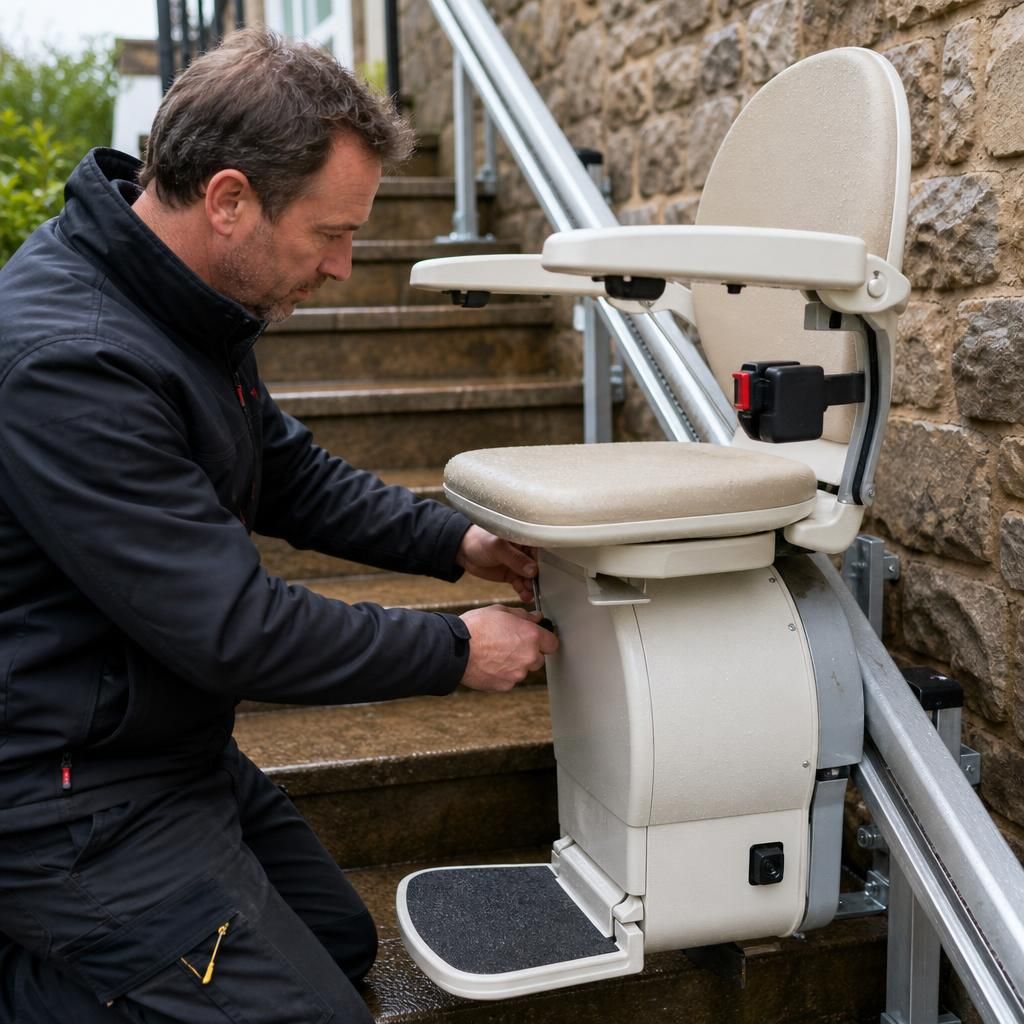
Arrange Your Outdoor Stairlift Assessment
Arrange an outdoor stairlift assessment with Independent Stairlifts to review your staircase, exposure to weather, charging position and access requirements. We can recommend a suitable year-round solution and explain the installation, servicing and protection it will require.