
Are there specific maintenance requirements for outdoor stairlifts that differ from indoor models?
Yes. Outdoor stairlifts need the same essential servicing as indoor models, but they also require additional protection and checks for rain, moisture, frost, dirt, temperature changes and UV exposure, including inspection of covers, seals, charging points, track and electrical components.
Outdoor stairlifts require all the routine servicing associated with indoor models, plus additional checks to protect against rain, damp, frost, dirt, temperature changes and sunlight. Maintenance should therefore cover the lift’s mechanical and electrical systems as well as its weather protection, charging equipment, covers, track and surrounding installation.
Use the manufacturer’s servicing schedule. The exact requirements vary according to the stairlift design, the exposure of the staircase and how often the lift is used. A professional service should be arranged at the intervals specified for your model and sooner if you notice a change in performance, unusual noise, reduced battery life or damage caused by weather. Keeping servicing records is also useful for demonstrating that the lift has been maintained correctly and for supporting any applicable warranty terms.
Weather protection is the main difference from indoor maintenance. An outdoor stairlift is designed to tolerate external conditions, but it is not maintenance-free. Its covers, seals and protective casings should be inspected for cracks, loose sections, water ingress or deterioration. If a cover becomes damaged, moisture can reach electrical components, controls or the battery system. Do not continue using the lift if water has entered the equipment or if a protective cover is no longer secure; arrange an inspection instead.
During a professional service, the engineer will generally assess:
- the condition, alignment and fixings of the track, including signs of corrosion, movement or damage;
- the carriage, drive mechanism, rollers, gears and other moving parts;
- the seat, armrests, footrest, swivel mechanism, seat belt and safety sensors;
- the operation of the controls, stop switches, safety edges and obstruction sensors;
- the batteries, charging contacts, charger and electrical connections;
- seals, covers, cable routes and other components exposed to rain or condensation;
- the installation points, steps, brackets and any changes to the external staircase that could affect safe operation; and
- the lift’s performance under normal operating conditions, including stopping, starting and parking.
Moisture and drainage need particular attention. Water should be able to run away from the track, parking area and charging point rather than collect around the equipment. Leaves, mud, moss, grit and standing water can interfere with sensors, obstruct the track or accelerate corrosion. Keep the staircase and the lift’s route clear, but avoid directing a hose or pressure washer at the stairlift. Clean external surfaces only as advised in the user instructions, using a suitable cloth and cleaning product.
Cold weather can affect batteries and moving parts. Frost and low temperatures may reduce available battery performance, while ice can restrict movement or make steps and landings unsafe. Before use, check that the track, seat, footrest and parking area are free from ice, snow and debris. Never force the lift to move if part of the mechanism appears frozen. Report repeated low-battery warnings or failure to charge, as these may indicate a battery, charger or contact problem rather than normal winter behaviour.
Sunlight and temperature changes can also cause gradual wear. Ultraviolet exposure may make some plastics, cushions or covers brittle over time, while repeated heating and cooling can affect seals and connections. A properly fitted weatherproof cover can reduce exposure when the stairlift is parked, provided it is used in accordance with the manufacturer’s instructions. The cover should not trap moisture against the equipment or interfere with charging and should be removed before operating the lift if required by the model.
Battery and charging checks are essential. Outdoor stairlifts normally rely on rechargeable batteries so that the lift can operate when it is away from a charging point or during a power interruption. Keep charging contacts clean and make sure the lift is parked in its designated charging position when not in use. If the lift is used infrequently, it still needs to be charged as instructed. A stairlift that is left unused for an extended period may develop a flat or weakened battery, particularly in cold conditions. Battery replacement should be carried out by a suitably qualified engineer using compatible parts.
Users can carry out simple visual checks between services. Look for loose covers, damaged cables, rust, unusual deposits, standing water, obstructions on the track and changes in the way the lift starts or stops. Check that the seat belt, armrests and footrest remain secure and that the controls respond correctly. These checks do not replace a service, and users should not remove casings, adjust safety components, lubricate parts or attempt electrical repairs unless specifically instructed to do so.
Contact us promptly if the stairlift makes a new grinding, clicking or squealing noise, moves unevenly, stops unexpectedly, fails to charge, shows a fault indication or has been exposed to flooding or significant water ingress. It should also be inspected after accidental impact, damage from falling branches or alterations to the steps, wall or landing around the installation. Switch off the lift only in the manner described in the user instructions and avoid using it until the cause has been established if its safety functions are not working normally.
Outdoor stairlifts can be reliable throughout the year when the model is correctly suited to the location and its protective features are kept in good condition. The key difference from an indoor lift is not a completely different servicing regime, but the need for more careful attention to weather exposure, corrosion, drainage, charging and seasonal conditions. Following the manufacturer’s guidance and arranging professional maintenance helps identify small problems before they affect safe access to the property.
The main maintenance difference between an outdoor and indoor stairlift is the need to protect against weather exposure. Rain, condensation, frost, dirt and sunlight can affect covers, seals, charging contacts, batteries and electrical connections, even when the lift is designed for external use.
Check the lift regularly for damaged covers, standing water, rust, loose fittings or debris around the track and charging point. Keep the route clear and park the lift as instructed so its batteries can charge. Do not use a pressure washer or attempt to remove casings, repair electrical parts or force frozen components. Arrange a professional inspection if water has entered the equipment, charging performance changes or the lift begins making unusual noises.
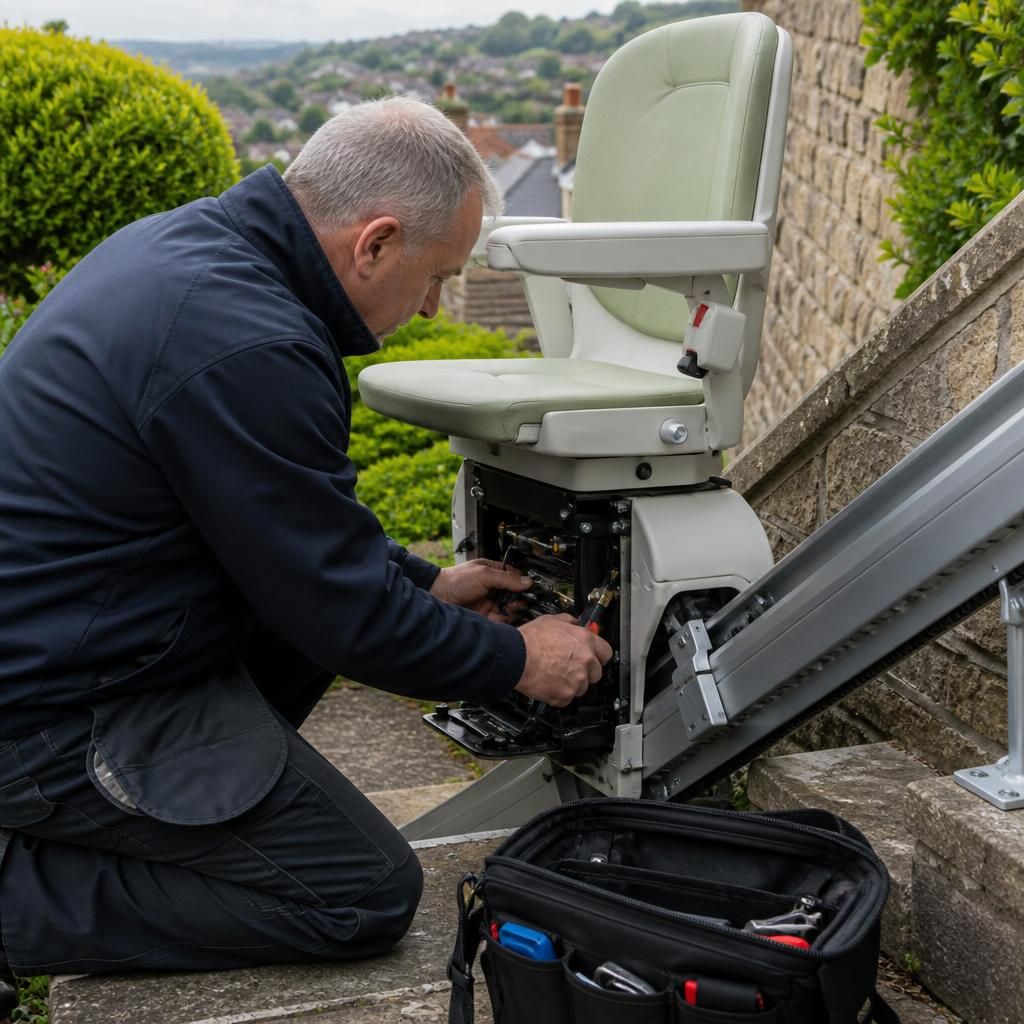
Arrange outdoor stairlift maintenance
If your outdoor stairlift is due for a service or showing signs of weather-related wear, contact Independent Stairlifts to arrange a professional maintenance inspection.