
Are there any additional maintenance costs specific to outdoor stairlifts?
Outdoor stairlifts can have additional maintenance costs because exposure to rain, frost, sunlight and dirt may require more frequent cleaning, weather protection and checks for corrosion or water damage. Allow for routine servicing and possible replacement of weather-affected parts, with the exact cost depending on the stairlift model, installation environment and service agreement.
Yes. Outdoor stairlifts can involve additional maintenance costs because they are exposed to rain, frost, sunlight, wind, dirt and changing temperatures. Compared with an indoor model, you may need more frequent cleaning and inspections, weather protection, corrosion treatment and replacement of components affected by moisture or ultraviolet light. The actual cost depends on the stairlift model, the condition of the installation site, how heavily it is used and what is included in your warranty or service agreement.
Routine servicing and inspections
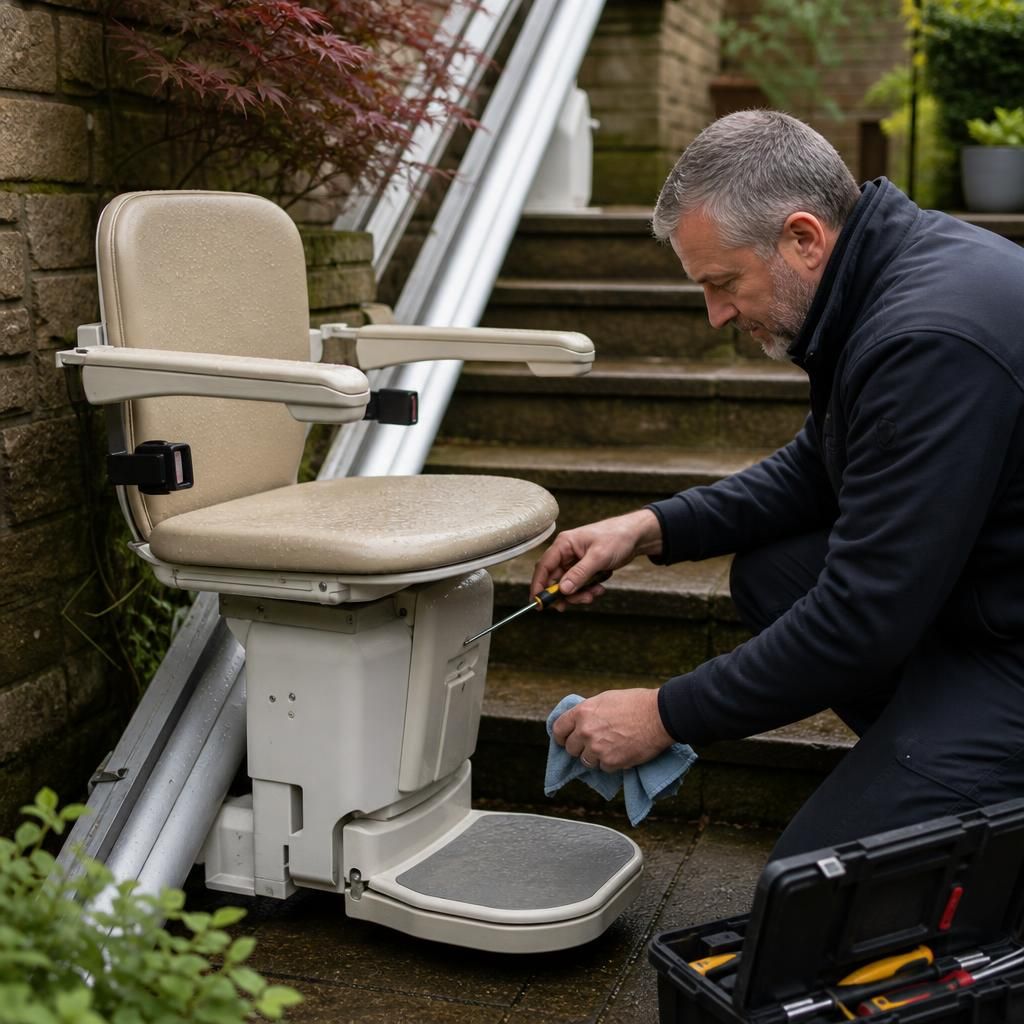
An outdoor stairlift should be serviced in line with the manufacturer’s recommendations, and sooner if it develops unusual noises, jerky movement, charging problems or reduced battery performance. A service normally involves checking the rails, drive system, safety sensors, seat, armrests, footrest, controls, charging points and batteries. The engineer may also check for loose fixings, water ingress, corrosion and damage to protective covers.
Outdoor installations can require more time to inspect than indoor stairlifts, particularly where the track is exposed to mud, leaves, grit, salt air or standing water. If your service plan includes routine inspections, these checks may already be covered. If not, you should allow for an engineer’s visit and any replacement parts identified during the inspection.
Cleaning and weather protection
Regular cleaning is an important part of outdoor stairlift maintenance. Dirt and grit can collect on the track, drive components and footrest, while leaves and other debris may interfere with sensors or moving parts. Cleaning may be something you can carry out yourself in accordance with the manufacturer’s instructions, but specialist cleaning or remedial work may be chargeable.
A protective cover can help shield the seat, controls and upholstery when the stairlift is not in use. Covers may need replacing if they become brittle, torn or waterlogged. Some outdoor models also use weather-resistant upholstery, sealed controls or protective housings. These features reduce exposure but do not make the stairlift maintenance-free.
Do not pressure-wash an outdoor stairlift or direct a hose at its motor, batteries, charging points or control units. Water can enter electrical components even when the equipment is designed for outdoor use. Use only the cleaning methods recommended for your model.
Corrosion and water-related repairs
Moisture is one of the main reasons outdoor stairlifts may cost more to maintain. Persistent damp, coastal air, road salt and poor drainage can accelerate corrosion on fixings, rails, electrical contacts and other exposed metal parts. Surface corrosion may be dealt with during servicing, but damaged fixings, covers, contacts or drive components may need replacement.
Water ingress can also affect control boards, charging equipment, wiring and sensors. These parts can be more expensive to replace than ordinary wear items, particularly if the cause is prolonged exposure or accidental damage rather than a fault covered by the warranty. Keeping the track clear, checking that water drains away from the installation and reporting damaged seals or covers promptly can help limit the repair required.
Batteries and charging equipment
Outdoor temperatures can affect battery performance, especially during cold weather. Batteries are consumable components and will eventually need replacing, whether the stairlift is installed indoors or outdoors. An outdoor model may place greater demands on the batteries if it is exposed to cold, used infrequently or not left correctly positioned at its charging point.
Charging points should be kept clean and unobstructed. If the lift is not charging properly, avoid repeatedly using it until the fault has been checked. A battery replacement, charger repair or electrical inspection may be an additional cost unless covered by your agreement.
Parts that may experience additional wear
Outdoor conditions can shorten the working life of some components or make faults more likely. Depending on the installation, maintenance may include:
- Replacing weather-damaged upholstery, armrest controls or protective covers.
- Cleaning or replacing corroded electrical contacts and fixings.
- Replacing worn seals, sensor covers or water-resistant enclosures.
- Checking and replacing batteries or charging components.
- Removing grit, leaves and mud from the rail and drive mechanism.
- Repairing damage caused by frost, impact, flooding, animals or nearby landscaping work.
Not every outdoor stairlift will need all of these items. They are examples of costs that may arise in addition to normal servicing and should not be treated as an automatic maintenance schedule.
Factors that affect the overall maintenance cost
The most important cost factors are the stairlift’s design, the length and position of the track, exposure to weather, frequency of use and ease of access for an engineer. A lift on a sheltered porch may need less remedial work than one installed beside an open, north-facing wall or in a coastal location. A track exposed to heavy rain, falling leaves or de-icing salt may also need more regular attention.
The installation itself can affect future costs. Poor drainage, overhanging trees, a damaged wall, uneven paving or a position that allows water to collect around the charging point can all increase wear. During a service, ask the engineer to identify environmental causes rather than simply replacing the affected part.
What a service agreement may and may not cover
Before budgeting for maintenance, check the terms of your warranty or service agreement. Coverage can differ between providers and models. It may include labour, call-outs, routine servicing, batteries or selected replacement parts, while excluding accidental damage, misuse, flooding, corrosion caused by the environment or consumable items.
Ask specifically whether the agreement covers outdoor exposure-related faults, emergency call-outs, batteries, weather covers and parts damaged by water or corrosion. Also check whether servicing must be completed at specified intervals to keep the warranty valid. Keeping records of services and reporting faults promptly can help establish whether a repair is covered.
How to keep additional costs under control
- Follow the manufacturer’s cleaning, charging and storage instructions.
- Keep leaves, mud, grit, snow and ice away from the rail, sensors and charging points.
- Use a suitable cover when the stairlift is not in use, where recommended.
- Check visually for cracked covers, loose fixings, rust, pooling water and damaged cables.
- Arrange repairs when a minor fault first appears instead of continuing to use the lift.
- Do not apply oils, lubricants or cleaning products unless they are approved for that model.
- Use a qualified stairlift engineer for electrical work, adjustments and replacement parts.
In practice, the additional maintenance cost of an outdoor stairlift is usually a combination of routine servicing, weather protection and occasional replacement of components affected by the environment. A clear assessment of the installation location and a service agreement that states what is covered will give you the most accurate view of your likely ongoing costs. If your stairlift is showing signs of corrosion, water ingress or charging difficulty, contact us before the problem causes further damage.
Outdoor stairlift maintenance costs are mainly affected by exposure to rain, frost, dirt and sunlight. Regular servicing can identify corrosion, water ingress, battery problems and damaged covers before they develop into more expensive repairs.
Check whether your service agreement includes outdoor-specific issues such as call-outs, batteries, weather covers and parts affected by corrosion or water damage. Keeping the rail, sensors and charging points clear of leaves, mud and standing water will also help reduce avoidable wear.
Get Advice on Outdoor Stairlift Maintenance Costs
If you need advice about servicing, weather-related damage or your outdoor stairlift maintenance costs, contact Independent Stairlifts to arrange an assessment and confirm what your warranty or service agreement covers.