
What should I consider regarding the cost implications of installing a stairlift in an outdoor setting?
The cost of installing an outdoor stairlift depends on the staircase layout, the equipment required, weatherproofing, power supply and the complexity of installation. You should also allow for ongoing maintenance and any additional work identified during a site survey, so a tailored assessment is needed for an accurate quote.
The cost of an outdoor stairlift depends on more than the stairlift itself. The staircase layout, length and gradient, exposure to weather, availability of a suitable power supply, condition of the steps and complexity of the installation can all affect the final price. Outdoor equipment usually requires additional protection and materials compared with an indoor installation, so an accurate quotation should follow a site survey rather than relying on a standard price.
The type and layout of the staircase are the first considerations. A straight outdoor staircase is generally simpler to equip than one with bends, landings or changes in direction. A curved installation requires a rail designed around the exact route, while a staircase with uneven steps, restricted access or unusual angles may need further design and fitting work. The length of the rail and the number of steps also affect the equipment and installation time required.
Access at the top and bottom of the stairs is equally important. There must be enough room for the user to get on and off the stairlift safely, and the chair should not obstruct a doorway, path or landing. Additional features, such as a swivel seat, folding mechanism or extended rail, may be recommended where space is limited. These features can increase the overall cost but may be necessary for safe and practical use.
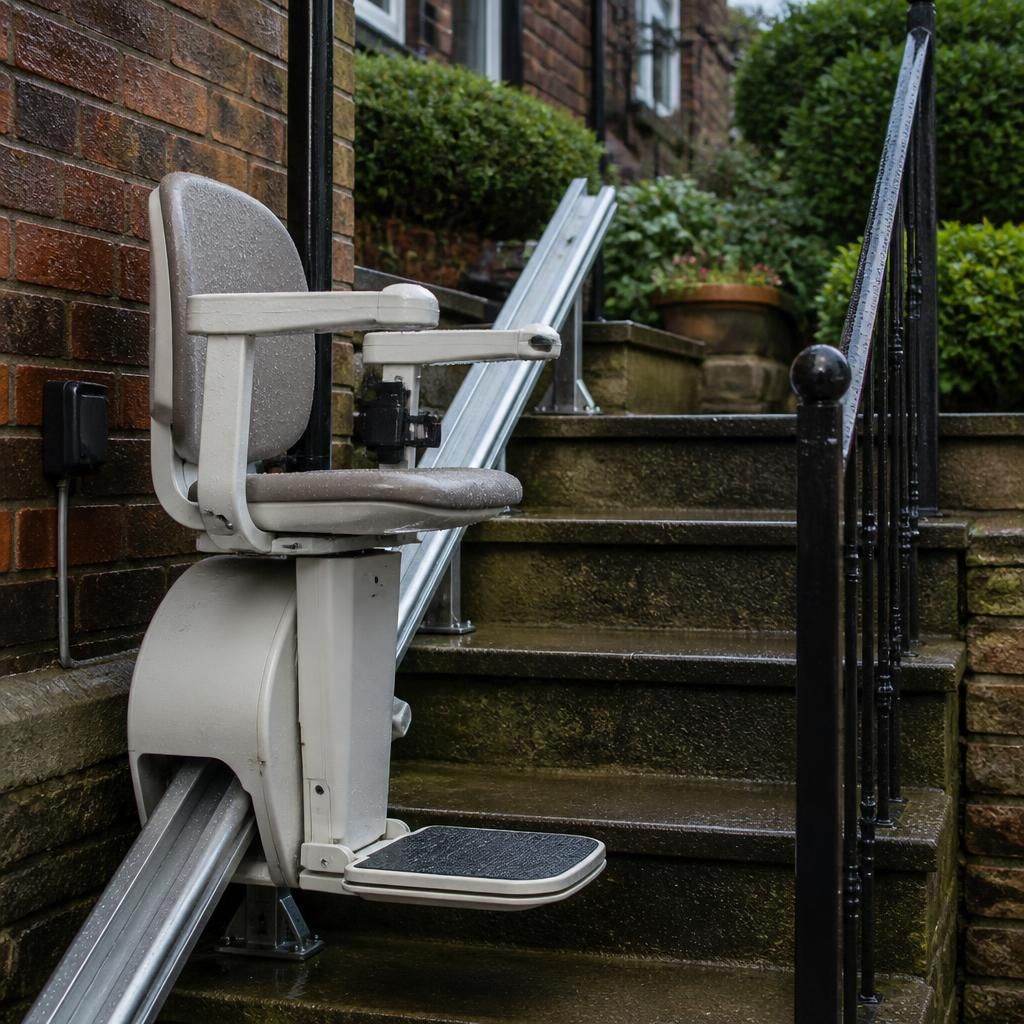
Outdoor weatherproofing is a significant cost consideration. An outdoor stairlift needs protection against rain, damp, frost, sunlight and changes in temperature. This can include weather-resistant covers, sealed electrical components, corrosion-resistant fixings and materials suitable for external use. The level of exposure matters: a sheltered staircase may need less protection than one that is fully open or close to the coast, where salt in the air can accelerate corrosion.
A suitable cover or storage arrangement should be considered when the stairlift is not in use. Keeping the seat and controls protected can help limit weather-related wear, although it may add to the initial cost. The equipment should not be treated as an indoor model placed outside; an outdoor stairlift must be specified for external conditions by the installer.
The power supply can introduce additional installation costs. The installer will need to establish whether an appropriate electrical supply is already available and safely positioned. If not, electrical work may be required to provide a dedicated connection, route cabling or protect the supply from the elements. The condition of the existing electrics and the distance between the power source and the stairlift can influence the work involved.
Outdoor stairlifts commonly use rechargeable batteries, allowing the lift to operate during a temporary power interruption. However, the batteries still need to recharge through the charging points, so the location of the equipment and the availability of a reliable supply remain important. Battery replacement is an eventual maintenance cost and should be included in your longer-term planning.
The condition of the staircase and surrounding ground may affect the quotation. Fixings must be secure and suitable for the construction of the steps, wall or supporting structure. Repairs, reinforcement, resurfacing or adjustments may be needed if steps are cracked, loose, unstable or affected by water. Drainage and standing water should also be considered, as persistent damp can damage both the staircase and the lift.
Where the staircase is particularly narrow, steep or difficult to access, the installation team may need additional time, equipment or labour. Restricted access to the property can also affect how the stairlift is delivered and assembled. These practical issues are difficult to assess accurately without visiting the property, which is why a survey is an important part of obtaining a reliable price.
Allow for ongoing maintenance as well as the initial installation. Outdoor equipment is exposed to harsher conditions than an indoor stairlift and may require regular checks of the rail, charging points, batteries, seat, controls and weatherproof covers. Cleaning and protecting exposed components can help reduce avoidable deterioration, but some parts will eventually need servicing or replacement.
When reviewing a quotation, check what is included in the warranty and whether it covers outdoor use. Confirm how faults are handled, whether call-outs are included, and whether routine servicing, batteries or replacement weatherproofing are charged separately. A lower purchase price may not represent the lowest overall cost if the equipment has limited outdoor protection or higher maintenance requirements.
A reconditioned stairlift may be an option, but it must be suitable for external installation. Not every reconditioned model is designed for outdoor conditions, and the rail, controls, batteries and protective components must all be assessed for the proposed environment. Ask whether the equipment is approved for outdoor use, what has been replaced or tested, and what warranty and aftercare are provided. Reusing a stairlift is only appropriate when its specification matches the staircase and expected exposure.
You should also ask whether any additional work is excluded from the initial price. Possible extras include electrical alterations, repairs to steps or surfaces, removal of an existing lift, extended rails, weatherproof storage, difficult-access installation and remedial work identified during the survey. A written quotation should clearly separate the stairlift, fitting, electrical work, optional features, warranty and future servicing.
For some customers, VAT treatment may affect the amount payable. Eligibility for VAT relief depends on the individual circumstances and the nature of the work, so it should be discussed before the quotation is accepted rather than assumed.
The most reliable way to compare outdoor stairlift costs is to compare like-for-like quotations. Check that each quote covers the same rail design, outdoor rating, weather protection, electrical requirements, installation work, warranty and aftercare. An assessment at the property will identify hazards, access requirements and environmental conditions that cannot be judged from photographs alone, allowing the recommended solution and its cost to be tailored to your staircase.
Weatherproofing is a major cost consideration when installing a stairlift outdoors because the equipment must withstand rain, frost, sunlight and damp. An outdoor model should have suitable protection for its electrical components, corrosion-resistant fixings and materials designed for external use; an indoor stairlift should not simply be installed outside.
The amount of protection required depends on the staircase’s exposure. A sheltered entrance may need less additional protection than an open staircase or a location near the coast, where moisture and salt can accelerate corrosion. Ask your quotation to specify the outdoor rating, protective covers, charging arrangements and warranty terms, as these details affect both the initial price and future maintenance costs.
Arrange Your Outdoor Stairlift Assessment
Arrange an outdoor stairlift assessment so we can review your staircase, access, power supply and weather exposure before preparing a tailored quotation.