
What factors should I consider when comparing the cost of installing a stairlift in different types of staircases?
When comparing stairlift installation costs, consider the staircase type, layout, length, access conditions and any structural or electrical work required. Straight stairlifts are usually simpler to install, while curved and outdoor systems generally cost more because they require bespoke design, weather-resistant components or additional fitting work.
The cost of installing a stairlift varies mainly according to the staircase type, the amount of bespoke work required and the condition of the installation area. A straight indoor stairlift is usually the simplest and most predictable option because it can be fitted to a single, consistent rail. Curved, split-level, narrow, outdoor and unusually shaped staircases generally require more detailed surveying, made-to-measure equipment or additional protection from the weather, so their installation costs can be higher.
Comparing prices is most useful when each quotation is based on the same information and includes the complete installation. A low initial figure may not be directly comparable with another quotation if it excludes items such as dismantling an existing lift, alterations to the electrical supply, delivery, building work, VAT where applicable, or future removal. Ask for a written breakdown so you can compare like for like rather than looking only at the headline price.
Staircase type and layout
The design of the staircase is the first major cost consideration:
- Straight staircases: A standard straight stairlift normally uses a single rail fitted along a continuous flight. The simpler design and installation process often make this the most economical option, although the rail length, access at the top and bottom, and any obstructions still need to be assessed.
- Curved staircases: A curved stairlift requires a rail designed to follow the bends, landings, changes in gradient or multiple flights. The rail is generally made to suit the individual staircase, and the survey, design and fitting process are more involved.
- Staircases with landings or multiple flights: A lift may need to travel around corners or connect different sections of the staircase. Depending on the layout, the appropriate solution could involve a single bespoke system or more than one lift, which affects both equipment and installation requirements.
- Narrow or restricted staircases: Limited width can require a compact seat, a folding or retractable rail, altered parking positions or careful positioning to preserve access. These adaptations can affect the specification and the labour involved.
- Outdoor staircases: An external stairlift needs weather-resistant materials, suitable covers and protection for its charging and electrical components. The condition of the steps, exposure to rain or frost, drainage and the route to the electrical supply can all influence the total cost.
Rail design and length
For a straight lift, the rail length is normally based on the measured flight and the required parking position. A longer staircase may need additional rail sections or a different configuration. A curved rail is assessed in three dimensions, taking account of the staircase angle, turns, intermediate landings, overhangs and the available space at each end. More complex geometry generally means more design and manufacturing work.
The rail may also need to extend beyond the first or last step so that the user can get on or off safely on a landing. This can improve access but may require a hinged, sliding or shortened rail if a doorway, hallway or another route would otherwise be obstructed. The cost should therefore be considered alongside practicality and safe everyday use.
Condition and construction of the staircase
Most stairlifts are secured to the steps rather than the wall, but the steps and surrounding structure must still be suitable. Loose, damaged or uneven treads may need attention before installation. A particularly narrow staircase, unusual tread shape, fragile surface or restricted fixing position can require additional brackets, alternative fixings or preparatory work.
Where the staircase is being altered, ask whether the quotation includes making good any affected surfaces. Moving furniture, removing a banister, adapting a doorway or carrying out joinery work may be separate from the stairlift installation itself. These requirements should be identified during the home assessment rather than discovered on the fitting day.
Electrical requirements
Stairlifts usually charge through a dedicated charging point at one or both ends of the rail, depending on the model. The installer should check whether there is a suitable nearby socket and whether the electrical supply is safe and accessible. Installing a new socket, extending wiring or resolving an electrical fault may add to the overall cost. Outdoor systems may need additional weatherproof electrical protection and a suitably located supply.
Equipment specification and customisation
The chosen features can change the equipment price even where the staircase itself is straightforward. Relevant options may include a powered swivel seat, powered footrest, folding or retractable rail, alternative seat dimensions, a higher weight capacity, additional remote controls or a different upholstery and finish. These features should be selected according to the user’s mobility, transfer ability and home layout, rather than added simply because they are available.
For a curved installation, the rail itself is already bespoke, but the seat and controls can also be tailored. A professional assessment helps establish which adaptations are necessary for safe transfers and which are optional conveniences. The quotation should identify these separately so you can understand how each choice affects the price.
Access, fitting and removal work
Installation labour depends not only on the stairlift but also on how easily the property can be accessed. Tight hallways, limited parking, several flights of stairs, difficult delivery routes or a need to protect flooring and furnishings can make the work more time-consuming. A curved or outdoor system may also require more preparation and testing than a standard indoor straight lift.
If an existing stairlift is being replaced, establish whether removal and disposal are included. Reusing a compatible rail is not normally possible when the new system has a different design or the staircase has changed, and an old installation may need to be dismantled before the new one can be fitted. Any associated repairs or storage requirements should be shown clearly in the quotation.
New, reconditioned and temporary options
A reconditioned stairlift may reduce the equipment cost where a suitable model is available, particularly on a standard straight staircase. Availability is more limited for bespoke curved rails because the rail is made for a specific layout and may not be reusable elsewhere. A reconditioned option should still be assessed for compatibility, safety, condition, warranty cover and the cost of adapting it to the property.
For a short-term requirement, hiring may be worth discussing, although availability, minimum hire periods, installation and removal charges can affect the overall value. Compare the full cost over the expected period of use rather than comparing only the weekly or monthly rate with a purchase price.
What a useful quotation should include
- The stairlift model and whether it is new or reconditioned.
- The staircase type, rail design and any bespoke measurements.
- Seat, control and safety features included in the specification.
- Delivery, fitting, testing and user instruction.
- Electrical work, structural preparation, rail extensions or special brackets where required.
- Removal or disposal of an existing lift, if applicable.
- Warranty arrangements and what servicing or call-out support covers.
- Any exclusions, additional charges and applicable VAT treatment.
It is also important to compare the support included after installation. A cheaper system may not provide the same warranty period, response arrangements or servicing options as another quotation. Clarify who to contact if the lift stops working, whether routine maintenance is recommended, and whether parts and labour are covered under the stated terms.
The most reliable comparison comes from an in-home assessment rather than a price based solely on a description or photograph. During the survey, the installer can measure the staircase, check the user’s transfers and posture, identify access or electrical issues, and explain where a straight, curved, outdoor or reconditioned solution is appropriate. Independent Stairlifts can then provide a specification-based quotation, allowing you to compare the total installed cost and practical suitability of each option before making a decision.
Comparing stairlift installation costs by staircase type means assessing the complete fitted solution, not just the price of the lift itself. A straight indoor staircase will usually need less bespoke work than a curved or outdoor staircase, while rail length, access, electrical requirements and the condition of the installation area can also change the total cost.
For a fair comparison, ask each installer to confirm what is included in the quotation. This should cover the stairlift, rail, delivery, fitting, testing and user instruction, as well as any required electrical work, rail extensions, special brackets or removal of an existing lift. Outdoor installations should also account for weather-resistant components and suitable protection for the electrical supply.
- Straight staircase: check the rail length, parking position and any obstructions at the top or bottom.
- Curved or multi-flight staircase: confirm that the bespoke rail design, measurements and fitting are included.
- Outdoor staircase: ask about weather protection, drainage, charging arrangements and the condition of the steps.
- Narrow or restricted staircase: check whether a compact seat, folding rail or altered fixing arrangement is needed.
A home assessment is the most reliable way to identify these differences. It allows the specification to be based on the user’s transfers and the staircase layout, so quotations can be compared on practical suitability as well as total installed cost.
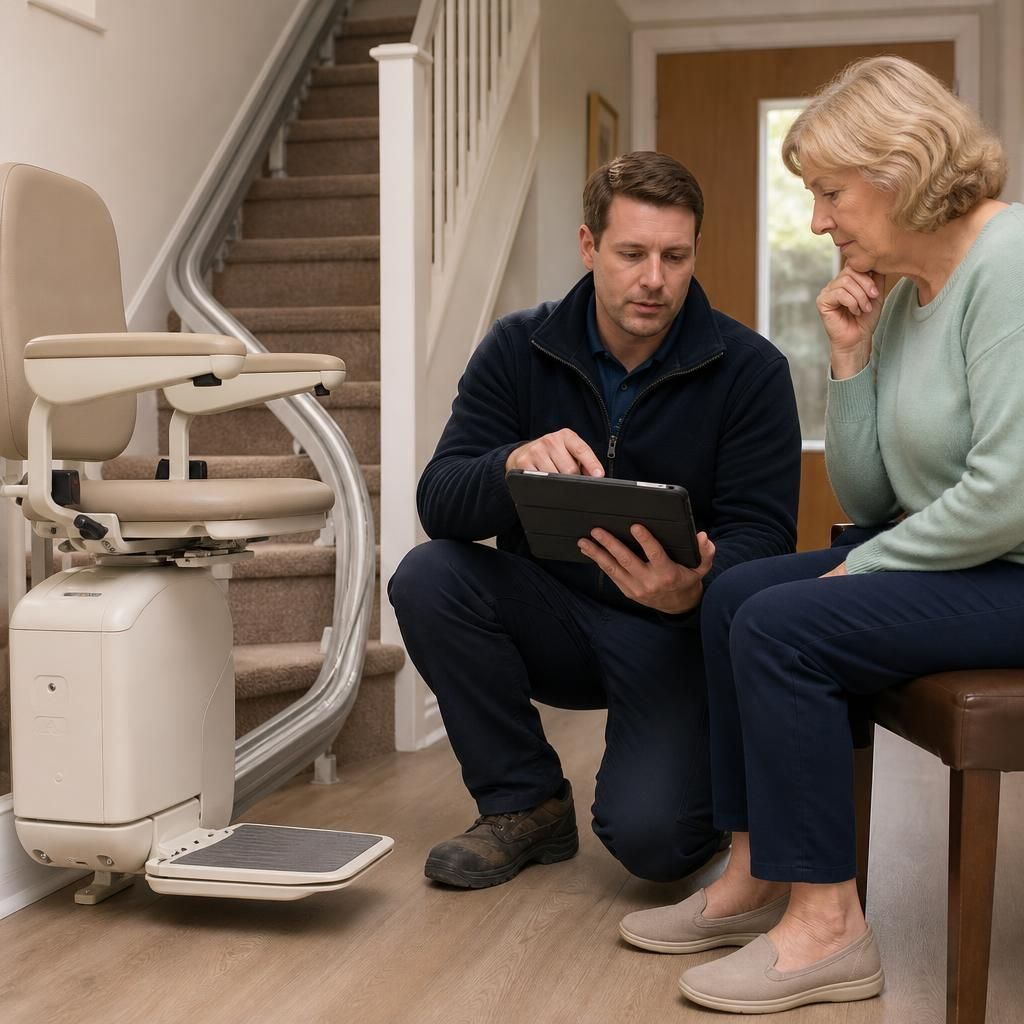
Arrange a Stairlift Assessment and Compare Your Installation Options
Arrange a home assessment with Independent Stairlifts to compare suitable straight, curved or outdoor stairlift options, including the complete installation requirements. We can provide a clear, specification-based quotation for your staircase and needs.