
What factors influence the overall cost of installing a stair chair lift?
The overall cost of installing a stair chair lift is mainly influenced by the staircase layout, the type of lift required, installation complexity and any features or adaptations selected. Straight stairlifts are generally simpler to install, while curved, outdoor or heavily customised systems usually require more detailed surveying, bespoke equipment and additional fitting work.
The overall cost of installing a stair chair lift is determined by the staircase, the type of equipment required and the work involved in fitting it safely. A straight indoor stairlift is usually the simplest option, whereas a curved, outdoor or highly customised installation involves more detailed surveying, bespoke components and additional installation time.
Staircase layout and design
The shape and construction of the staircase have a direct effect on the equipment and labour required. A straight flight with a suitable electrical supply generally needs a standard rail and a relatively straightforward installation. A staircase with bends, intermediate landings, multiple flights or changing gradients may require a made-to-measure curved rail. The survey will establish whether the lift can follow the staircase accurately while leaving sufficient room for people to use the stairs safely.
Narrow staircases, tight turns and restricted spaces at the top or bottom can also affect the specification. In some homes, the stairlift may need a swivel seat, folding components or a modified rail to prevent obstruction at a doorway, hallway or landing. These adaptations can increase the overall cost because they require additional design and fitting work.
The type of stairlift selected
Straight, curved, outdoor and reconditioned stairlifts have different cost considerations:
- Straight stairlifts: These typically use a standard rail and are less complex to manufacture and install, provided the staircase and access points are suitable.
- Curved stairlifts: These are designed around the individual staircase. The bespoke rail, detailed measurements and more involved installation generally make them more expensive than straight models.
- Outdoor stairlifts: These must withstand exposure to moisture, temperature changes and dirt. Weather-resistant materials, protective finishes and suitable charging arrangements can affect the specification and cost.
- Reconditioned stairlifts: A reconditioned model may reduce the equipment cost where a suitable system is available. However, the rail must still be appropriate for the staircase, and installation, safety checks and any required adaptations remain part of the assessment.
Seat, controls and safety features
The basic lift may be suitable for some users, but the most appropriate specification depends on posture, balance, leg movement and how the person approaches the staircase. Options such as a powered swivel seat, powered footrest, adjustable seat height, a lift-up seat, extra upholstery or a higher weight capacity can change the price.
Controls are another consideration. Standard armrest controls may be sufficient, while remote controls can be useful when the stairlift needs to be sent between floors. Folding rails, hinged rails and powered options may be needed if a doorway, corridor or passage would otherwise be obstructed. These features are not simply cosmetic upgrades; they may improve access and make the installation more practical for the household.
Installation complexity
The installation cost includes more than placing the chair on the rail. The installer may need to position charging points, secure the rail to the stairs, route or check electrical connections and test the system under normal operating conditions. Difficult access, limited parking, several flights of stairs or the need to remove an existing lift can add time to the work.
Most stairlifts are secured to the stair treads rather than the wall. Even so, the condition and construction of the stairs must be checked. Uneven, damaged or unusually shallow treads may require preparatory work or a different installation approach. Any required electrical work, structural repairs or changes to surrounding fixtures should be identified before installation wherever possible.
The condition and accessibility of the property
Properties differ in the amount of preparation needed before a stairlift can be installed. A clear staircase and suitable access to the electrical supply can keep the fitting process simple. Narrow landings, low ceilings, nearby doors, radiators, furniture or other obstructions may require repositioning or additional equipment.
If the staircase is shared, unusually exposed or affected by building restrictions, further checks may be needed. In a rented property, permission from the landlord may also be required. These circumstances do not automatically prevent installation, but they can affect the survey, timescale and total cost.
Removal, disposal and reinstatement
If an old stairlift is already installed, its removal may be charged separately from the new installation. The cost can depend on whether the existing equipment is being removed for disposal, returned to a provider or replaced as part of a planned upgrade. Any making-good work, such as repairing damaged fixings or redecorating surrounding areas, should be discussed in advance because it may not be included in a standard installation.
Aftercare and servicing
The initial installation price is only one part of the long-term cost of ownership. A quotation may include a warranty or initial support, while servicing, repairs, replacement batteries and call-out work may be covered separately. Battery replacement is a normal maintenance requirement over the working life of a stairlift, although the timing depends on use, charging conditions and the equipment.
When comparing quotations, check what is included in the warranty, whether routine servicing is available, how faults are handled and whether emergency assistance carries an additional charge. A lower initial price is not necessarily the lowest overall cost if important aftercare is excluded.
What a stairlift survey should establish
A proper survey is essential because the final cost cannot be confirmed reliably from the number of steps alone. The surveyor should assess the staircase dimensions, landings, access points, electrical supply, user requirements and any potential obstructions. They should also explain which features are essential, which are optional and whether a straight, curved, outdoor or reconditioned solution is appropriate.
Before accepting a quotation, ask for a clear breakdown covering the stairlift, rail, installation labour, electrical work, delivery, removal of existing equipment, warranty and any optional features. Confirm whether the quoted amount includes VAT and whether the price could change if additional work is discovered during fitting. A tailored survey and itemised quotation provide the most reliable way to understand the cost of installing a stair chair lift in a particular home.
The staircase layout is usually the most significant factor in stair chair lift installation cost. A straight flight can often use a standard rail, while bends, intermediate landings, changing gradients or restricted access may require a bespoke curved rail and more detailed fitting.
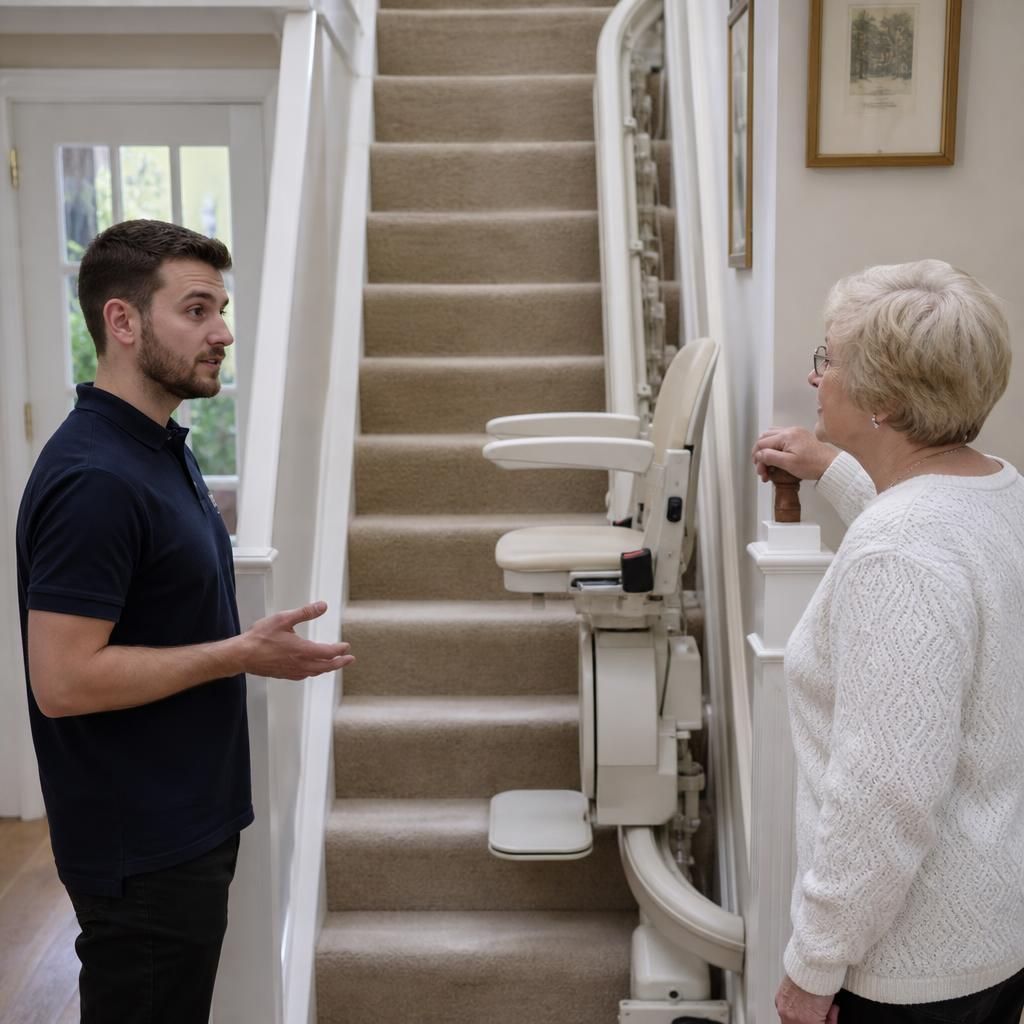
A professional survey also checks the stair width, available space at the top and bottom, nearby doors and the condition of the treads. This helps identify whether features such as a swivel seat, folding rail or modified controls are needed, allowing the quotation to reflect the actual installation rather than the staircase length alone.
Get a Tailored Stairlift Installation Quote
Arrange a tailored stairlift survey with Independent Stairlifts to assess your staircase, requirements and the features needed. You will receive clear advice and a quotation based on your specific installation.