
What are the ongoing maintenance costs after installing a stair chair lift?
Ongoing stair chair lift maintenance costs usually include routine servicing, with additional charges possible for replacement parts, call-outs and repairs outside any warranty or service plan. The exact cost depends on the lift model, usage, age and condition, so Independent Stairlifts can advise on suitable servicing arrangements and likely maintenance requirements for your installation.
Ongoing stair chair lift maintenance costs normally consist of scheduled servicing, with further charges only when parts need replacing, a repair is required, or an engineer visit falls outside your warranty or service agreement. The amount you should budget depends on the lift’s model, age, usage, installation environment and condition. Independent Stairlifts can explain the servicing options for your particular installation and identify which costs are covered before work is carried out.
What routine servicing usually includes
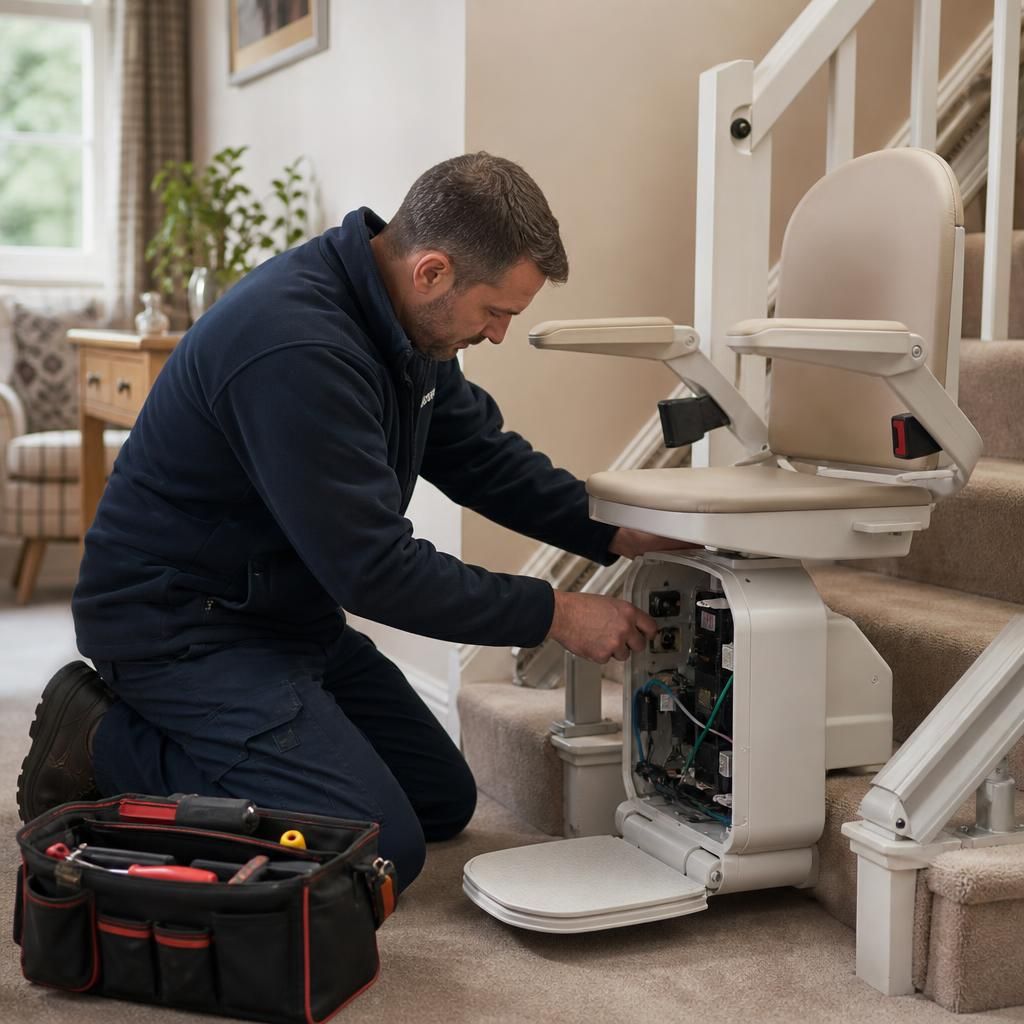
A service is a preventative check intended to keep the stairlift operating safely and reliably. An engineer will normally inspect the carriage, seat, armrests, footrest, swivel mechanism, controls, charging points, safety sensors and the track or rail. They may also check that the lift starts, stops and travels correctly, and test features such as the seat belt, obstruction sensors and emergency controls.
Where appropriate, the engineer can clean working components, tighten fixings, adjust settings and identify wear before it develops into a more disruptive fault. Routine servicing does not usually include every repair or replacement part automatically, so it is important to check the terms of any plan or warranty.
The main costs to allow for
- Planned servicing: This may be paid for as an individual service or included within a maintenance agreement. The appropriate service frequency depends on the model, how often it is used and the manufacturer’s guidance.
- Replacement batteries: Most stairlifts use rechargeable batteries. These are consumable components and will eventually lose capacity, particularly if the lift is used frequently or is not left correctly positioned on its charging point. Battery replacement may be charged separately unless it is covered by your agreement.
- Wear-and-tear parts: Components such as rollers, switches, sensors, belts, handles and charging contacts can wear over time. Curved lifts may have more specialised components because their rail follows the shape of the staircase.
- Breakdown call-outs: A call-out fee may apply if an engineer is needed outside a service plan, warranty or other agreed cover. The total may also reflect travel, time spent diagnosing the fault and any repair required.
- Repair labour and parts: If a fault cannot be corrected during a standard service, you may receive a separate quotation for parts and labour. Ask whether the quoted price includes fitting, testing and any follow-up visit.
- Outdoor maintenance: An outdoor stairlift is exposed to rain, temperature changes, dirt and other conditions that can increase cleaning, inspection and component-replacement requirements. Protective covers and correct positioning can help, but they do not remove the need for servicing.
Warranty and maintenance agreements
A new stairlift will usually include a manufacturer’s warranty, although the duration and terms vary by model and supplier. A warranty may cover defects or certain component failures, but it may exclude accidental damage, misuse, inadequate maintenance or normal wear and tear. Batteries and other consumable items often have separate conditions.
A maintenance agreement can provide greater predictability by covering planned servicing and, depending on the arrangement, some call-outs, labour or replacement parts. Before choosing a plan, check exactly what is included, whether there is an excess or call-out charge, how emergency visits are handled and whether cover changes as the stairlift becomes older. A lower-cost plan is not necessarily the most suitable if important parts or engineer labour are excluded.
If your installation is still within its warranty period, check the documents supplied with the stairlift before arranging independent repairs. Using unsuitable parts or allowing unauthorised work could affect the cover. If you are unsure whether a problem is covered, contact Independent Stairlifts for clarification.
How the stairlift type affects future costs
Straight stairlifts generally have a simpler rail and more standardised configuration, which can make servicing and parts replacement more straightforward. Curved stairlifts are made to follow an individual staircase and may use bespoke rail sections or model-specific components. This can affect the cost and availability of repairs, particularly as the lift gets older.
Reconditioned stairlifts can offer a practical solution, but their remaining service life and warranty arrangements may differ from those of a new lift. Ask about the inspection completed before installation, the condition of the batteries and other wear items, the warranty provided and the availability of replacement parts. These details are more useful than comparing the purchase price alone.
Simple checks you can carry out
Regular user checks can help identify a developing problem, although they do not replace professional servicing. Keep the rail, charging points and travel path clear. Check that the seat belt fastens correctly, controls respond normally and the lift reaches its charging point. Report unusual noises, jerky movement, reduced travel speed, warning lights or repeated battery alerts rather than continuing to use the lift until it stops completely.
Do not attempt to dismantle the carriage, bypass a safety sensor or repair electrical components yourself. Keep the stairlift clean in line with the manufacturer’s instructions, but avoid applying unapproved oils or cleaning products to the rail or mechanism. If the lift is not used regularly, it still needs to be left in the correct position for charging and checked periodically.
How to budget accurately
- Check your installation paperwork for the warranty period, exclusions and recommended service arrangements.
- Confirm whether you have a service plan and request a clear explanation of the included labour, parts and call-out cover.
- Ask which items are treated as consumables, particularly batteries and wear-related components.
- Consider the lift’s age, usage, staircase design and exposure to outdoor conditions when estimating future maintenance needs.
- Request a quotation before approving non-urgent repairs and ask whether a repair or replacement is the more sensible long-term option.
Maintenance is usually easier to manage when small issues are reported promptly. Independent Stairlifts can assess the lift, explain the likely cause of a fault and advise whether it needs a routine service, a specific repair or replacement parts. This helps you understand the expected cost before work proceeds and keeps the stairlift appropriate for continued daily use.
A stair chair lift maintenance agreement can make ongoing costs more predictable by covering scheduled servicing and, depending on the terms, some engineer call-outs, labour or replacement parts. It is separate from the original installation cost, so check what is included before renewal or arranging additional work.
When reviewing your cover, confirm whether it includes:
- Routine inspections and servicing
- Call-out charges and emergency visits
- Engineer labour and diagnostic time
- Common wear items, including batteries
- Parts for your specific stairlift model
- Any excess, exclusions or changes as the lift gets older
A lower-priced plan may exclude the parts or labour most likely to be needed. If your stairlift is under warranty, check its conditions first, as unauthorised repairs or unsuitable parts could affect your cover. Independent Stairlifts can explain the maintenance options for your lift and clarify likely charges before work begins.
Ask Independent Stairlifts about your maintenance options
Contact Independent Stairlifts to discuss the most suitable maintenance options for your stairlift, including servicing, warranty cover and potential repair costs.