
How does the cost of a straight stairlift installation compare to a curved stairlift installation?
A straight stairlift installation is usually less expensive than a curved stairlift because it uses a standard rail, while a curved stairlift requires a rail made to follow the exact shape of your staircase. The final cost depends on the staircase layout, lift specification and installation requirements, so an assessment is needed to provide an accurate comparison.
A straight stairlift installation is usually less expensive than a curved stairlift installation. A straight model uses a standard rail fitted along an uninterrupted flight of stairs, whereas a curved model needs a rail manufactured to follow bends, landings, changes of direction or multiple flights. The final price depends on the staircase layout, the stairlift specification and any work needed in the home, so an assessment is required for an accurate comparison.
Why straight stairlifts generally cost less
A straight stairlift is designed for a staircase with no curves, intermediate landings or changes in direction. The rail is normally supplied in a standard configuration and can be installed with fewer site-specific adjustments. This makes the installation process more straightforward and usually reduces both the equipment and labour costs.
Installation may also take less time because the rail does not need to be measured, shaped and manufactured around the individual staircase. In many homes, the work involves securing the rail to the stair treads, checking the electrical connection and testing the stairlift. The exact process still varies according to the property and the selected model.
Why curved stairlifts usually cost more
A curved stairlift is made for the particular staircase rather than selected from a standard straight-rail configuration. The rail must follow the precise shape of the stairs, including curves, corners, landings and changes in gradient. It may also need to stop at a specific position or provide access to more than one level.
This bespoke design involves a detailed survey, accurate measurements, computer-aided planning and individual rail production. Manufacturing and fitting a curved rail generally require more time and specialist work than installing a straight rail. These factors account for much of the difference in cost.
A curved stairlift is not simply a straight stairlift with an extra section of rail. Its travel path, parking position, safety clearances and seat orientation all need to be considered together. On a complex staircase, the design may also need to accommodate narrow steps, doorways, radiators or limited space at the top and bottom.
What is included in the comparison
When comparing quotations, look beyond the price of the stairlift itself. A useful comparison should make clear whether the following are included:
- the stairlift, rail and charging equipment;
- the home assessment and bespoke design work;
- delivery and installation;
- removal or disposal of existing equipment, where relevant;
- testing, commissioning and an explanation of how to use the stairlift;
- the warranty and any aftercare included with the installation; and
- any electrical, building or access work that may be needed.
A lower initial quotation may not represent better value if essential installation work, servicing or removal costs are excluded. Conversely, a higher curved-stairlift quotation may reflect the additional design and manufacturing required to provide access across a more complicated staircase.
Other factors that can affect either installation cost
The difference between straight and curved models is usually the main consideration, but the following can affect the final price for either type:
- the model, seat style and weight capacity;
- powered options such as a swivel seat, folding rail or powered footrest;
- the position of the charging points;
- the condition and construction of the stairs;
- restricted access for delivery or installation;
- the need to alter or remove obstacles near the staircase; and
- whether the stairlift is new or reconditioned and what warranty is provided.
Features that improve ease of use can add to the purchase price, but they may be appropriate where the user has limited strength, balance or reach. The most suitable specification should be based on how the stairlift will be used rather than on cost alone.
Can a straight stairlift be used on a curved staircase?
A straight stairlift is suitable only where the rail can run continuously along a straight flight and provide safe access between the required points. If the staircase has a bend or landing that interrupts the route, a standard straight model will not normally provide complete access. A curved stairlift may therefore be necessary, even where its installation cost is higher.
In some properties, separate straight stairlifts may be considered for different flights, but this is not suitable for every layout and may require the user to transfer between lifts at a landing. The available space, the user’s mobility and the practicalities of transferring should be assessed before this approach is considered.
How to assess the right option
Ask for a home assessment rather than relying on a general price comparison. The assessment should establish the shape and dimensions of the staircase, where the stairlift needs to start and finish, the user’s preferred transfer points and any access or safety constraints. It also allows the installer to identify whether a straight, curved or alternative arrangement is appropriate.
Independent Stairlifts can compare the available options based on the staircase and the user’s requirements. A clear quotation should explain the recommended model, what is included in the installation, any optional features and any costs that could arise from the property itself. This gives you a more reliable comparison than comparing a standard straight-stairlift price with an estimated price for a bespoke curved installation.
In summary, a straight stairlift is generally the more economical installation because it uses a simpler, standard rail and involves less bespoke manufacturing. A curved stairlift usually costs more because it is individually designed and made to suit the staircase, but it may be the only practical way to provide safe, continuous access. The appropriate choice is determined by the layout of the stairs and the user’s needs, with the final cost confirmed after a professional assessment.
A straight stairlift installation usually costs less because it uses a standard rail fitted to one uninterrupted flight of stairs. A curved stairlift requires a rail designed and manufactured to follow the exact route of the staircase, including bends, landings and changes in direction.
This bespoke work can increase the cost of the curved installation, as the rail must be surveyed, planned, produced and fitted for the individual property. The quotation may also reflect additional features needed to park the stairlift safely or provide access across more than one flight.
When comparing prices, check that both quotations include assessment, delivery, installation, testing, warranty cover and any work needed around the staircase. A professional assessment confirms whether a straight stairlift is suitable or whether a curved model is needed for safe, continuous access.
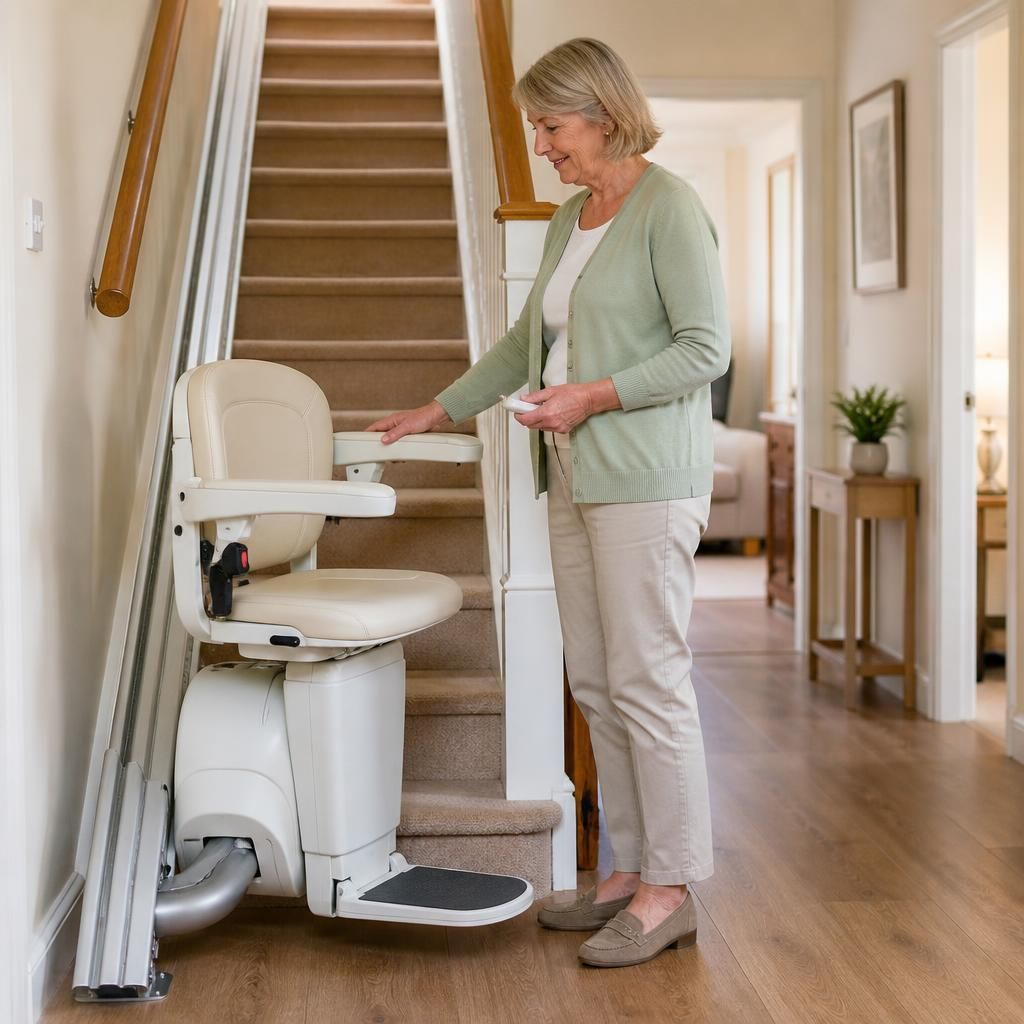
Arrange a Staircase Assessment for an Accurate Cost Comparison
Arrange a staircase assessment with Independent Stairlifts to confirm whether a straight or curved stairlift is suitable and receive an accurate installation quotation. The assessment will also clarify what is included, including fitting, testing and any additional work required.