
How does the price of a straight stairlift compare to a curved stairlift?
A straight stairlift usually costs less than a curved stairlift because it uses a standard rail and simpler installation. A curved stairlift is made to follow the exact shape of your staircase, so its bespoke rail, design and fitting typically make it more expensive overall.
A straight stairlift usually costs less overall than a curved stairlift. Straight models use a standard rail designed for a staircase with one continuous flight, while curved stairlifts require a rail made specifically for the bends, landings, turns or changes in direction in your staircase. The bespoke design and more involved installation are the main reasons for the price difference.
The final cost is not determined by the stairlift type alone. A basic straight staircase may need a relatively straightforward installation, whereas a curved staircase requires an assessment, precise measurements and a rail manufactured to follow the staircase accurately. The quotation should therefore be based on your home rather than on a general list price.
What is included in the cost of a straight stairlift?
A straight stairlift normally includes the lift, a standard straight rail, fitting and instruction on safe use. The rail is installed along the stairs and is usually suitable where there are no bends, intermediate landings or changes in direction. Because the design is more standardised, the installation is generally less complex and can often be completed more quickly than a curved installation.
The price can still change depending on the length and layout of the staircase, the seat specification, the position of the controls, the parking arrangement and any work needed to prepare the stairs. Additional options, such as a powered swivel seat or powered footrest, may also increase the cost. These features can be useful where the user has limited strength, balance or flexibility, but they should be selected according to practical need rather than added automatically.
Why does a curved stairlift cost more?
A curved stairlift is made for the individual staircase. Its rail may need to follow one or more bends, a half or quarter landing, a spiral section, a change in gradient or an unusual staircase width. The design must allow the lift to travel safely while leaving suitable clearance for people using the stairs and allowing the seat to park in a convenient position.
The additional cost generally reflects:
- the assessment and detailed measurement of the staircase;
- the bespoke design and manufacture of the rail;
- more complex fitting and adjustment on site;
- additional components needed for bends, landings or parking positions; and
- the need to integrate the lift with the particular space available in the home.
A curved model may also be the only practical option where a straight rail cannot safely follow the staircase. In that situation, comparing the prices as though they were interchangeable can be misleading: the curved system is solving a different access problem.
Does installation make a significant difference?
Yes. With a straight stairlift, the installation is usually based on a standard rail and a relatively predictable route. Curved installations involve more detailed planning because the rail must be positioned accurately around the staircase. The installer may need to consider doorways, landings, bannisters, radiators, available headroom and the points where the user will get on and off.
When comparing quotations, check whether the stated price includes delivery, installation, testing, user instruction and removal of packaging. Ask whether any necessary alterations, dismantling or removal of an existing stairlift are included. A lower initial price may not represent better value if important fitting work or essential features are excluded.
Which option has the lower ongoing cost?
Both straight and curved stairlifts need routine care to remain safe and reliable. Ongoing costs can include servicing, repairs outside any warranty and replacement of worn components or batteries. A curved stairlift may have more bespoke parts, so repairs or replacement components can sometimes be more specialised. This does not mean that every curved model will cost more to maintain, but it is sensible to ask about servicing arrangements, warranty cover and the availability of parts before making a decision.
Battery replacement is a normal consideration for most powered stairlifts. Battery life depends on use, charging conditions and the equipment itself. Keeping the stairlift connected to its charging point when it is parked, and following the supplied maintenance guidance, can help support reliable operation. Your quotation or service information should explain what is covered and what would be chargeable.
Can a straight stairlift be fitted to a staircase with a landing?
A straight stairlift can normally cover only one uninterrupted flight. If the staircase changes direction or includes a landing, possible solutions may include separate straight lifts, a curved stairlift or another arrangement designed around the layout. Separate lifts can require the user to transfer at the landing and may not be suitable for someone who needs continuous seated travel. A curved lift generally costs more, but it may provide a more convenient route and avoid a transfer between flights.
Where a staircase has only a minor change in direction, the most suitable option still depends on the available space and the user’s mobility. A site assessment is important because a solution that appears possible from photographs may not provide safe clearance or comfortable access.
Are curved stairlifts always the more expensive choice?
They are usually more expensive when comparing similar specifications and installation conditions, but the difference varies between homes. A long or unusually configured straight staircase may require additional rail or fitting work, while a relatively simple curved layout may be less complex than a staircase with several difficult access points. The seat, controls, safety features, parking position and preparation work can also affect either type.
A reconditioned straight stairlift may reduce the initial cost where the staircase is suitable for a standard rail and the equipment is available. Reconditioned curved stairlifts are more dependent on rail compatibility because the rail is made for a particular staircase. It may be possible to reuse or adapt certain equipment, but this must be confirmed by an assessment rather than assumed from the lift’s appearance or age.
How to compare quotations fairly
- Confirm whether the quotation is for a straight or bespoke curved rail and whether it covers the complete staircase.
- Check that delivery, installation, testing, instruction and any agreed removal work are included.
- Compare the seat type, weight capacity, controls, safety features and parking options rather than comparing the lift name alone.
- Ask whether the price includes any alterations needed around the stairs or landing.
- Check the warranty, servicing arrangements and likely costs after the warranty ends.
- Make sure the proposed design allows the user to get on and off safely at the top and bottom of the stairs.
The right choice is therefore not simply the lowest-priced stairlift. A straight model is generally the more economical option when the staircase is straight and the user can use its standard route safely. A curved model costs more because it is designed around the home, but it may be the better-value solution when bends, landings or unusual geometry make a straight lift unsuitable. A proper assessment will establish the configuration, features and installation work needed before you commit to a total price.
A curved stairlift usually costs more because its rail is designed and manufactured to follow the exact shape of the staircase. Bends, intermediate landings, changes in direction and restricted parking areas all require more detailed measurement, planning and installation than a standard straight rail.
When comparing prices, check that both quotations include the same elements, such as the lift, rail, fitting, testing, user instruction and any necessary preparation work. A straight stairlift is normally the lower-cost option for one continuous flight, while a curved model may provide the more suitable solution where the staircase layout cannot be covered safely with a straight rail.
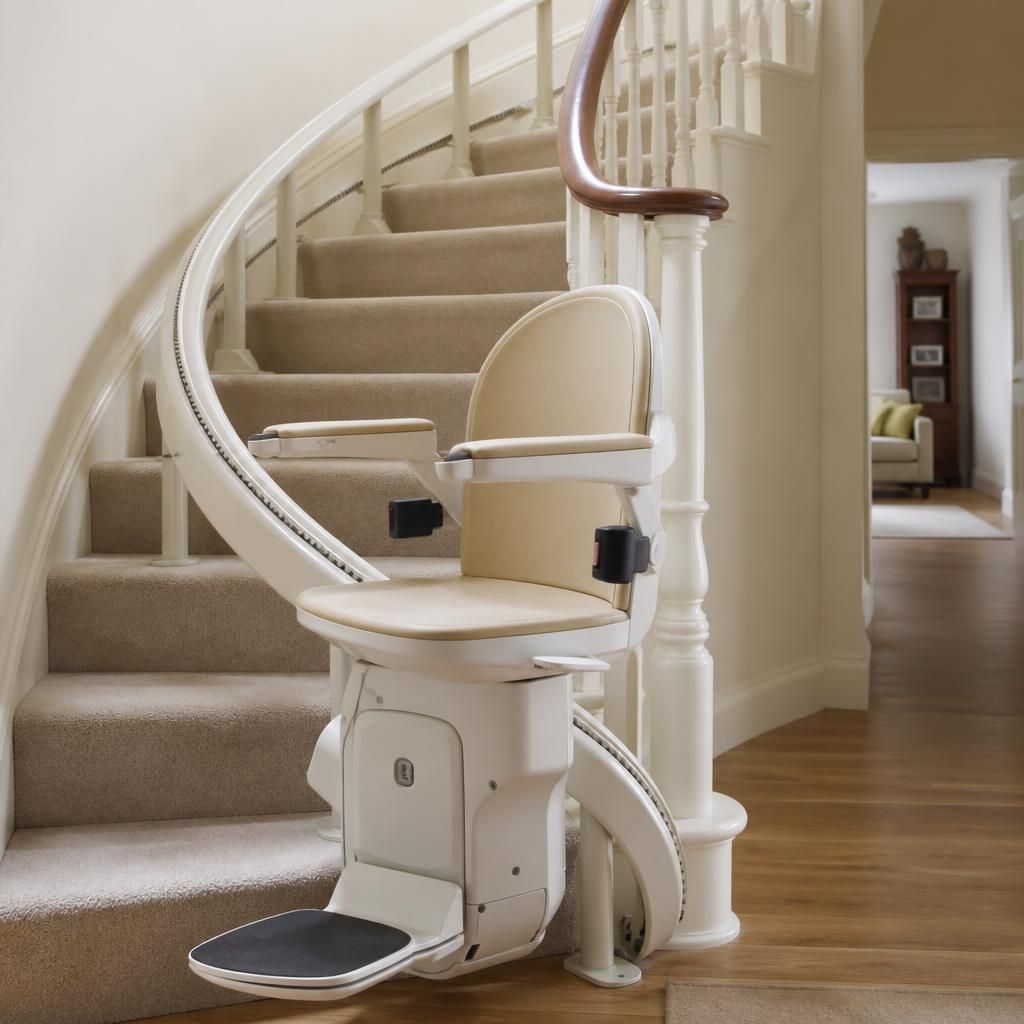
Arrange an assessment for an accurate stairlift quotation
Arrange an assessment with Independent Stairlifts to confirm whether a straight or curved stairlift suits your staircase and receive an accurate quotation. We will assess the layout, access requirements and features needed for safe, comfortable use.