
What factors should I consider when comparing prices for different stairlift brands?
When comparing stairlift prices, look beyond the brand and assess the complete cost: the model, stairway design, installation requirements, included features, warranty, servicing and any ongoing charges. A like-for-like comparison based on a home assessment will show which option offers the most suitable value for your mobility needs.
Comparing stairlift prices properly means assessing the complete cost of ownership rather than comparing the headline price of one brand with another. The model, stairway layout, installation work, included features, warranty, servicing and any future charges can all affect whether a quote represents good value for your home and mobility needs.
Start with a like-for-like comparison. Check that each quotation is for a stairlift with a similar specification and that the price includes the same elements. A lower initial quote may exclude installation, delivery, removal of an old lift, upgraded seating or ongoing support. Ask for a written breakdown so you can identify what is included, what is optional and what could cost extra.
Prices should be based on a proper home assessment wherever possible. A survey allows the installer to check the staircase, access, electrical supply, landing space and any practical installation issues. It also helps establish whether the proposed model is suitable for the user’s weight, posture, movement, transfer ability and preferred direction of travel.
Consider the type of stairlift required.
- Straight stairlifts usually have a simpler rail and installation process, so they are often less expensive than models designed for more complex staircases.
- Curved stairlifts require a rail manufactured to follow the individual staircase. The design, number of turns, landings and stopping points can all affect the price.
- Outdoor stairlifts need materials and controls that are suitable for exposure to weather. The condition of the steps, drainage and available electrical supply may also influence installation work.
- Reconditioned stairlifts can reduce the initial purchase cost, but check their age, condition, compatibility, refurbishment process, warranty and future availability of replacement parts.
A bespoke rail is not automatically comparable with an off-the-shelf straight model. If two quotes are based on different types of equipment, the price difference may reflect the engineering and installation required rather than the brand itself.
Examine the specification and features. Features that may affect the price include the seat design, swivel or powered seat functions, folding mechanisms, armrest width, footrest operation, control arrangement, upholstery, battery system and safety sensors. Some features are primarily for convenience, while others may be important for safe and independent use.
It is useful to separate essential requirements from preferences. For example, a powered swivel seat may assist someone who finds it difficult to turn at the top or bottom of the stairs. A powered footrest may be helpful where bending is restricted. Remote controls can allow the stairlift to be called to another floor, while a folding rail may be relevant where a doorway or circulation area could otherwise be obstructed.
Ask whether the quoted specification is the standard version or includes upgrades. A lower price may relate to a basic seat and manual functions, whereas a higher price may include features already selected for the user’s needs. The cheapest model is not necessarily the most suitable if it requires awkward transfers or does not provide the support the user needs.
Assess the installation requirements. Installation is part of the value of a stairlift, not an incidental extra. The installer may need to work around narrow landings, doors, radiators, uneven steps, bannisters, unusual wall construction or limited parking and access. Curved and outdoor installations can involve additional preparation or site-specific work.
Confirm whether the quote includes fitting, testing, user instruction and making good any minor installation-related work. Ask whether electrical work, alterations to flooring or removal of an existing stairlift are included. If building alterations are likely, these should be explained before you commit to the purchase.
Compare new and reconditioned equipment carefully. A reconditioned stairlift may be appropriate where the budget is limited or the expected period of use is shorter. However, the price should be considered alongside the remaining service life, condition of the batteries and controls, availability of compatible parts and the length and scope of the warranty.
For a curved staircase, a reconditioned lift may only be suitable if its rail matches the staircase or can be adapted safely and economically. A low equipment price does not necessarily mean a low installed price if substantial alterations or a replacement rail are needed.
Read the warranty terms rather than relying on the warranty length alone. Check what is covered, when cover starts, whether parts and labour are included, and whether call-out charges apply. Some terms may treat batteries, upholstery, accidental damage or misuse differently from the main stairlift mechanism.
Also ask what happens if a fault occurs outside normal working hours and whether support is available throughout the area where the stairlift is installed. A warranty has greater practical value when the repair process is clearly explained and suitable assistance is available when needed.
Allow for servicing and ongoing ownership costs. Ask whether routine servicing is included in the purchase price, offered as a separate plan or left to the owner. Find out how often servicing is recommended and whether there are call-out, labour, battery or replacement-part charges.
Battery replacement is an eventual maintenance consideration for most battery-powered stairlifts. The expected lifespan can vary according to usage, charging conditions and the equipment itself, so it is sensible to ask how batteries are tested and replaced. You should also clarify whether a service agreement renews automatically and how cancellation works.
Check the payment and end-of-use arrangements. If the stairlift is being purchased, confirm the total price, payment schedule and any deposit or cancellation terms. If a rental or other payment arrangement is offered, compare the total payable over the expected period rather than looking only at the regular payment.
Ask what happens if the user’s circumstances change, if the stairlift is no longer required or if the property is sold. Removal, storage, resale and disposal may be treated differently depending on the agreement. Confirm whether VAT applies to the particular purchase and whether any eligibility requirements need to be met.
Consider suitability, reliability and support alongside price. A stairlift is used repeatedly in a domestic setting, so ease of operation, comfortable transfers, quiet movement and dependable charging can be more important than a small difference in the initial quote. The installer’s assessment should explain why the recommended model suits the staircase and the person using it.
When comparing suppliers, look for clear documentation, realistic advice and transparent terms. Be cautious of quotes that are difficult to understand, omit key costs or recommend features without explaining their purpose. A trustworthy assessment should distinguish between necessary work and optional upgrades, and should not assume that the most expensive specification is automatically the best choice.
For an effective comparison, ask each installer to confirm:
- the exact model and whether it is new or reconditioned;
- the stairlift’s weight capacity and suitability for the user;
- the rail design and any adaptations required;
- which seat, safety and convenience features are included;
- the full installation and testing cost;
- whether removal of an existing lift or minor electrical work is included;
- the warranty period, exclusions and repair arrangements;
- servicing options, call-out charges and likely maintenance requirements;
- the treatment of batteries and replacement parts;
- the total price, VAT position and any future or end-of-use charges.
The most useful comparison is therefore not simply the lowest quotation. It is the option that provides the right level of support and safety, fits the staircase correctly, includes transparent installation and aftercare, and remains affordable over the period the stairlift is expected to be used.
Comparing stairlift prices accurately means comparing the complete installed solution, not just the equipment price. Each quotation should cover a similar model, seat specification, rail design, installation work and level of aftercare.
Ask for a written breakdown showing what is included and what may cost extra. Check whether the price covers delivery, fitting, testing, user instruction, removal of an existing lift and any required electrical or minor preparatory work. A home assessment is important because narrow landings, doors, bends and unusual staircase layouts can change the installation requirements.
Also compare warranty cover and ongoing support. Check whether parts and labour are included, how batteries are treated, whether call-out charges apply and what servicing options are available. This gives you a clearer view of the likely ownership cost and helps identify whether a lower quote is genuinely better value or simply excludes important services.
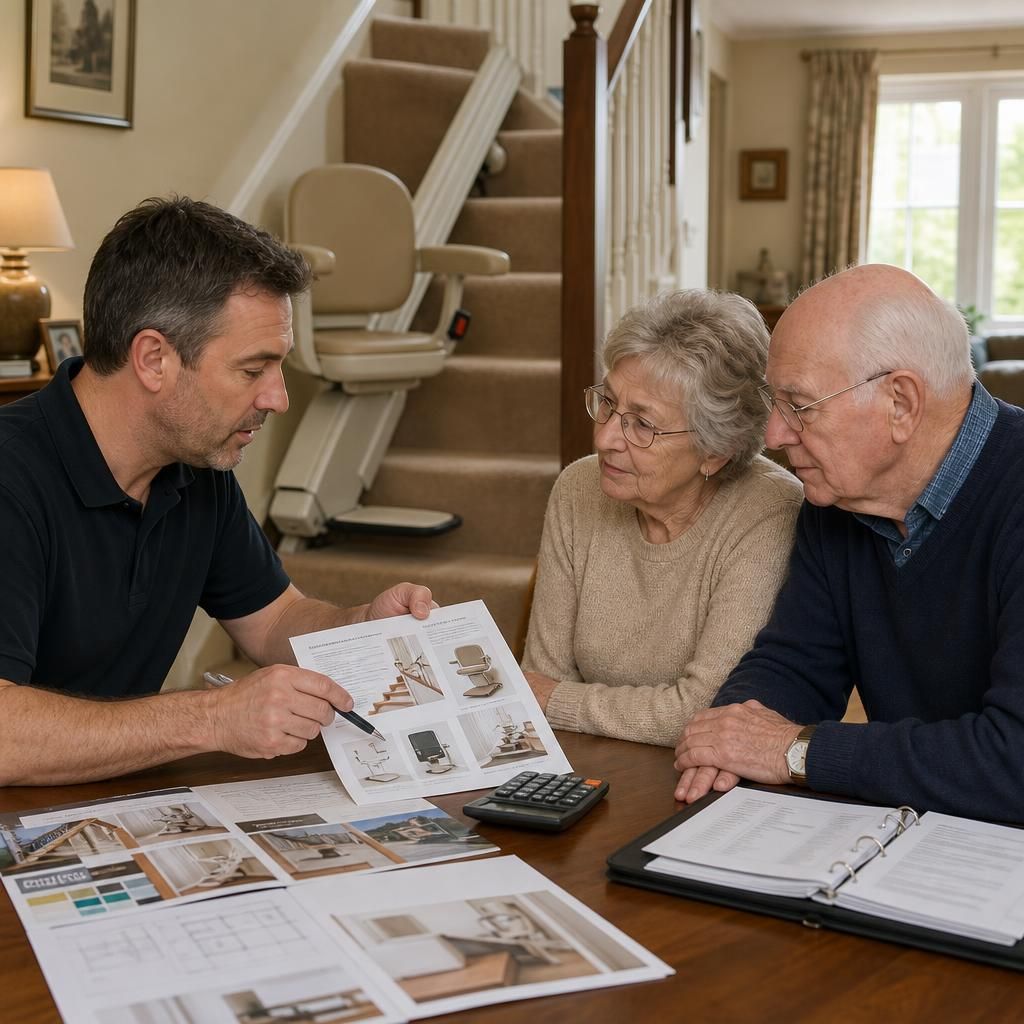
Arrange a personalised stairlift assessment
Arrange a personalised stairlift assessment with Independent Stairlifts to compare suitable options, installation requirements and total costs for your home. You’ll receive clear advice based on your staircase layout and mobility needs.