
What factors influence the pricing of Handicare stairlifts compared to other brands?
Handicare stairlift pricing is influenced by the stairway’s shape and length, the model selected, installation requirements, and features such as powered swivel seats or folding rails. Compared with other brands, the final cost depends less on the name alone than on how well the stairlift fits your home, mobility needs, warranty and servicing arrangements.
Handicare stairlift prices are influenced by the same practical factors that affect most stairlift quotations: the shape and length of the staircase, the model and rail required, the level of customisation, installation work, and the support included after fitting. The brand name is only one part of the cost. A straightforward lift on a standard staircase may be priced very differently from a bespoke installation with powered options, a folding rail or additional electrical work.
Staircase design and rail type
The staircase is usually the most significant influence on the price. A straight stairlift normally uses a standard rail and can be installed with less preparation. A curved stairlift requires a rail made to follow the individual shape of the stairs, including bends, landings and changes in direction. This bespoke manufacturing and fitting process generally makes a curved installation more expensive than a straight one, regardless of the manufacturer.
Staircase length, width, headroom and the available space at the top and bottom also affect the quotation. If the stairlift needs to park beyond the final step, or if the rail must be shortened, extended or positioned carefully around a doorway, the design may require additional work. A professional survey is therefore more reliable than comparing a basic advertised price.
Model and intended environment
Different Handicare models are designed for different stair layouts and users. A compact model may suit a narrow staircase where keeping access to the stairs is important, while a more substantial design may be appropriate where the user needs additional support or a higher weight capacity. An outdoor stairlift also requires materials and controls suited to exposure, temperature changes and moisture, which affects its price compared with an indoor model.
Reconditioned stairlifts can provide a lower-cost alternative where a suitable model and rail are available. However, a reconditioned lift is not necessarily interchangeable between homes, particularly when the staircase is curved. The condition of the equipment, the age of its batteries and components, the work required to adapt it, and the warranty offered should all be considered alongside the initial price.
Features and seating options
Optional features can make a noticeable difference to the final cost. Depending on the model, these may include:
- a powered swivel seat to help with turning safely at the top of the stairs;
- a powered or manual folding rail where a doorway or passage could otherwise be obstructed;
- an adjustable seat, armrests or footrest to improve positioning and comfort;
- powered controls that reduce the effort needed to operate the lift;
- an upgraded seat or upholstery designed around the user’s posture and transfer needs; and
- additional charging or parking arrangements where the normal position is unsuitable.
These features should be assessed in relation to the person using the stairlift. An option that adds cost may be worthwhile if it makes transfers safer or allows the user to operate the lift independently. Conversely, features that are not needed can be left out to keep the quotation focused on essential requirements.
Installation requirements
Installation is part of the overall cost, but quotations do not always present it in the same way. Some prices include a standard installation, while others separate the equipment, fitting and additional work. When comparing Handicare with another brand, check whether both quotations cover the same services.
Potential additional work can include removing an existing stairlift, adapting a handrail, protecting or relocating electrical items, making good minor fixings, or arranging a different charging point. Most stairlifts are fitted to the stairs rather than the wall, but the surveyor will confirm whether the proposed rail and fixing method are suitable for the property.
Warranty, servicing and ongoing ownership
A lower purchase price does not necessarily represent the lowest cost over the life of the stairlift. Check the length and scope of the warranty, whether it covers parts and labour, and whether call-outs or travel are treated separately. Batteries and other wear-related components may have different coverage from the main lift.
Service plans can provide scheduled checks and support after the initial warranty period, although the terms and price vary. Ask what response arrangements apply if the stairlift stops working, whether servicing is recommended for the particular model, and which repairs are excluded. These details allow a fairer comparison between Handicare and other brands than the equipment price alone.
Why quotations from different brands can vary
Two stairlifts may appear similar but have different prices because of differences in rail construction, seat design, control systems, battery arrangements, installation practice or after-sales provision. A quote may also reflect the supplier’s assessment of the home rather than a standard catalogue price. It is therefore important to compare equivalent specifications, including the rail type, seat, powered options, installation, removal of any existing equipment, warranty and servicing.
How to assess the cost for your home
- Arrange an assessment of the staircase and the user’s mobility needs rather than relying solely on an online guide price.
- Ask for the equipment, installation and any additional work to be shown clearly in the quotation.
- Confirm which features are included and which are optional.
- Check whether the price covers delivery, removal of an old lift, VAT treatment where applicable, warranty support and future servicing.
- Compare like-for-like quotations, including the same rail arrangement, seating features and level of after-sales cover.
The most suitable Handicare stairlift is not always the one with the lowest initial quotation. The useful comparison is between the total cost of a properly fitted solution and the safety, independence, comfort and support it provides. A detailed home assessment helps identify which features are necessary, which are optional and whether a new or reconditioned stairlift offers the more appropriate overall value.
Handicare stairlift prices are best compared with other quotations by checking the complete installed solution, rather than the equipment price alone. The staircase layout, rail type, seating options, installation work and after-sales cover can all change the final cost.
For a fair comparison, check whether each quotation includes:
- a rail designed for the staircase, including any bends, landings or folding sections;
- the required seat and powered features, such as a swivel seat or folding rail;
- delivery, installation and removal of an existing stairlift where necessary;
- warranty cover for parts and labour; and
- servicing arrangements, call-out terms and likely replacement items such as batteries.
A lower initial price may not provide better value if essential installation work or support is excluded. A home assessment helps identify which features are necessary for safe, comfortable use and which can be omitted if keeping the cost down is a priority.
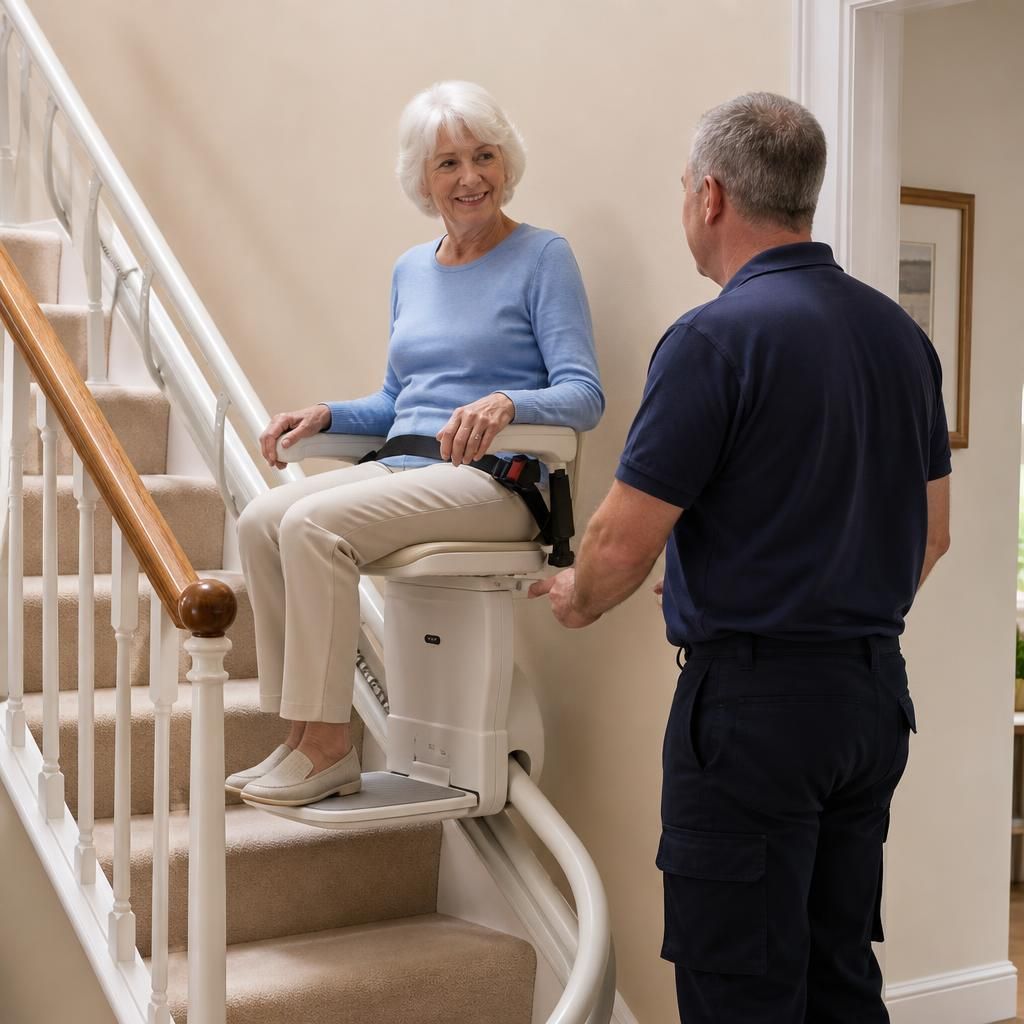
Get a tailored Handicare stairlift price assessment
Arrange a tailored Handicare stairlift price assessment so we can consider your staircase, mobility needs and the features required. You’ll receive clear guidance on the most suitable solution and the costs involved.