
What is the cost implication of choosing a reconditioned stairlift for elderly users compared to a brand new installation?
Choosing a reconditioned stairlift will usually reduce the upfront cost compared with a brand-new installation, although the final price depends on the stairlift’s condition, specification, warranty and the complexity of fitting it in your home. A new stairlift costs more initially but may offer a wider choice of features, configuration and warranty cover, so the most suitable option should be assessed against both immediate and longer-term costs.
Choosing a reconditioned stairlift will usually reduce the initial purchase and installation cost compared with a brand-new stairlift. The saving depends on the model, the condition of its components, the warranty provided and how much adaptation is needed for the staircase. A new stairlift generally costs more at the outset, but it may provide a wider choice of features, a longer or more comprehensive warranty and a better match for unusual access requirements.
What a reconditioned stairlift includes
A reconditioned stairlift is a previously used stairlift that has been removed, inspected, cleaned and tested before being offered for installation again. Depending on the model and supplier, worn parts may be replaced and the equipment may be checked for safe operation. Reconditioned does not simply mean second-hand equipment fitted without preparation, so it is important to ask what work has been completed and what is covered after installation.
The cost may include the chair, motor, controls, rail, installation and a period of warranty cover. Some parts of a previous installation may be suitable for reuse, particularly on a straightforward staircase, while other situations require additional work. The rail may need to be altered, replaced or made specifically for the staircase, and this can affect the overall price.
How the cost compares with a new installation
A new stairlift is manufactured and supplied for the current installation. This usually gives you more flexibility over the seat style, upholstery, controls, safety features, weight capacity and positioning of the controls. A new curved stairlift, for example, is normally designed around the exact shape of the staircase rather than selected from a standard rail. This bespoke work can make the installation more expensive than a reconditioned straight stairlift, but the comparison is only meaningful when both options meet the same practical requirements.
With a reconditioned stairlift, the purchase price may be lower because some equipment has already been used. However, the final price can still include removal of an existing lift, delivery, fitting, electrical work, alterations to the rail, servicing or replacement components. A lower advertised price should therefore not be treated as the full cost until these items have been confirmed in writing.
Factors that can change the total price
- Staircase design: Straight staircases are generally simpler to fit. Curved, split-level, narrow or unusually shaped staircases usually require a more specific rail and a detailed survey.
- Condition of the equipment: The age, battery condition, motor, charging system, upholstery and safety sensors can affect whether parts need replacing before installation.
- Specification: Powered swivel seats, powered footrests, folding rails, enhanced controls and other options may add to the cost of either a new or reconditioned stairlift.
- Installation requirements: Difficult access, changes to the flooring, repositioning of furniture or electrical work may increase the fitting charge.
- Warranty and aftercare: A reconditioned stairlift may have a shorter or more limited warranty than a new model. The terms should state whether labour, call-outs, batteries and replacement parts are included.
- Availability: A suitable reconditioned model may not always be available in the required configuration. Waiting for a particular model or adapting a less suitable one may reduce the apparent saving.
Looking beyond the initial saving
The lowest upfront price is not necessarily the lowest cost over the useful life of the stairlift. Ask how the equipment has been tested, whether batteries and other consumable parts have been replaced, and whether servicing support is available locally. An older reconditioned model may need maintenance sooner than a new model, although this cannot be judged from age alone. The quality of the refurbishment, the installation and the way the stairlift is used are also important.
A new stairlift can have a higher initial price but offer greater choice and more predictable warranty protection. It may also be the more suitable option where the user needs a particular seat position, additional support, a higher weight capacity or controls in a specific location. Paying more for a stairlift that fits the user and staircase properly can be more cost-effective than choosing a cheaper model that is difficult or uncomfortable to use.
Questions to ask before choosing a reconditioned model
- What is included in the quoted price, including the survey, installation, removal and disposal of any existing equipment?
- Which parts have been inspected or replaced?
- How long is the warranty, and what exclusions apply?
- Who provides repairs and servicing after the warranty ends?
- Is the stairlift suitable for the user’s mobility, weight, transfer ability and preferred side of travel?
- Will the rail, controls and charging points suit the staircase and the way the user moves around the home?
- Would a new model provide a materially better fit or more appropriate safety features?
A professional assessment should consider the user as well as the staircase. The safest and most economical choice may be a reconditioned stairlift when a suitable model is available, the installation is uncomplicated and the warranty provides reasonable protection. A new installation may be preferable where the staircase is complex, the required specification is unusual or longer-term warranty support is a priority. Comparing like-for-like written quotations, including installation and aftercare, gives a more accurate view of the real cost than comparing equipment prices alone.
A reconditioned stairlift usually costs less upfront than a new installation because the main equipment has been used previously and prepared for reuse. The saving is only meaningful when both quotations cover the same essentials, including the rail, installation, safety checks, warranty and any required replacement parts.
Before choosing the lower-priced option, check the stairlift’s condition, battery replacement history and warranty exclusions. A new model may cost more initially but provide a wider choice of features and more predictable aftercare. For an elderly user, the most economical option is the one that fits the staircase and can be used safely and comfortably, rather than simply the one with the lowest advertised price.
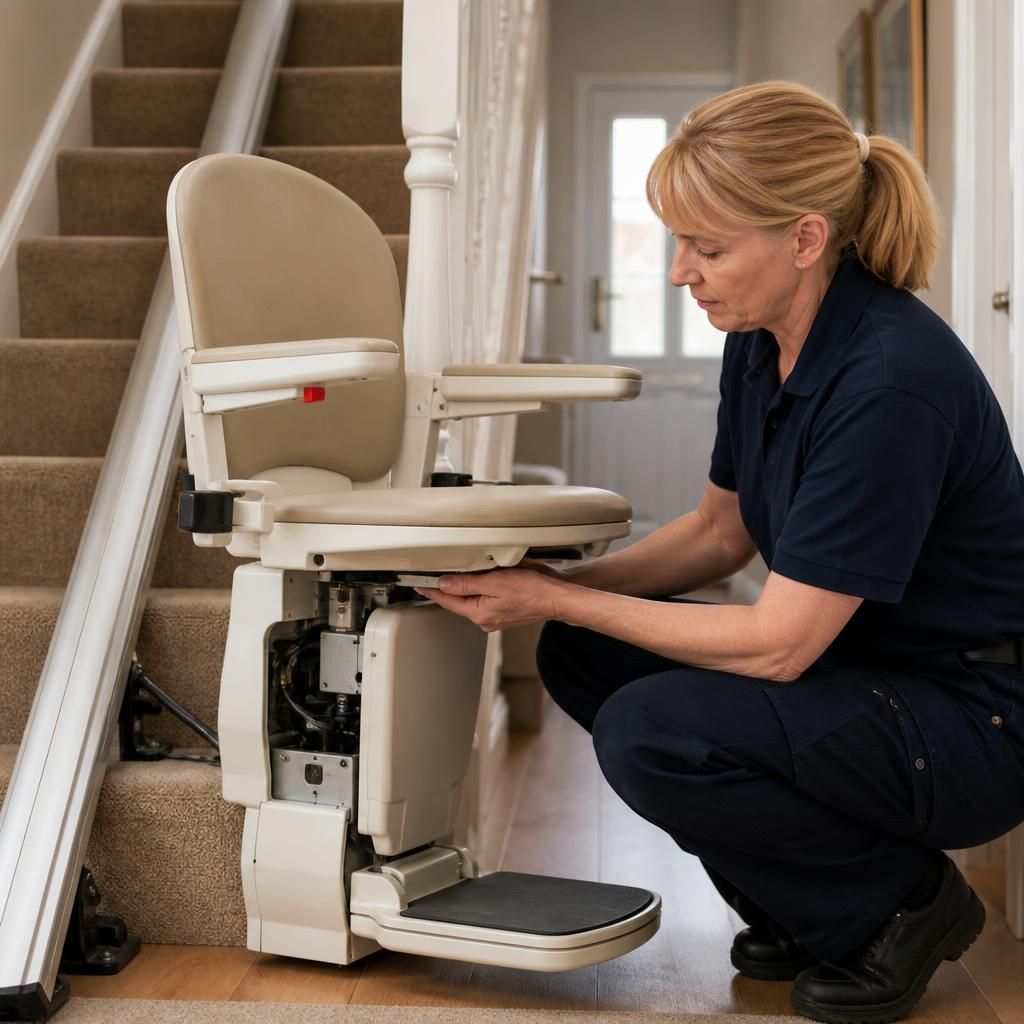
Compare Your Reconditioned and New Stairlift Options
Ask Independent Stairlifts for a tailored comparison of suitable reconditioned and new stairlift options, with installation, warranty and aftercare clearly included. This will help you choose the safest and most cost-effective solution for your staircase and individual needs.