
What is the average lifespan of stairlifts for the elderly, and how does this affect maintenance costs?
A well-maintained stairlift can provide many years of reliable service, although its lifespan depends on usage, the staircase, installation quality, battery condition and ongoing servicing. As a stairlift becomes older, maintenance costs may rise because batteries, rollers, chargers and other wear components are more likely to need replacement, making repair history and overall condition important when planning future costs.
A stairlift typically provides around ten years of service, although some remain reliable for longer with suitable care and moderate use. Its practical lifespan depends on the model, how frequently it is used, the staircase environment, installation quality, battery condition and the availability of replacement parts. Age affects maintenance costs because wear-related repairs become more likely as components deteriorate, but an older stairlift is not automatically uneconomical to keep.
What determines a stairlift’s lifespan?
A stairlift consists of several parts with different expected service lives. The motor, drive system, control boards, charging equipment, seat mechanism, safety sensors and carriage all contribute to reliability. Batteries, rollers, belts and other moving or high-use components usually require attention sooner than the main rail and structural parts.
Usage is important. A lift used several times a day by one person may experience less wear than one shared by several people or used continuously in a busy household. Repeated journeys, heavier loads, frequent stops and starts, and prolonged periods of disuse can all affect performance. A stairlift that is rarely used may still develop battery or electrical problems if it is not left correctly connected to its charger.
The staircase and surrounding conditions also matter. Dust, pet hair, damp, extreme temperatures and outdoor exposure can place additional strain on moving and electrical components. Outdoor stairlifts generally need more careful cleaning and protection because rain, moisture and temperature changes can accelerate corrosion or affect charging equipment.
How does age affect maintenance costs?
Maintenance costs are often lower during the earlier part of a stairlift’s life, particularly while the installation is covered by a manufacturer’s or installer’s warranty. Routine servicing may still be advisable, but major component failures are less common when the lift has been installed correctly and used as intended.
As a stairlift becomes older, the likelihood of replacing wear components increases. Common examples include:
- Batteries: rechargeable batteries gradually lose capacity and may eventually struggle to hold a charge, causing the lift to stop away from a charging point or operate less reliably.
- Rollers and drive components: these can wear through regular movement along the rail and may cause increased noise, vibration or uneven travel.
- Charging equipment: contacts, chargers and related electrical components may need attention if the lift is not charging properly.
- Controls and safety sensors: hand controls, remote controls, limit switches and sensors can be affected by wear, accidental damage or electrical faults.
- Seat and mechanical fittings: armrests, swivel mechanisms, belts and locking parts may need adjustment or replacement where they are used frequently.
A single replacement may be relatively straightforward, whereas several faults occurring together can make an older lift more expensive to maintain. This is why maintenance costs usually need to be considered over the remaining useful life of the stairlift rather than judged from one repair alone.
Routine servicing and preventative maintenance
Regular servicing can help identify developing faults before they cause a breakdown. A service normally involves checking the drive system, rail, batteries, charger, safety sensors, seat functions, controls and electrical connections. The engineer may also clean relevant components, tighten fittings and recommend adjustments or replacement parts.
Servicing does not prevent every repair, and it cannot restore a worn-out battery or damaged component indefinitely. It can, however, help maintain safe operation, reduce avoidable strain and provide a clearer record of the lift’s condition. Keeping the rail and charging areas clear, following the user instructions and reporting unusual noises, jerky movement, warning lights or reduced battery performance promptly can also limit the risk of a more disruptive failure.
When does repair become less cost-effective?
Repair is often sensible where the stairlift has a sound rail and carriage, the fault is clearly identified and replacement parts remain available. A repair may be preferable to replacement where the lift fits the staircase well, meets the user’s needs and has a manageable maintenance history.
Replacement may warrant consideration when the lift has repeated breakdowns, several major components need replacing, parts are difficult to source, or the cost of a repair is high compared with the condition and likely remaining life of the installation. A stairlift that no longer meets the user’s needs, such as because of changes in mobility, weight requirements or transfer ability, may also need to be reassessed even if it is still operating.
The age of the stairlift should therefore be considered alongside its repair history. A well-maintained older model with a recently replaced battery may represent better value than a newer installation that has been poorly maintained or exposed to unsuitable conditions.
How the type of stairlift affects long-term costs
Straight stairlifts generally have a simpler rail arrangement, which can make servicing and component replacement more straightforward. Curved stairlifts are individually configured to the staircase and may contain more specialised parts, so maintenance or replacement can depend more closely on the original design and parts availability.
Outdoor models require particular attention to weather protection, charging equipment and corrosion. Heavy-duty stairlifts are designed for higher user weights and may use stronger or more robust components, but their servicing requirements and replacement parts can differ from standard models. The initial purchase price is only one part of the comparison; expected servicing, battery replacement and the availability of technical support should also be considered.
Maintenance costs for reconditioned stairlifts
A reconditioned stairlift can be a practical option where the equipment has been inspected, refurbished and installed to suit the staircase. However, its age and previous usage should be established before purchase. Ask which components have been replaced, what warranty is provided, whether parts remain available and what servicing is included.
A lower initial cost does not necessarily mean lower lifetime costs if the lift is near the end of its serviceable life or has an uncertain repair history. Conversely, a properly assessed and reconditioned installation can provide reliable service when its condition and future maintenance needs are clearly explained.
Planning for future maintenance
When assessing an existing or replacement stairlift, request a clear explanation of the expected maintenance arrangements. Important points include:
- the age and model of the stairlift;
- its service and repair history;
- the condition and age of the batteries;
- whether replacement parts are readily available;
- the terms and duration of any warranty;
- whether routine servicing is included or charged separately;
- the likely cost of common replacement components; and
- the procedure for arranging help if the lift stops working.
It is also worth considering how a breakdown would affect the user. Someone who relies on the stairlift for essential access may benefit from a maintenance arrangement that includes priority assistance, even if its overall cost is higher than paying for occasional repairs. The appropriate choice depends on the user’s reliance on the lift, its age, condition and the likely cost of keeping it operational.
In summary, a stairlift often lasts around ten years, but lifespan varies considerably. Maintenance costs normally become less predictable as the lift ages, mainly because batteries and other wear components are more likely to need replacement. Regular servicing, prompt attention to faults and a realistic assessment of repair history can help control costs. When repairs become frequent or parts are no longer readily available, comparing the expected maintenance cost with replacement is usually the most sensible next step.
The age of a stairlift can affect maintenance costs because batteries, rollers, chargers and other frequently used components may need replacing before the main rail and carriage become unsuitable. An older stairlift is not automatically poor value, but its repair history and remaining parts availability are important.
Before arranging a repair or replacement, check:
- the stairlift’s age, model and service history;
- the condition and age of its batteries;
- whether replacement parts are still readily available;
- how often faults have occurred recently; and
- whether the likely repair cost is proportionate to the lift’s remaining useful life.
Regular servicing and prompt attention to warning lights, unusual noises, jerky movement or reduced battery performance can help identify faults early. Comparing the expected cost of continued maintenance with replacement is particularly important when several major components need attention at the same time.
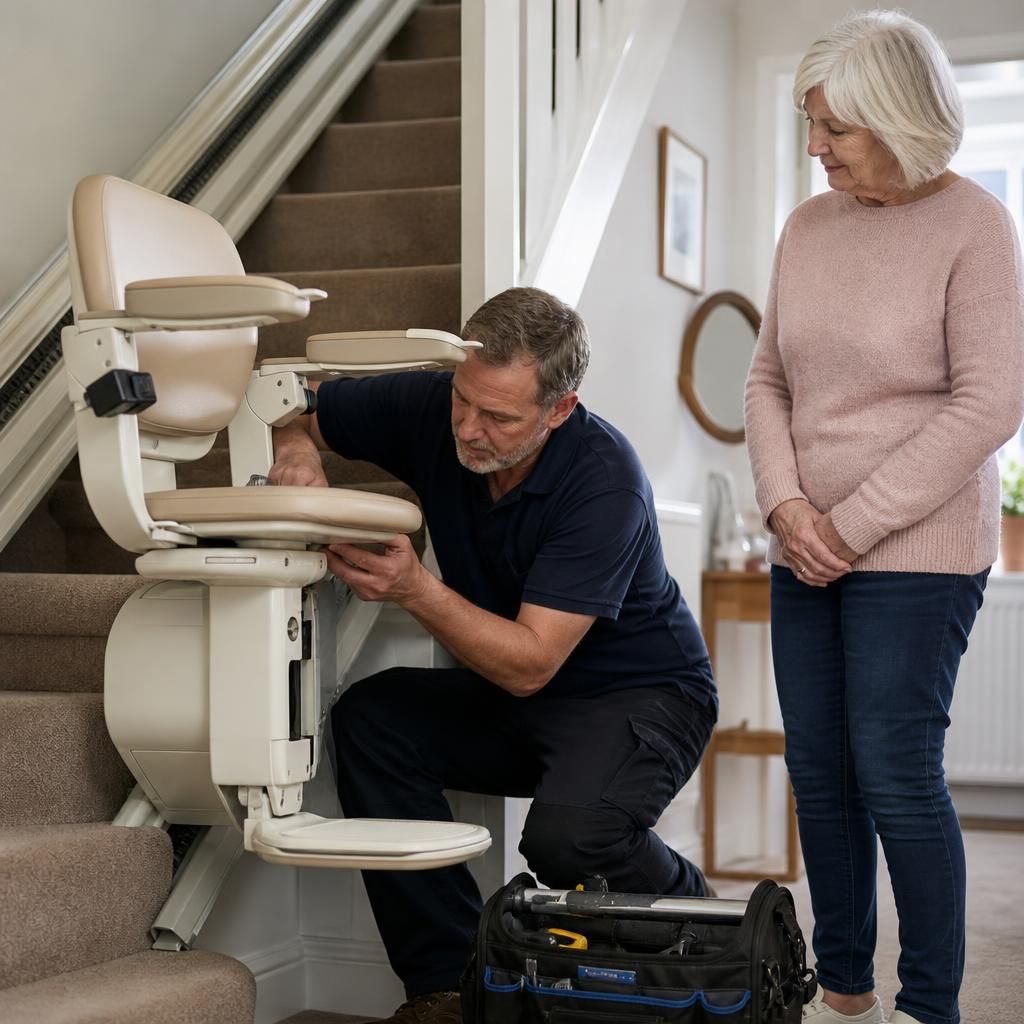
Discuss Your Stairlift’s Maintenance and Replacement Options
Contact Independent Stairlifts to discuss your stairlift’s maintenance history, likely repair needs and whether continued servicing or replacement is the more practical option.