
What factors affect the cost of a stairlift for the elderly?
The cost of a stairlift for an elderly person is mainly affected by the staircase layout, the type and condition of the lift, installation requirements, and any features needed for comfort, safety or outdoor use. Straight stairlifts are usually less complex to install, while curved, outdoor, reconditioned or specially adapted models may have different pricing.
The cost of a stairlift for an elderly person is mainly determined by the staircase layout, the type and condition of the stairlift, the complexity of installation, and the features required for safe and comfortable use. A straight indoor stairlift is generally less complex than a curved, outdoor or specially adapted model, but the most accurate price can only be established after assessing the staircase and the user’s requirements.
The shape and layout of the staircase
The staircase is one of the most important cost factors. A straight flight with no bends, intermediate landings or changes in direction usually needs a standard rail and a comparatively straightforward installation. A staircase with one or more bends, a half landing, several flights or a spiral design requires a curved rail made to follow its exact shape. This bespoke manufacturing and fitting process normally makes a curved stairlift more expensive.
Other features that may affect the work include narrow steps, restricted headroom, unusually steep sections, doors close to the top or bottom of the stairs, and limited space for parking the chair. The position of the rail, charging points and folded seat must all be considered so that the stairlift does not obstruct access or create a trip hazard.
The type of stairlift selected
Different stairlift types are designed for different environments and levels of use. Straight models are intended for uncomplicated staircases, while curved models are made for stairs that change direction. Outdoor stairlifts need materials and electrical components suitable for exposure to rain, cold, sunlight and changing temperatures. Their installation may also require additional weather protection and suitable outdoor power provision.
Heavy-duty stairlifts for larger users can have stronger motors, wider seats, higher weight capacities and more robust components. These requirements can increase the purchase and installation cost compared with a standard model. A specialist stairlift may also be needed where the user has particular transfer, posture, balance or mobility needs.
Whether the stairlift is new or reconditioned
A reconditioned stairlift may cost less than a new installation, particularly where the staircase is straight and the available equipment is suitable. However, the price depends on the model, its age, condition, specification, warranty and the work required to prepare and install it. A curved reconditioned stairlift is less likely to be a simple like-for-like option because its rail is made for a particular staircase and may not be suitable for another property.
When comparing options, consider what is included in the price rather than looking only at the initial purchase cost. Check whether inspection, refurbishment, delivery, fitting, testing, warranty cover, removal and future servicing are included.
Installation requirements
Installation is not just a matter of fixing the stairlift to the steps. The installer must check the structure of the staircase, position the rail correctly, connect or confirm the charging supply, test the controls and make sure the lift operates safely at every point. A straightforward installation may involve less labour than one requiring adjustments to the rail, additional electrical work or changes to the parking position.
Costs can also be affected if access to the property is difficult, if the stairlift has to be carried through a restricted entrance, or if an existing lift needs to be removed. Any necessary repairs to damaged steps, flooring, electrical circuits or walls should be identified before installation rather than assumed to be included in the standard quotation.
Seat design and user-specific adaptations
The basic seat may be sufficient for some users, but others need features that make transfers and operation easier. Options can include a powered swivel seat, powered footrest, adjustable seat height, a higher or wider seat, a perch-style seat, alternative armrests or a harness. These additions can increase the cost because they use more complex components and may require a different lift specification.
The correct choice should be based on the user’s ability to sit, stand, transfer and operate the controls. Selecting the cheapest model without considering these factors can make everyday use more difficult and may result in extra costs if adaptations are needed later.
Safety and convenience features
Safety features such as obstruction sensors, diagnostic displays, secure armrests, easy-to-use controls, seat belts and folding mechanisms may form part of the standard specification or may be optional, depending on the model. Additional controls, remote call/send units, powered folding rails and automatic swivel functions can also affect the total price.
These features should be assessed for their practical value. For example, a powered folding rail may be useful where a doorway or walkway is close to the bottom of the stairs, while a remote control may help another person call the stairlift between floors. An assessment can help distinguish essential features from those that are unlikely to benefit the particular user.
Indoor or outdoor location
An outdoor stairlift generally costs more than a comparable indoor model because it must withstand weather and may need protective covers, weather-resistant finishes and charging arrangements suited to the installation site. The condition of external steps, the availability of a safe power supply and the distance from the property’s electrical system may also affect the work involved.
Condition, age and aftercare
The expected reliability and future maintenance requirements should be considered alongside the initial price. A newer lift may have current components, a longer available support period and a wider choice of replacement parts. A reconditioned lift can offer good value when it has been properly inspected and serviced, but the warranty and aftercare arrangements should be clearly understood.
Ongoing costs may include servicing, replacement batteries, repairs and eventual removal. Battery life is affected by usage and charging performance, while outdoor exposure and heavy use may place greater demands on components. Ask what routine maintenance is recommended and whether servicing is available after the installation warranty ends.
VAT and possible financial support
In the UK, some disabled or chronically ill people may qualify for VAT relief on qualifying mobility equipment, including certain stairlift installations, when the relevant conditions are met. Eligibility depends on the user, the intended private use and the specific goods or services supplied. It should be confirmed with the installer before the quotation is accepted; it should not be assumed automatically because the user is elderly.
Local authority funding, charitable assistance or other support may also be available in some circumstances, but eligibility and contribution levels vary. These sources should be checked separately, as an application may need to be made before ordering work.
How to compare quotations
A useful quotation should describe the stairlift model, rail type, seat specification, installation work, electrical requirements, warranty, delivery, removal of an existing lift and any ongoing support. Make sure the quotation is based on an assessment of the actual staircase rather than a generic price.
- Compare the total installed cost, not just the equipment price.
- Check which safety, comfort and charging features are included.
- Confirm whether the quotation covers preparation work and removal of an old stairlift.
- Ask about warranty length, servicing and replacement parts.
- Ensure the chosen specification suits the user’s mobility, weight, posture and ability to transfer.
An in-home assessment remains the most reliable way to identify the factors affecting cost. It allows the staircase, user requirements and installation conditions to be considered together, producing a quotation for a safe and practical solution rather than a price based on assumptions.
The cost of a stairlift for an elderly user is most accurately determined by assessing the staircase and the user’s mobility needs together. A straight indoor staircase may suit a standard installation, while bends, landings, restricted space or transfer difficulties can require a different rail, seat or installation method.
When reviewing a quotation, check that it includes:
- the stairlift, rail and seat specification;
- installation, testing and any required electrical work;
- removal of an existing lift, if applicable;
- warranty and aftercare arrangements; and
- any adaptations needed for safe transfers or easier operation.
This approach helps you compare the total installed cost rather than an equipment-only price and reduces the risk of unexpected charges later.
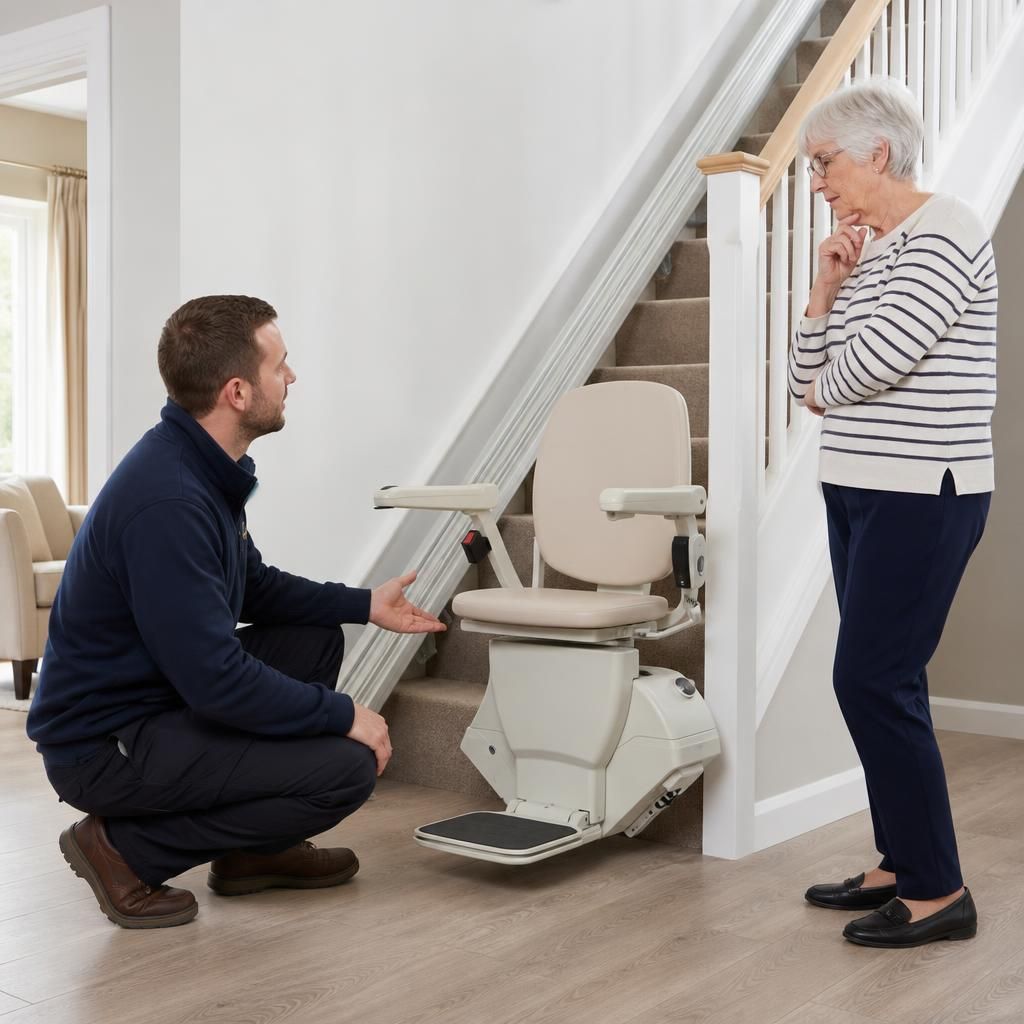
Arrange a stairlift assessment and receive a tailored quotation
Arrange a stairlift assessment so we can review your staircase, mobility requirements and installation needs. You’ll then receive a tailored quotation for a suitable stairlift solution.