
What are the cost differences between stairlifts designed for heavier users versus standard models?
Stairlifts designed for heavier users usually cost more than standard models because they require stronger motors, reinforced components, a higher-capacity seat and, in some cases, a wider rail or specialist installation. The final price also depends on the staircase, chosen features and whether the lift is new or reconditioned, so an individual assessment is needed for an accurate comparison.
Heavy-duty stairlifts generally cost more than standard models because they are built to support a greater user weight and may require stronger motors, reinforced frames, higher-capacity seats and additional safety components. The difference is not a fixed surcharge: the total price depends on the stairlift specification, the staircase, installation requirements and whether the equipment is new or reconditioned.
A standard stairlift is usually suitable where the user falls within the lift’s specified weight limit and can sit safely in the standard seat. A stairlift for a heavier user is designed for a higher maximum load and may also provide more space, greater stability and additional support. These requirements affect both the equipment price and, in some homes, the complexity of fitting it.
Why heavy-duty models cost more
- Higher-capacity drive system: The motor, gearbox and braking system must move and stop a greater combined weight safely and reliably. This can require more robust components than those used in a standard lift.
- Reinforced construction: The seat, swivel mechanism, footplate, armrests and carriage may all need to be strengthened. These components are subject to greater loads during use.
- Larger or specialist seating: A wider seat, stronger upholstery frame, extended armrests or a higher-capacity swivel seat can increase the equipment cost. Some users may also need a powered swivel, powered footplate or other positioning aid.
- Different rail requirements: The rail may need to carry a heavier carriage and user. On a curved staircase, the rail is made specifically for the stairs, and the design may require additional engineering or a more substantial installation.
- Additional safety features: Seat belts, adjustable supports, sensors, safety edges and controls positioned for easier reach may be particularly important. Optional powered functions can add to the final price.
How installation affects the comparison
Installation is not necessarily more expensive simply because a stairlift has a higher weight capacity. A straightforward straight-stair installation may use the existing type of fitting approach, although the heavier carriage and rail fixings must be suitable for the specification. Costs can rise where the staircase is narrow, has unusual dimensions, requires alterations to handrails or skirting, or needs electrical work.
Curved staircases usually cost more than straight staircases because the rail is measured and manufactured to follow the individual bends, landings and changes in direction. A heavy-duty curved stairlift can therefore combine two separate cost factors: the specialist rail and the higher-capacity equipment. Outdoor installations may also need weather-resistant materials, protective covers and suitable electrical provision.
The condition of the staircase and the space available at the top and bottom should also be considered. A larger seat or carriage may affect access to doorways, hallways or landings. In some properties, the installation team may need to assess whether the lift can park without obstructing a route or whether the user can transfer safely in the available space.
New versus reconditioned heavy-duty stairlifts
A reconditioned stairlift may reduce the equipment cost, but availability is more limited for higher-capacity models. The lift must still be suitable for the user’s weight, posture, mobility and staircase. It should be professionally inspected, serviced and installed, with its condition and warranty explained clearly. A lower purchase price should not be treated as a saving if the model lacks the seat width, lifting capacity, controls or safety features required.
New equipment may offer a wider choice of capacities, seat designs and powered options. It can also be specified more precisely for the user and the staircase. The appropriate comparison is therefore the complete installed solution, rather than the advertised price of the stairlift alone.
Other costs to include in the overall budget
- The stairlift, rail and chosen seat configuration.
- Surveying, delivery and professional installation.
- Any adaptations to electrical supplies, handrails or surrounding fittings.
- Removal of an existing stairlift, where applicable.
- Servicing, repairs and replacement parts over the expected working life.
- Optional features such as powered swivel seats, powered footplates, extra controls or upgraded upholstery.
Maintenance costs can be influenced by how heavily the stairlift is used and the availability of compatible replacement parts. A heavy-duty model is not automatically more expensive to maintain, but its specialist components may cost more to replace. Following the manufacturer’s operating guidance and arranging servicing when recommended can help identify wear before it affects safe operation.
When comparing quotations, check that each one states the maximum user weight, seat dimensions, included safety features, rail type, installation work, warranty and any ongoing service arrangements. Also confirm whether the quoted price includes VAT and removal of an existing lift if that is relevant. A quotation based on an assessment is more useful than a basic equipment price because it accounts for the staircase and the user’s individual needs.
The safest and most cost-effective choice is the lowest-capacity model that comfortably meets the user’s requirements, rather than selecting a standard stairlift that is close to its limit. An assessment can confirm the correct weight capacity, seating position, transfer space and control layout before a price is agreed.
The main cost difference between a stairlift for a heavier user and a standard model usually comes from the equipment specification, rather than the installation alone. A higher-capacity lift may need a stronger drive system, reinforced seat and carriage, wider seating and more robust safety components.
Installation can remain relatively straightforward on a standard straight staircase, provided the rail, fixings and available space are suitable. Costs may increase if the staircase is curved, narrow or requires changes to handrails, electrical supplies or surrounding fittings. The most useful comparison is therefore the complete installed price, including the correct weight capacity, seat configuration, survey, fitting and warranty.
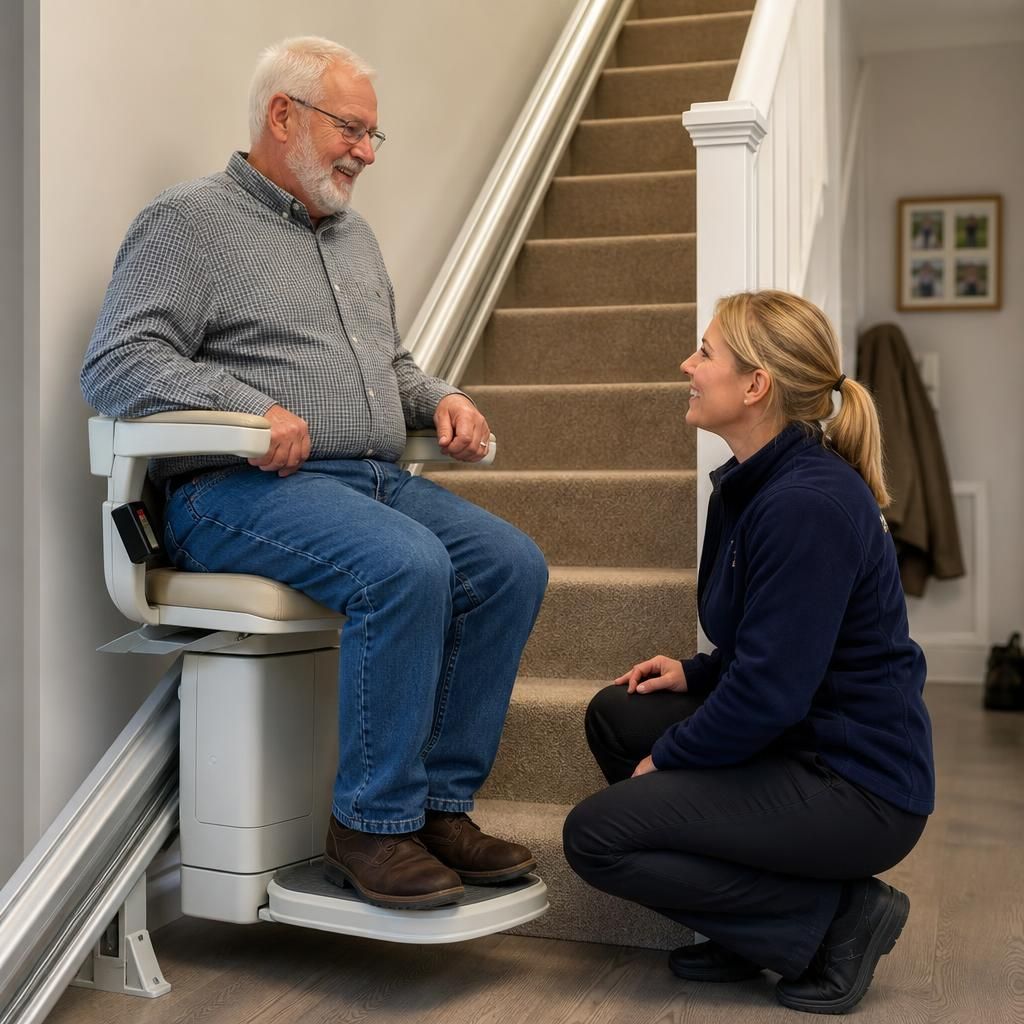
Arrange a Stairlift Assessment for the Right Weight Capacity
Arrange a stairlift assessment to confirm the right weight capacity, seat configuration and installation requirements for your staircase. We can then provide a clear quotation for the complete solution.