
How does the price of adding advanced safety features to stairlifts impact overall costs?
Adding advanced safety features can increase the initial stairlift price and, in some cases, ongoing maintenance costs, but the impact depends on the feature, stair design and whether it is included in the chosen model. Options such as enhanced sensors, powered swivelling seats, powered footrests and automatic folding rails may cost more, so an assessment helps identify which provide genuine value for the user’s needs.
Adding advanced safety features usually raises the initial cost of a stairlift, but the increase depends on the feature, the stairlift model, the staircase and whether the option is already included as standard. Some features improve physical safety directly, while others make the lift easier to operate for someone with limited strength, balance or coordination. The most cost-effective choice is therefore the one that addresses the user’s specific risks, rather than adding every available option.
Safety equipment is often built into modern stairlifts as standard. Typical essential features include a seat belt or harness, obstruction sensors, braking systems, diagnostic controls and a safe means of stopping if power is interrupted. These should not normally be treated as optional extras. When comparing quotations, check which safety functions are included in the stated price and which are upgrades, as two apparently similar stairlift prices may cover different specifications.
Advanced options can affect the overall cost in several ways:
- Enhanced obstruction sensors: Additional or more sensitive sensors can help detect objects on the stairs and stop the lift before contact. They may be particularly useful in busy households, although the stairway should still be kept clear.
- Powered swivel seats: A powered seat can rotate at the top or bottom of the stairs, reducing the need to twist or step sideways when getting on and off. This can add to the purchase price but may provide important practical value for someone with reduced hip, knee or back movement.
- Powered footrests: A powered footrest can fold or unfold without requiring the user to bend down. This may be useful where flexibility, strength or balance is limited.
- Automatic or powered folding rails: These can reduce the effort needed to move a rail out of the way at a doorway, hallway or other access point. The cost is influenced by the rail design and the available space.
- Adjustable seating and support: A higher seat, firm armrests, additional cushioning or a supportive backrest may improve transfer safety and comfort. These changes can sometimes involve a different seat specification rather than a separate safety accessory.
- Remote controls and call-send controls: These do not protect the user while travelling, but they allow the stairlift to be moved to a convenient position. This can reduce unnecessary reaching or walking to find the lift.
- Specialist controls: Joystick, toggle, push-button or other control arrangements can make operation safer for users with arthritis, poor grip or limited hand movement. The cost depends on the model and the adaptation required.
The staircase itself is a major influence on the price. A straight stairlift generally has a simpler rail and installation process, whereas a curved stairlift is made to follow bends, landings or changes in direction. Advanced features fitted to a curved model may therefore have a higher overall cost because they are being added to a more individually configured system. Narrow stairs, unusual access points and the position of doors or radiators can also affect the installation work.
Some safety-related upgrades increase the purchase price without substantially changing routine running costs. Powered seats, footrests and folding rails may use the stairlift’s rechargeable battery, so their effect on electricity use is usually limited. However, they introduce additional moving parts and controls. Over time, servicing or replacement of a failed component may cost more than maintaining a simpler specification. This does not mean that powered options are poor value; it means their likely usefulness should be weighed against their additional complexity.
Maintenance costs are also affected by how the stairlift is used and maintained. Keeping the rail and charging points clear, following the operating instructions and arranging appropriate servicing can help identify wear before it affects reliability. A suitable warranty or aftercare agreement may cover some faults, but the exact terms should be checked. Ask whether advanced components, batteries, call-out visits and labour are included, and whether cover differs between a new and reconditioned stairlift.
For an elderly user, the value of an advanced feature is best judged against the task it removes. For example, a powered swivel seat may be more worthwhile than a basic manual swivel if the user cannot safely turn at the landing. A powered footrest may be justified where bending down creates a fall risk. Conversely, a simpler stairlift may be adequate where the user has good movement, can operate a manual control safely and does not need help at the top or bottom of the stairs.
It is also important to distinguish safety features from convenience features. A powered rail or remote control may improve access and reduce effort, but it does not replace the need for a correctly fitted seat belt, clear stairs and safe transfers. The installer should explain which features address a specific hazard, which improve independence and which are mainly for comfort.
When reviewing the overall cost, request an itemised quotation showing:
- the stairlift model and whether it is new or reconditioned;
- the safety features included as standard;
- each advanced option and its individual price;
- survey, installation and any electrical or structural work;
- warranty, servicing and battery coverage;
- possible costs for removing the stairlift or relocating it later.
A home assessment is particularly important when the user has limited mobility, visual or cognitive difficulties, or more than one person will use the stairlift. The assessment should consider how the user approaches the stairs, sits down, fastens the belt, operates the controls, reaches the landing and leaves the seat. This helps prevent paying for an option that does not solve the actual difficulty, while identifying upgrades that may materially improve safe use.
In summary, advanced safety features can increase the upfront stairlift price and may add to future servicing costs, but they can also reduce transfer risks and make independent use possible for longer. Compare the complete installed specification rather than the headline price, prioritise features linked to the user’s assessed needs, and confirm the long-term warranty and maintenance implications before making a decision.
Advanced stairlift safety features increase the overall cost when they are added as upgrades rather than included in the standard model. The most worthwhile options are those that remove a specific difficulty, such as a powered swivel seat for safer transfers or a powered footrest for someone who cannot bend comfortably.
When comparing quotations, check whether essential safety equipment, installation and aftercare are already included. Ask for each additional feature to be priced separately, along with any effect on servicing, batteries, warranty cover and replacement parts. This makes it easier to compare the complete installed cost rather than choosing on the headline stairlift price alone.
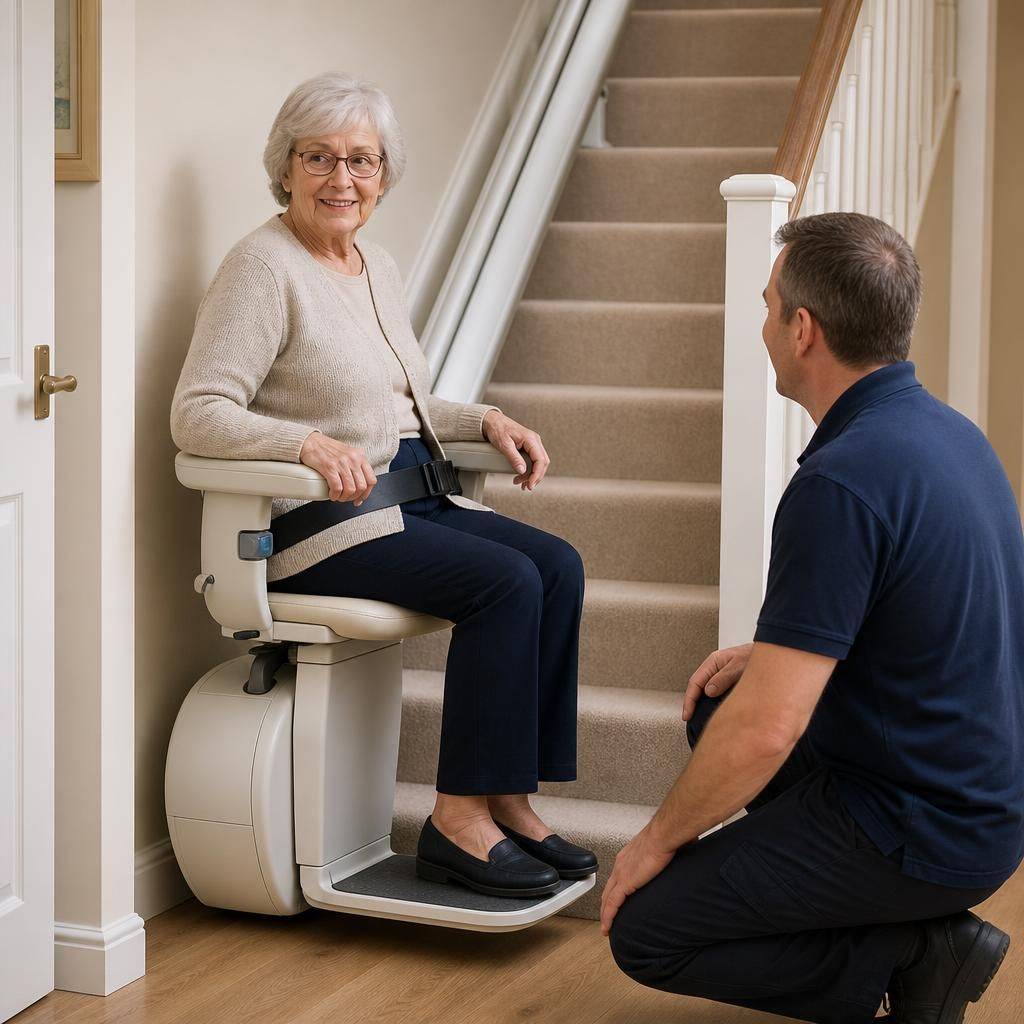
Discuss the right stairlift safety features for your needs
Discuss the right stairlift safety features for your needs with our team, based on the user’s mobility, staircase and transfer requirements. We can explain which options are included as standard, which are upgrades and how they affect the complete installed cost.