
Are reconditioned stairlifts a cost-effective option for elderly users?
Reconditioned stairlifts can be a cost-effective option for elderly users because they are typically less expensive than new installations while still providing reliable, safe access when properly inspected and serviced. Their value depends on the stairlift’s condition, suitability for the staircase, included warranty and ongoing maintenance requirements, so a professional assessment is important before choosing one.
Reconditioned stairlifts can be a cost-effective option for elderly users because they usually cost less than a comparable new installation while still offering dependable support when the equipment has been properly assessed, serviced and fitted. The important comparison is not simply the purchase price. You should consider the stairlift’s condition, suitability for the staircase, warranty, installation work, expected maintenance and the likely cost of replacing parts over its remaining service life.
A reconditioned stairlift is a previously used unit that has been removed, inspected, cleaned, tested and serviced before being installed for another customer. Components may be repaired or replaced where necessary. The stairlift should then be matched to the user and staircase rather than selected solely because it is cheaper.
Why reconditioned stairlifts can reduce the initial cost
- The main stairlift equipment has already been manufactured and used, so its purchase price is generally lower than that of a new model.
- Some components, such as a straight rail, may be suitable for reuse if they are in good condition and compatible with the staircase.
- A reconditioned model may provide essential functions without the cost of optional upgrades that are not needed for the user’s circumstances.
- It can be a practical choice where access is needed quickly or where the stairlift is required for a limited period, provided the supplier offers appropriate support and warranty cover.
The potential saving is often clearer with a straight stairlift because standard rails may be easier to source and adapt. Curved stairlifts are made for individual staircases, so the rail remains a significant part of the installation. A reconditioned curved unit may still offer value, but the saving can be less substantial once the rail, fitting and any alterations have been considered.
Safety and condition matter more than age alone
Age does not, by itself, determine whether a stairlift is suitable. A well-maintained older unit may be more appropriate than a newer model that is poorly matched to the staircase or user. However, a professional assessment should establish the condition of the drive system, batteries, charging equipment, seat, armrests, footrest, controls, sensors, swivel mechanism and safety belt.
Before installation, the stairlift should be examined and functionally tested. Servicing may include checking electrical connections, drive components, charging performance, operating controls, safety edges and stopping mechanisms. Worn parts should be identified and replaced where required. The installation should also include instructions on safe operation and confirmation that the user can comfortably transfer on and off the seat.
Ask what the supplier means by “reconditioned”. This term can cover different levels of preparation. A reliable quotation should explain whether the stairlift has been fully serviced, which parts have been replaced, whether the batteries are new or tested, and whether the equipment has been checked against the manufacturer’s operating requirements.
Compare the complete installed cost
The price of the stairlift is only one part of the total cost. When comparing a reconditioned model with a new installation, check whether the quotation includes:
- the stairlift and any required rail;
- delivery, fitting and removal of existing equipment;
- alterations needed to the stairs, landing or power supply;
- demonstration and user instruction;
- warranty cover for parts and labour;
- follow-up servicing or call-out support;
- replacement batteries or other likely wear items; and
- removal or cancellation arrangements if the stairlift is no longer needed.
A lower initial price may not represent good value if the warranty is limited, servicing is excluded or commonly replaced components are near the end of their useful life. Conversely, a reconditioned stairlift with a clear warranty, professional installation and suitable aftercare may provide dependable access at a substantially lower overall cost than a new equivalent.
Consider the user’s needs and the staircase
The stairlift must support the user’s mobility, weight, balance, confidence and ability to operate the controls. Seat height, seat width, swivel action, footrest position and belt design can all affect safe use. If the user has limited strength or dexterity, controls should be easy to reach and operate. A model that is inexpensive but difficult to use may lead to reduced independence and unnecessary expenditure later.
The staircase also affects suitability and price. A straight flight is usually simpler to fit. A staircase with bends, intermediate landings, narrow sections or doors close to the steps requires more detailed planning. Outdoor stairlifts need equipment designed for exposure to weather and may involve additional protection and maintenance. These differences mean that prices should be compared only after an assessment of the actual installation environment.
Space is another practical consideration. The folded stairlift should leave enough room for other people to use the stairs where possible. At the top or bottom of the staircase, the seat and rail must allow a safe transfer. A professional survey can identify whether a reconditioned model has the adjustment range and configuration needed for the property.
When a new stairlift may be better value
A new stairlift may be preferable where the user needs a particular specification, where the staircase is complex, or where the equipment will be used frequently for many years. New models may offer the latest seating options, controls and safety features, together with a longer or more comprehensive warranty. The additional cost can be justified if it reduces the need for modifications or provides features that are important to safe, comfortable use.
A new installation may also be more suitable if a compatible reconditioned model is not available. Forcing a poor match to save money can create additional installation work, compromise comfort or result in earlier replacement. The right decision should therefore be based on the complete quotation and expected use, not on the reconditioned label alone.
Questions to ask before choosing a reconditioned stairlift
- Has the unit been inspected and serviced before being offered for installation?
- Which parts have been replaced, and what is the condition of the batteries?
- Is the stairlift suitable for the user’s weight, mobility and preferred transfer method?
- Will the existing rail fit the staircase safely, or will a new or modified rail be needed?
- What does the warranty cover, and for how long?
- Are call-outs, labour and replacement parts included or charged separately?
- What maintenance is recommended, and which components are likely to wear over time?
- What happens if the stairlift is no longer required?
For elderly users, a reconditioned stairlift is generally most cost-effective when it is professionally assessed, correctly fitted, supported by a meaningful warranty and chosen to meet the user’s actual needs. We can compare suitable reconditioned and new options during an assessment, explain the likely ongoing costs and provide a quotation based on the staircase and required specification rather than the equipment price alone.
A reconditioned stairlift is cost-effective when its lower purchase price is matched by safe installation, reliable condition and suitable aftercare. Before comparing it with a new model, check what is included in the complete quotation.
- Professional inspection, servicing and fitting
- Replacement or tested batteries and other worn parts
- Warranty cover for parts and labour
- Call-out, maintenance and future repair arrangements
A low initial price may offer poor value if essential servicing or support is excluded. A properly assessed reconditioned stairlift with clear warranty terms can provide dependable access at a lower overall cost, provided it is suitable for both the user and the staircase.
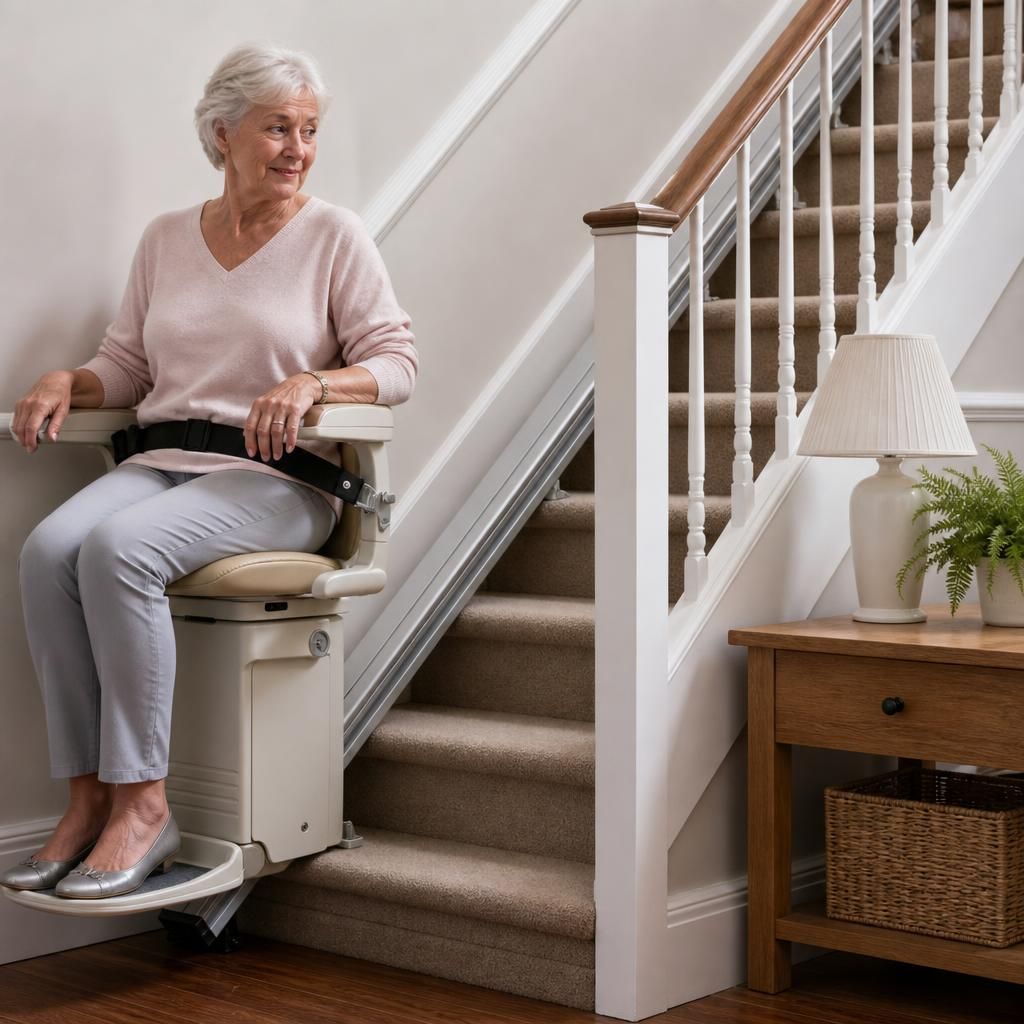
Arrange an Expert Assessment of Reconditioned Stairlift Options
Arrange an expert assessment to compare suitable reconditioned and new stairlift options for your staircase and requirements. We can explain the complete installed cost, warranty and ongoing support before you decide.