
What factors influence the cost of a curved stairlift?
The cost of a curved stairlift is mainly influenced by the shape and complexity of your staircase, the length of the rail, the installation requirements and the features selected. Bespoke measurements, extra landings or bends, powered options and whether you choose a new or reconditioned stairlift can all affect the final price.
The cost of a curved stairlift is primarily influenced by the design of the staircase, the length and complexity of the bespoke rail, the installation requirements and the features selected. Unlike a straight stairlift, a curved model is usually made to follow the precise route of the stairs, so bends, intermediate landings, changes in direction and the available space at the top and bottom can all affect the final price.
A reliable price can normally be given only after a detailed assessment. Photographs may help with an initial discussion, but an in-home survey allows the stairlift specialist to measure the staircase, check access and identify practical installation considerations that are not always visible in photographs.
Staircase shape and complexity
The configuration of the staircase is usually the most significant factor. A simple curved staircase with one continuous flight generally requires less rail work than a staircase with several turns, intermediate landings or multiple flights. The rail may need to follow:
- tight or wide bends;
- changes in direction;
- spiral or helical sections;
- split-level landings;
- several flights joined together; or
- unusual changes in stair width or pitch.
Each additional curve or transition requires careful measuring, design and manufacture. A staircase with a more complicated layout may therefore cost more than a longer staircase with a relatively straightforward route.
Rail length and construction
Curved stairlift rails are made to suit the staircase rather than supplied as a standard straight section. The length of the route, the number of sections and the amount of shaping required all contribute to the cost. A rail that continues across more than one flight or extends beyond the normal starting and stopping points will involve additional materials and installation work.
The position of the rail also matters. It must provide a safe and comfortable travel path while leaving suitable clearance for the user and other people using the stairs. In some homes, the best route may require a particular rail position, a different parking point or an adjustment to the way the seat approaches the top or bottom landing.
Landings, parking positions and access at the ends
The space available at the bottom and top of the stairs can influence both the design and the price. A standard parking position may not be suitable where there is a doorway, narrow hallway or limited landing space. The rail may need to extend beyond the staircase, or the stairlift may require a configuration that moves the seat away from the stair opening.
Possible arrangements include a straight approach onto a landing, a shortened or extended rail, or a powered mechanism that moves the seat or footplate into a more convenient position. These choices are assessed in relation to safe transfers and the layout of the home, rather than selected on appearance alone.
Seat and powered features
The specification of the stairlift also affects the price. A basic seat may be appropriate for one person, while another user may need extra support, more adjustment or powered movement. Features that can change the cost include:
- a powered swivel seat;
- a powered folding footplate;
- powered seat or footrest adjustments;
- additional or upgraded controls;
- different seat widths or upholstery options;
- folding or retractable components where space is restricted; and
- specialist seating or support features suited to the user.
Powered options can make transfers easier, particularly where the user has limited strength or movement. However, they add equipment and complexity, so they should be considered according to the user’s needs and the available space.
Installation conditions
The condition and construction of the staircase can affect the work required. Most domestic stairlifts are fixed to the stairs rather than the wall, but the installer still needs to check the stair structure, fixings, skirting boards, surrounding walls and nearby obstructions. Unusual stair construction, restricted access or the need to protect finished surfaces may require additional preparation.
Installation can also be affected by the distance between the staircase and an available electrical supply. A suitable power connection is required to charge the stairlift. Where electrical work or other preparation is needed, this should be identified during the survey and included clearly in the quotation.
New or reconditioned equipment
A reconditioned curved stairlift may have a lower initial cost than a new installation, but suitability depends on the rail route and the condition of the equipment. Because the rail is made for a particular staircase, a previously used curved stairlift may not be suitable for another home unless the rail can be remade or adapted. The available specification, warranty, battery condition and servicing history should all be checked before making a decision.
A new curved stairlift provides a rail designed specifically for the property and allows the specification to be chosen around the user. A reconditioned option can be useful in some circumstances, but the lower purchase price should be considered alongside any alteration, installation and future maintenance requirements.
Removal, alterations and additional work
The quotation may also be influenced by work outside the stairlift itself. This can include removing an existing stairlift, disposing of old equipment, moving furniture to create safe access, carrying out minor electrical work or making agreed changes to the parking position. These items are not required in every installation, so they should be confirmed during the assessment rather than assumed.
How to compare quotations
When comparing prices, check that each quotation covers the same specification. It should be clear whether the price includes the survey, bespoke rail, delivery, installation, testing, user instruction, warranty and removal of existing equipment where applicable. A lower price may reflect a simpler configuration or fewer powered features, rather than a like-for-like alternative.
Ask the surveyor to explain which parts of the staircase are driving the cost and which features are essential for safe, comfortable use. This helps distinguish between costs caused by the building and optional upgrades that can be selected according to preference and budget.
Independent Stairlifts can assess the staircase and discuss the user’s mobility, transfer requirements and preferred features before recommending a suitable specification. A tailored assessment provides a more accurate understanding of the likely cost and helps ensure that the quoted stairlift is appropriate for the home, rather than based only on a standard model or an estimated rail length.
The staircase layout is usually the strongest influence on the cost of a curved stairlift. Unlike a straight model, the rail is measured and manufactured to follow the exact route of the stairs, including bends, changes of direction, intermediate landings and multiple flights.
Each change in the route requires additional design, shaping and installation work. The available space at the top and bottom can also affect the specification if the rail needs to extend to a safer parking position or move the seat away from a doorway or stair opening. An in-home survey identifies these requirements so the quotation reflects the actual staircase rather than an estimated rail length.
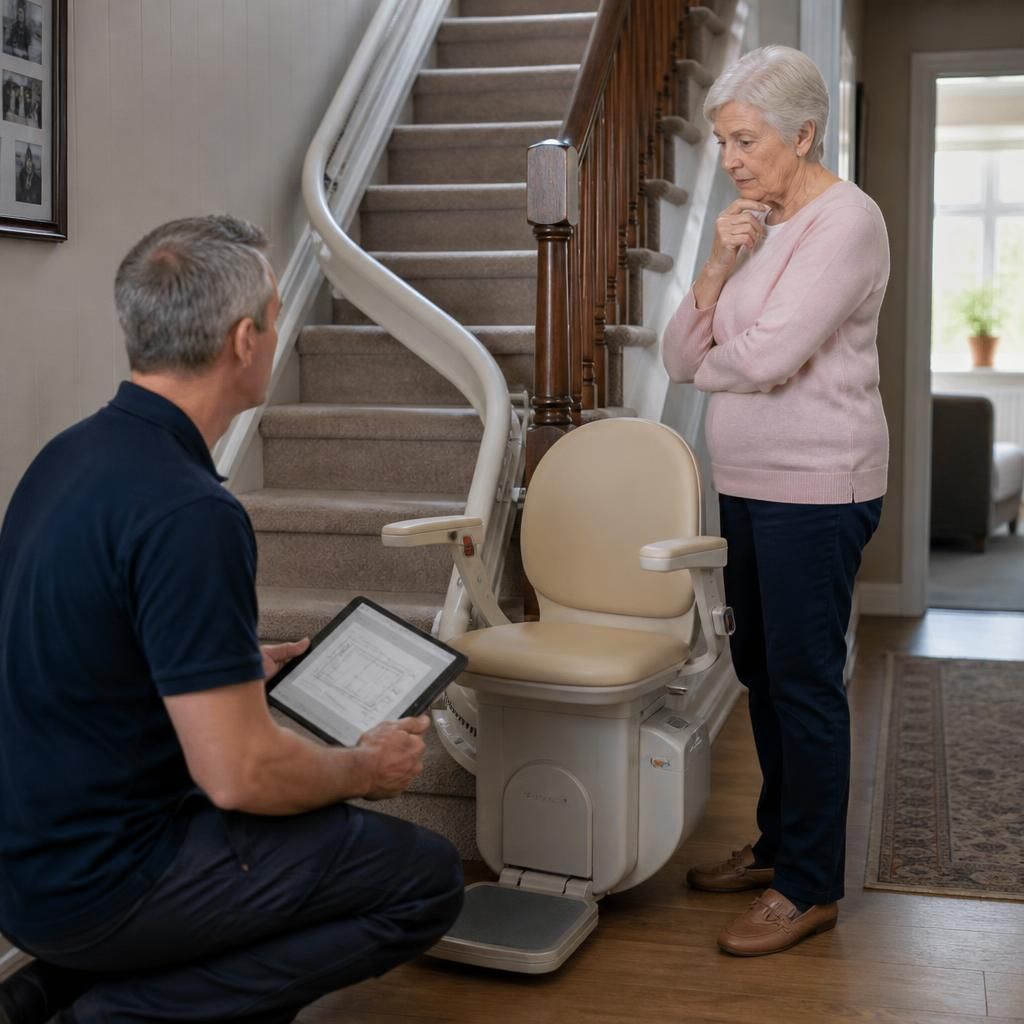
Arrange your curved stairlift assessment
Arrange your curved stairlift assessment with Independent Stairlifts to discuss your staircase, mobility requirements and suitable features. A home survey will help provide a clear quotation based on your individual installation.