
What are the ongoing maintenance requirements for a curved stairlift?
A curved stairlift should receive regular servicing by a qualified engineer, alongside routine cleaning, battery checks and inspection of the track, seat, sensors and safety controls. Follow the manufacturer’s maintenance schedule and report unusual noises, movement, charging problems or warning lights promptly so issues can be assessed before they affect safe operation.
Ongoing maintenance for a curved stairlift consists of routine cleaning and user checks, regular servicing by a qualified engineer, and prompt attention to faults. Because the rail is made to follow the individual shape of the staircase, both the lift and its track need to be kept clean, correctly aligned and free from obstructions. Following the manufacturer’s schedule helps maintain safe, dependable operation and can protect any applicable warranty or service agreement.
Routine checks for the user
Before using the stairlift, check that the staircase and landing are clear, the seat is in its normal operating position and there are no visible signs of damage. Pay attention to changes such as unusual noise, hesitation, vibration, jerky movement, reduced travel speed, warning lights or difficulty starting. These symptoms should not be ignored, even if the lift continues to operate.
- Keep the track clear of clothing, toys, bags, pet items and other objects that could interfere with the lift or its sensors.
- Wipe dust and light dirt from the seat, armrests, footrest and accessible parts of the rail using a soft, slightly damp cloth.
- Keep the charging points clean and unobstructed so the lift can charge when parked.
- Check that the seat belt, swivel mechanism, armrests and footrest operate as intended.
- Make sure hinged or folding sections of track, where fitted, move freely and lock securely.
Do not use abrasive cleaners, solvents, excessive water or household lubricants unless the manufacturer specifically permits them. Liquids can damage electrical components, while unsuitable oils may attract dust or affect sensors and moving parts.
Professional servicing
A qualified stairlift engineer should service the lift at the intervals recommended by its manufacturer, installer or service agreement. The precise requirements vary according to the model, how often it is used, the staircase layout and the conditions in the home. Servicing normally includes inspecting and testing the drive system, batteries, charging equipment, rail fixings, seat, safety belt, swivel and folding mechanisms, sensors, controls and emergency functions.
The engineer may also check the alignment and condition of the curved rail, examine wear on mechanical components and confirm that the lift stops correctly at the top and bottom of the staircase. Safety devices should be tested rather than assumed to be working. Any adjustments, replacement parts or software-related checks should be completed by a suitably trained professional.
Batteries and charging
Most domestic stairlifts use rechargeable batteries and are designed to charge when parked at a designated charging point. Leaving the lift correctly parked after use is important, particularly if it is used infrequently. A battery that is not charging properly may cause slow movement, repeated warning tones, reduced travel or failure away from a charging point.
Battery life is affected by the model, usage and charging conditions. Batteries are consumable parts and will eventually need replacing. Do not attempt to open, modify or replace them unless this is specifically permitted and you have the appropriate instructions. Contact the service team if the lift does not charge, loses power quickly or repeatedly reports a battery fault.
Track, sensors and the home environment
Curved stairlift rails include bends, joins or moving sections that must remain secure and unobstructed. Do not hang items from the rail or use it as a handrail. Check the area around the track after decorating, moving furniture or carrying out building work, as dust, paint, coverings and changes to flooring can affect clearances or sensor operation.
Outdoor or damp locations require additional care because moisture, temperature changes and dirt can accelerate wear. An outdoor stairlift should be maintained in accordance with its specific instructions, including checks of protective covers, exposed electrical connections and drainage around the installation. Report corrosion, water ingress or deterioration of external components promptly.
When to stop using the stairlift
Stop using the lift and request professional advice if it stops unexpectedly, moves unevenly, produces a new or persistent noise, smells of burning, shows a fault warning, fails to charge, or has damaged wiring, a loose rail or a malfunctioning safety component. Do not bypass a sensor, hold down a safety control or continue using the lift after an impact or suspected electrical fault.
If the lift stops between floors, follow the user instructions supplied with the specific model. Use the emergency lowering or release procedure only as instructed, and seek assistance if you cannot reach a safe landing. Avoid dismantling the stairlift or attempting repairs yourself, as this may create a safety risk and could affect warranty or service cover.
Keeping maintenance records
Keep the installation documents, user manual, service reports and details of any replacement parts together. Record reported faults and repairs, particularly if the stairlift is reconditioned or has changed ownership. These records help an engineer identify recurring issues and confirm that servicing has been completed in line with the relevant requirements.
Maintenance does not normally require the stairlift to be removed from the staircase. Most servicing is carried out in the home, although an engineer may recommend further work if parts are worn, the batteries are failing or the rail or drive system needs adjustment. If you are unsure when your next service is due, check the service documentation or contact Independent Stairlifts for advice based on the model and installation.
Professional servicing is the most important part of ongoing curved stairlift maintenance. A qualified engineer should follow the schedule provided for your model and inspect the drive system, batteries, charging points, curved rail, fixings, sensors, seat, safety belt and emergency controls.
Curved rails may include bends, joins or folding sections that need to remain correctly aligned and secure. An engineer can identify wear, test that the lift stops safely at each landing and make adjustments before a minor issue affects reliability. Do not lubricate, dismantle or repair the stairlift yourself unless the manufacturer specifically instructs you to do so. Keep the service reports with your user manual, as they provide a useful record of maintenance and any replacement parts.
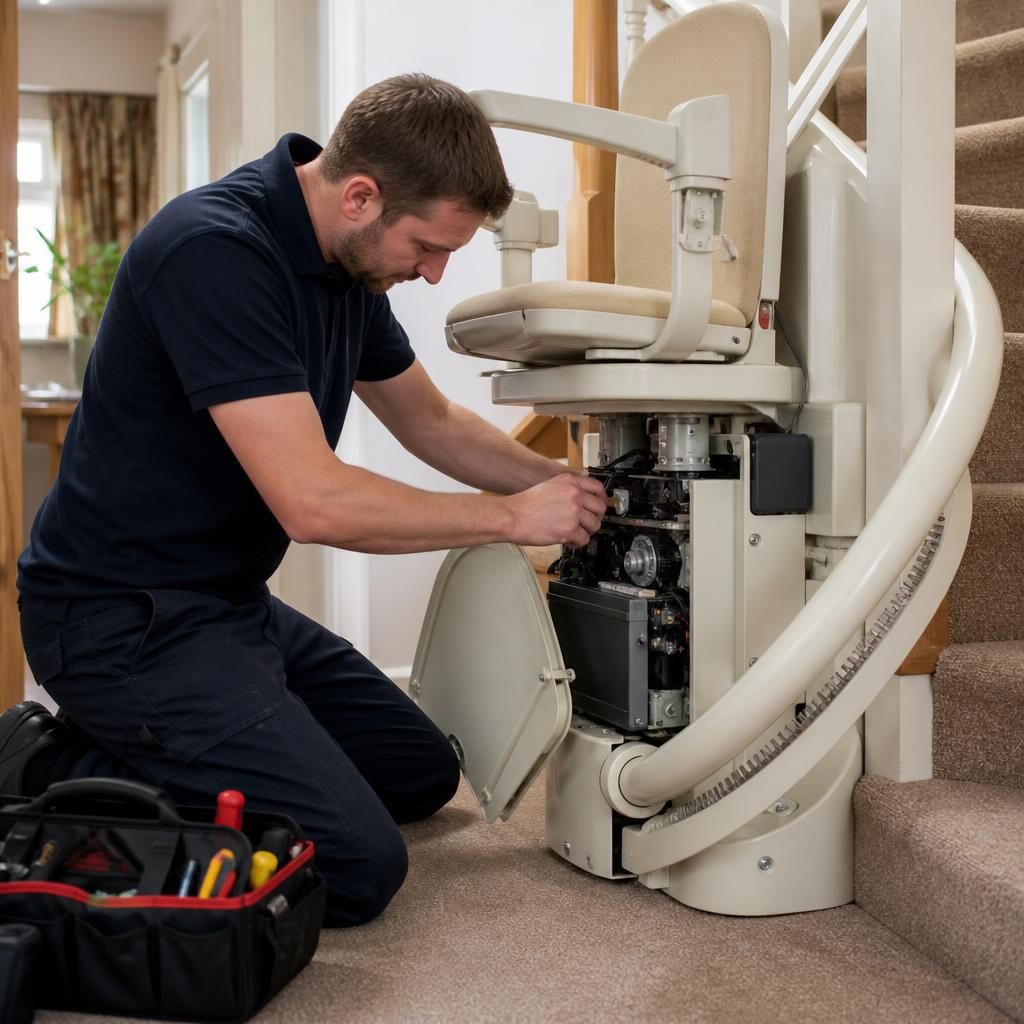
Arrange Your Curved Stairlift Service
Arrange a professional curved stairlift service with Independent Stairlifts to check the rail, drive system, batteries and safety controls. Contact our team for advice on servicing your model or to book an engineer visit.