
How long does the installation of a curved stairlift take?
A curved stairlift is usually installed during a single visit once the bespoke rail has been manufactured. The overall timescale depends on the initial survey, the staircase design, any required preparation and the installation schedule.
Most curved stairlifts are installed during a single visit once the bespoke rail has been manufactured. The installation itself is often completed within one working day, although a complex staircase, additional preparation or a multi-rail system may require more time. The overall timescale starts with the assessment and includes measuring, design approval, manufacture, scheduling and installation.
A curved stairlift cannot usually be fitted straight away because its rail is made to follow the precise shape of your staircase. Before installation, a surveyor will assess the full route, including bends, landings, intermediate floors, changes in direction, available headroom and the position of the top and bottom parking areas. Measurements and photographs or digital records from this assessment are used to design the rail.
The main stages are:
- Initial assessment: A trained surveyor visits your home to examine the staircase and discuss how you intend to use the lift. The survey also identifies practical matters such as power supply, seating position, access at the top and bottom of the stairs, and whether doors or furniture could affect safe use.
- Rail design and manufacture: The curved rail is produced to suit the measured staircase rather than being selected from a standard straight length. The time required depends on the design, the number of curves and landings, the chosen specification and the manufacturer’s production schedule.
- Pre-installation preparation: Any agreed changes, such as clearing access routes or confirming the electrical supply, should be completed before the fitting appointment. Most stairlifts use a nearby electrical connection and do not normally require major building work.
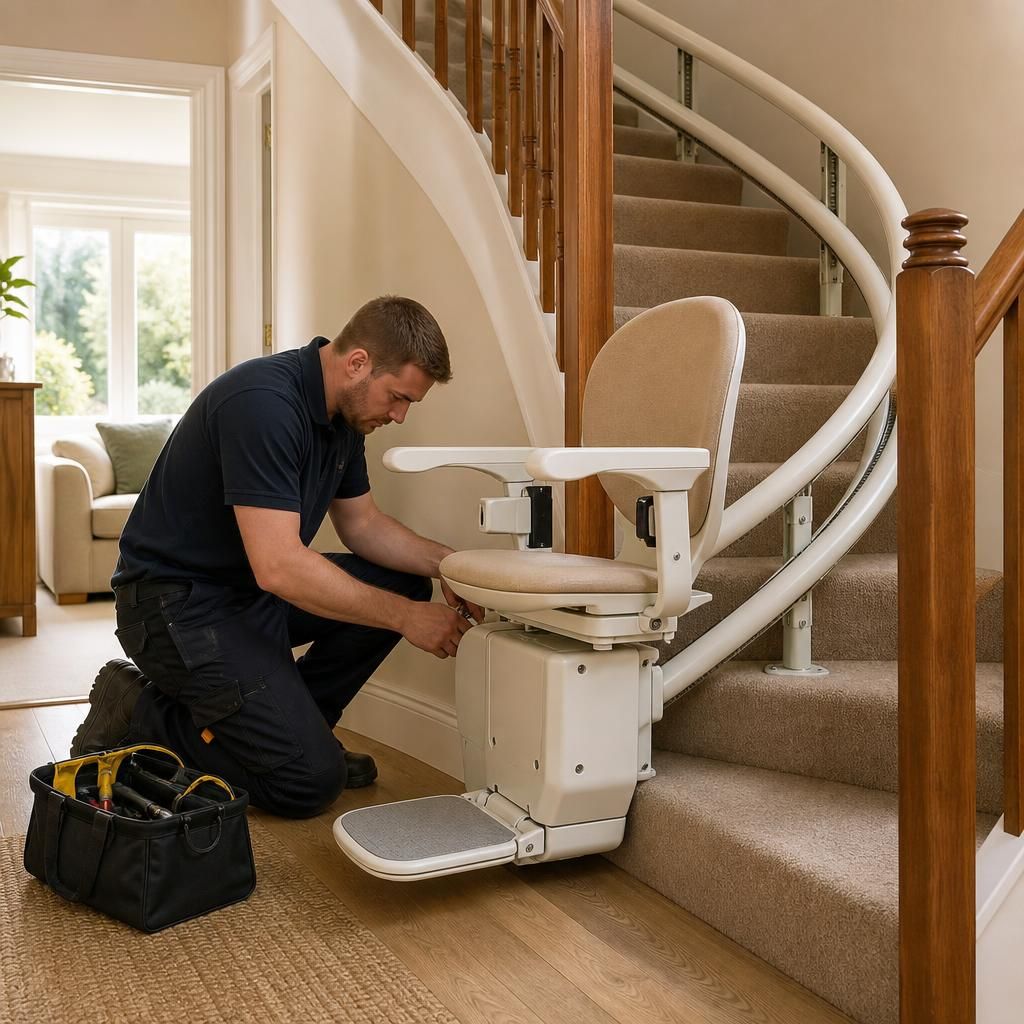
- Installation: The installer secures the rail to the stair treads or another agreed fixing position, fits the carriage and seat, connects the charging system and checks the controls. The lift is then tested throughout its complete route.
- Handover: You are shown how to operate the stairlift safely, including the controls, seat swivel, armrests, footrest, charging position and safety sensors. The installer should also explain what to do if the lift stops or displays a warning.
The shape of the staircase is the most significant factor affecting the fitting time. A straightforward curved route with clear access may be completed efficiently, while a staircase with several landings, tight turns, limited space or unusual fixing requirements can take longer. Staircase material and condition may also matter. For example, installers may need to allow extra time where fixings require particular care, where access is restricted or where minor preparation has been agreed in advance.
The installation appointment may take longer if the stairlift includes options such as powered folding rails, automatic swivel seats, powered footrests or remote controls. These features do not necessarily make the system unsuitable, but they require additional fitting and commissioning checks. If the staircase is shared with other people in the home, the installer will also need to confirm that the rail, seat and footrest leave safe access when the lift is parked.
It is useful to distinguish between the installation time and the total waiting time. The fitting appointment may last only one visit, but the complete process also includes the survey, confirmation of the design, manufacture of the curved rail and arranging a suitable installation date. A simple design may progress more quickly than a staircase requiring detailed measurements or bespoke adaptations. Your surveyor or installation coordinator should provide the most accurate expected schedule after assessing your home.
Before the installer arrives, keep the stairs and nearby landings as clear as possible and make sure there is a suitable route for bringing equipment into the property. Tell us in advance about access restrictions, parking limitations, pets, shared entrances or any mobility concerns that could affect the appointment. If another person will be using the stairlift, it is helpful for them to be present for the handover so they can practise the controls and ask questions.
On completion, do not use the stairlift until the installer has finished the safety checks and confirmed that it is ready. The checks should cover smooth movement, stopping points, charging, obstruction sensors, seat operation and the emergency or manual controls relevant to the model. Once the handover is complete, the stairlift should be ready for normal use without requiring further building work in most homes.
If your staircase or access arrangements are unusual, the survey is the best opportunity to identify anything that could change the timetable. Independent Stairlifts can explain the expected sequence of work following the assessment, so you know when to prepare the staircase and what to expect on installation day.
The installation appointment for a curved stairlift is commonly completed in one working day, once the bespoke rail has been manufactured and the staircase is ready. The installer fits the rail, carriage, seat and charging equipment, then tests the lift across its full route before handing it over for use.
The complete process takes longer than the fitting visit because it includes the home survey, rail design, manufacture and arranging a suitable installation date. Several landings, tight turns, restricted access or agreed preparation work may extend the timetable. Your surveyor or installation coordinator can confirm the expected schedule after assessing your staircase.
Discuss your curved stairlift installation timeline
To discuss your curved stairlift installation timeline, contact Independent Stairlifts after your assessment so we can explain the expected schedule for your staircase.