
How does choosing a reconditioned curved stairlift impact overall costs and reliability?
Choosing a reconditioned curved stairlift can reduce the upfront cost compared with a new bespoke model, while still providing reliable performance when it has been professionally inspected, refurbished and correctly fitted. Reliability depends on the condition and compatibility of the lift, the quality of installation, ongoing servicing and the warranty provided.
A reconditioned curved stairlift usually costs less upfront than a new bespoke model because some components are reused, but the saving depends on how closely the available equipment matches your staircase and what refurbishment is required. Reliability can be comparable to a new stairlift when the lift has been properly inspected, worn parts have been replaced, the rail is suitable for the staircase and installation is carried out by a qualified engineer. The condition of the batteries, drive system, controls, safety features and warranty should all be considered alongside the purchase price.
Why a reconditioned curved stairlift can cost less
Curved stairlifts are made for the shape of an individual staircase, so the rail is usually the most significant bespoke element. With a reconditioned system, the installer may be able to reuse a suitable rail, carriage, seat or other components rather than supplying every part new. This reduces manufacturing and equipment costs.
However, a reconditioned curved stairlift is not simply a used lift installed without preparation. The rail may need adapting or replacing, and the carriage may require new batteries, rollers, sensors, upholstery, controls or other parts. The final price should therefore be based on a home assessment rather than a standard second-hand price.
- Staircase layout: multiple bends, intermediate landings, tight turns and changes in gradient can affect whether an existing rail is suitable.
- Available equipment: a larger stock of compatible parts can make a reconditioned option more practical and cost-effective.
- Condition and age: older equipment may need more extensive refurbishment or may have limited access to replacement parts.
- Installation requirements: difficult access, unusual fixing points or changes to the staircase may add to the work involved.
- Included support: warranty cover, servicing, delivery and removal of an existing stairlift can affect the overall cost.
How reliability is assessed
Reliability depends more on the quality of the assessment, refurbishment and installation than on whether the stairlift is labelled new or reconditioned. Before agreeing to a system, ask whether it has been tested under load and whether its safety systems have been checked. These may include the seat swivel and locking mechanism, armrest and footrest sensors, obstruction sensors, braking system, charging function and emergency controls.
The batteries deserve particular attention. Stairlift batteries gradually lose capacity, especially if a lift has been stored unused or has not been charged correctly. A reputable refurbishment process should test the batteries and replace them if they do not meet the required standard. Ask whether the batteries are new or tested reused components, and what signs of reduced performance should be reported after installation.
The drive motor, gearbox, rollers and control systems should also be inspected. Unusual noise, juddering, inconsistent movement or difficulty docking may indicate wear or an installation issue. A properly fitted lift should move smoothly, stop accurately and respond consistently to its controls.
Warranty and aftercare make a significant difference
A lower purchase price is less useful if faults, call-outs and replacement parts are excluded. Check exactly what the warranty covers, how long it lasts and whether it includes parts, labour, batteries and return visits. Confirm who will provide support if the stairlift stops working and whether servicing is available in your area.
It is also worth asking about parts availability. Some older models remain dependable but may become more difficult or expensive to repair if specific electronic or mechanical components are discontinued. An installer should be able to explain the expected support for the proposed model rather than relying only on its current condition.
Compare the total cost, not just the quoted equipment price
When comparing a reconditioned curved stairlift with a new one, request a written quotation showing what is included. The total should make clear whether it covers the home survey, rail and carriage, delivery, installation, testing, user instruction, warranty, future servicing and removal of any existing equipment. It should also identify any work that may be charged separately.
A reconditioned lift may provide a good balance between cost and functionality where a compatible system is available. In other cases, the saving may be reduced by extensive rail modifications, replacement parts or additional installation work. A new bespoke lift can be more predictable where the staircase is particularly complex, the required configuration is unusual or long-term parts support is a priority.
Questions to ask before choosing
- Which parts of the stairlift are reconditioned, and which are new?
- Has the rail been made or adapted specifically for this staircase?
- What inspection and safety tests have been completed?
- Have the batteries and other commonly worn parts been replaced or tested?
- What warranty is provided, and does it include labour and call-outs?
- Will replacement parts remain available for the expected period of use?
- What maintenance is recommended, and what costs should be expected after installation?
In practical terms, choosing a reconditioned curved stairlift can reduce the initial cost without sacrificing dependable use, provided the equipment is genuinely refurbished and correctly matched to the staircase. A professional assessment should establish whether the proposed lift is structurally suitable, safe for the intended user and financially worthwhile. Consider the quoted price together with condition, warranty, installation quality, parts support and ongoing maintenance before making a decision.
A reconditioned curved stairlift can lower the initial cost, but its reliability depends on the quality of the refurbishment and how well the equipment suits your staircase. The rail, carriage, batteries, drive system and safety controls should all be inspected and tested before installation.
When comparing quotations, check the warranty, parts availability and aftercare as well as the equipment price. A professionally assessed and correctly fitted lift may provide dependable service, while an older system with worn batteries, limited parts support or inadequate cover could create higher costs later.
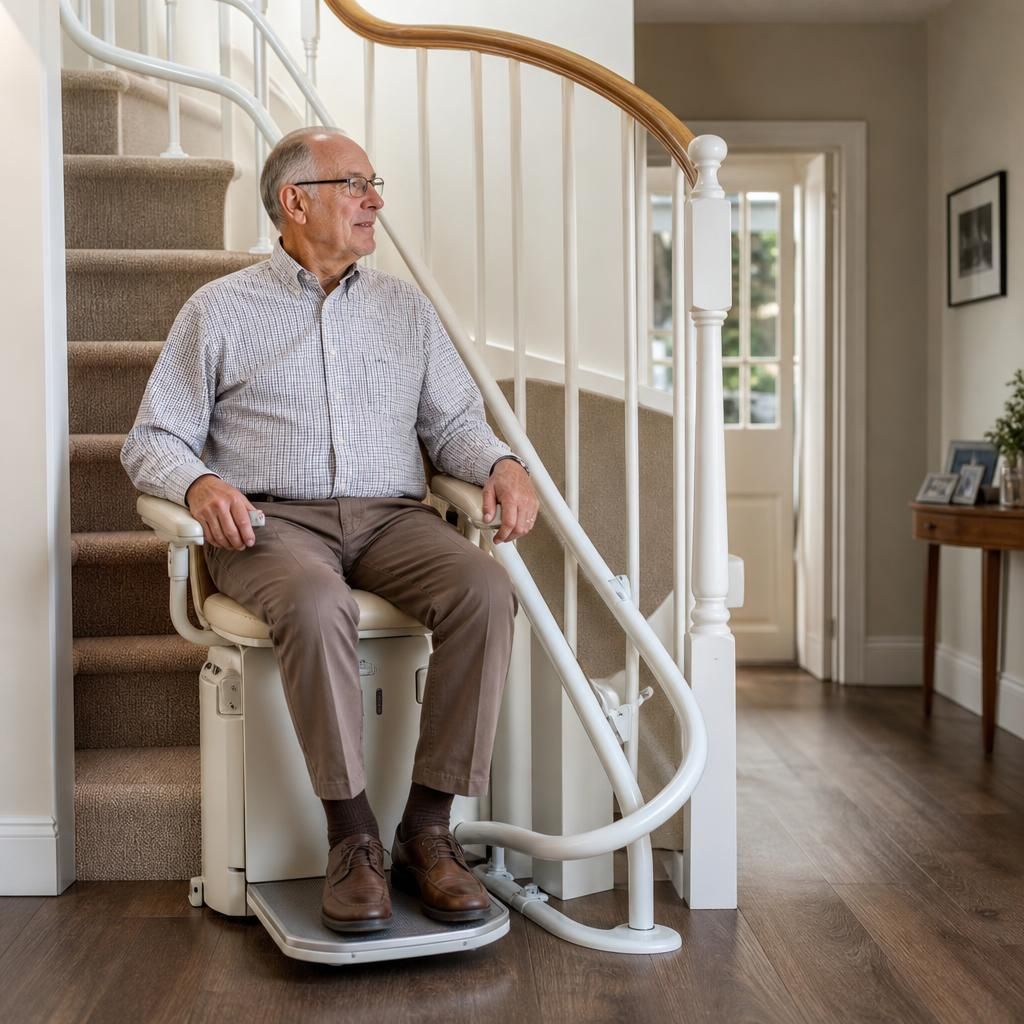
Arrange Your Reconditioned Curved Stairlift Assessment
Arrange your reconditioned curved stairlift assessment to check suitability, condition, installation requirements and total costs for your staircase. Our team can explain the available options and aftercare before you decide.