
Do curved stairlift prices vary depending on staircase material or design?
Yes. Curved stairlift prices can vary according to the staircase material and design, because the rail must be measured and manufactured to follow the route safely around bends, landings, changes in gradient and other features.
Staircases with multiple turns, tight curves, narrow sections or unusual materials may require additional surveying, installation work or specialist fittings, so an individual assessment is needed for an accurate price.
Yes. Curved stairlift prices can vary depending on both the staircase material and its design, although the layout of the stairs is usually the more significant factor. A curved stairlift requires a rail made to follow the staircase, so the survey must account for bends, landings, changes in gradient, available clearance and the position of the user at the top and bottom. The way the rail can be securely fitted to the stairs also depends on the construction and condition of the staircase.
Staircase design is usually the main cost consideration. A simple staircase with one consistent curve may need less bespoke rail work than a staircase with several turns, intermediate landings or tight changes of direction. The following features can affect the design and installation:
- Multiple bends or turns: Each change in direction has to be measured accurately and incorporated into the rail. Tighter or more complex curves generally require more detailed manufacturing and fitting.
- Intermediate landings: A landing may require the rail to change direction, pass close to a wall or doorway, or continue through a different section of the staircase.
- Changes in gradient: Uneven or varying stair angles affect the rail profile and the position of the stairlift as it travels between levels.
- Narrow sections: Limited width can restrict the available rail position, seating options and clearance for other people using the stairs.
- Spiral or unusually shaped stairs: These often need particularly careful surveying because the available space and turning radius can change continuously.
- Parking position: The stairlift may need to park at the top, bottom or on a landing. The chosen position can affect the length and shape of the rail, as well as access to doors and walkways.
- Obstructions and nearby doors: Radiators, architraves, cupboards, handrails and door openings may influence where the rail and seat can safely travel.
Staircase material can affect the installation method. Most stairlifts are fitted to the stair treads or structural parts of the staircase rather than relying solely on the wall. Timber stairs may allow standard tread-mounted supports, provided the treads and underlying structure are sound. Older timber stairs, loose treads or damaged areas may need additional assessment or suitable reinforcement before installation.
Masonry, concrete and metal staircases can require different fixings and installation techniques. The installer must identify the material, check its condition and select fixings that provide a secure attachment without damaging important services or finishes. A staircase with stone, tiled or particularly hard surfaces may need specialist drilling or carefully positioned supports. These requirements can add installation time or affect the final specification, but the material alone does not automatically determine the price.
Glass balustrades, decorative panelling and open-plan staircases can also influence the design. They may limit where supports can be positioned or require the rail to be designed with additional clearance. In some homes, the rail can be mounted on the stairs while keeping the existing handrail or balustrade in place; in others, adjustments may be needed to maintain safe access.
The condition of the staircase is as important as its material. During an assessment, the installer should consider whether the stairs are stable, whether the treads can support the proposed brackets and whether there is enough space for safe travel. Any structural concern should be identified before the stairlift is ordered. Addressing an issue at this stage is preferable to modifying the installation after the rail has been manufactured.
Other choices can influence the overall price without being directly caused by the staircase. These may include the type of seat, powered swivel or folding features, powered footrest, an upgraded upholstery option, additional controls and whether the stairlift is new or reconditioned. Such features should be considered alongside the staircase layout because the available space may determine which options are practical.
A proper survey is therefore essential for an accurate quotation. Measurements should cover the full route, including the width of the stairs, the position of landings, headroom, doorways, obstructions and the preferred parking locations. The assessor should also discuss how the stairlift will be used and whether other household members need to continue using the staircase normally.
In summary, staircase design normally has a greater effect on curved stairlift prices than the basic construction material. Complex curves, tight turns, multiple levels and restricted clearance require more bespoke rail design and installation work. Materials and structural condition mainly affect the fixing method and preparation required. An individual assessment will confirm the safest configuration and provide a price based on the actual staircase rather than a standard estimate.
Staircase design usually has a greater effect on curved stairlift prices than the material used to build the stairs. Multiple bends, tight turns, intermediate landings, changing gradients and restricted clearance all require more precise rail measurements and bespoke manufacturing. Materials such as timber, concrete, stone or metal mainly affect the fixing method and may require specialist drilling, reinforcement or additional preparation if the staircase is older or in poor condition.
A professional survey checks the full route, including stair width, headroom, nearby doors, handrails, balustrades and suitable parking positions. This confirms how the rail can be fitted safely and whether the existing staircase can support the installation, allowing the quotation to reflect the actual design rather than a standard estimate.
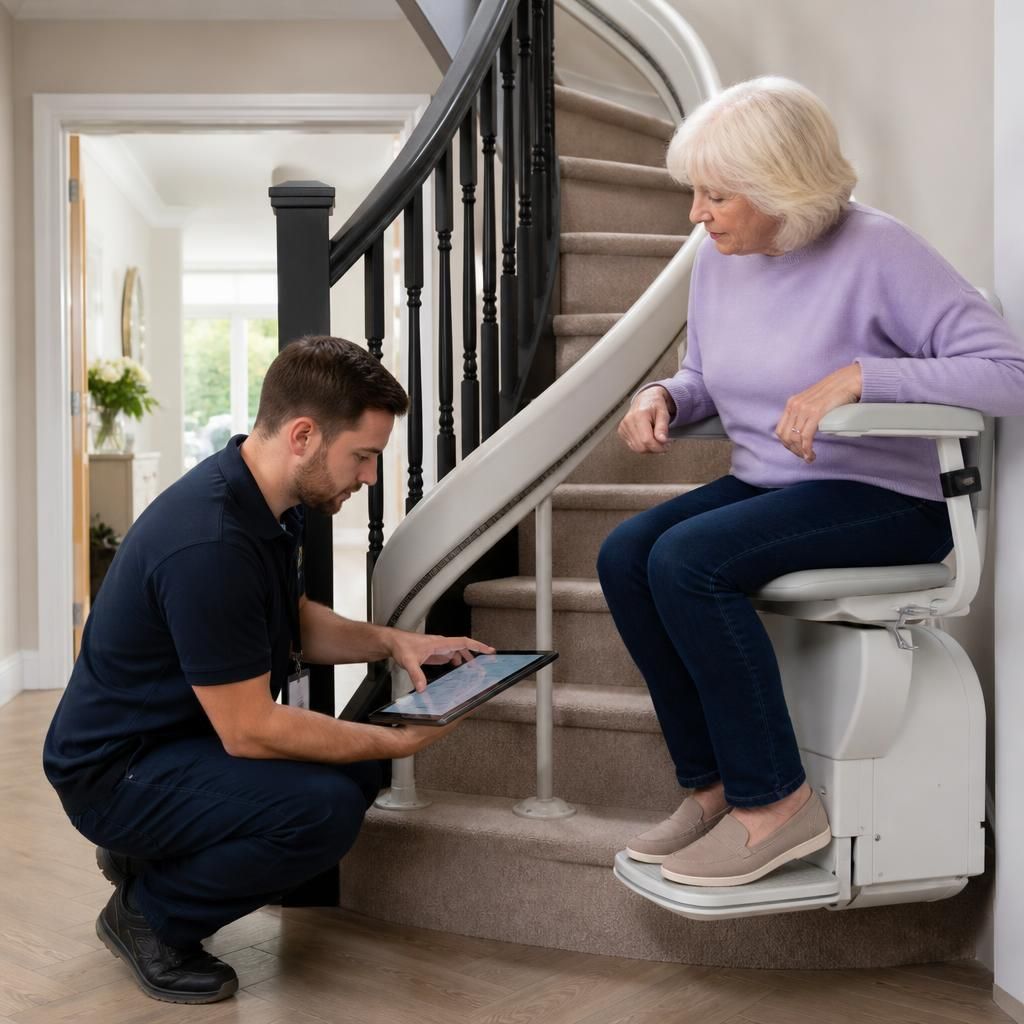
Arrange a survey for an accurate curved stairlift price
Arrange a professional survey to assess your staircase design, materials, access and fixing requirements before your curved stairlift is specified. This allows us to provide an accurate quotation based on your home.