
Which factors most influence the affordability of stairlifts, and how can you maximise value?
Stairlift affordability is mainly influenced by the stairway layout, whether the lift is new or reconditioned, the features required, and the complexity of installation. To maximise value, compare like-for-like quotations, choose only useful safety and comfort features, and consider a professionally assessed reconditioned model where suitable.
Stairlift affordability is influenced most by the shape of the staircase, the type and condition of the stairlift, the installation work required, and the features included. A straight stairlift with a standard rail is usually less costly than a curved model because curved systems require a rail designed specifically for the staircase. To maximise value, compare like-for-like quotations, select features that support safe everyday use, and consider a professionally assessed reconditioned stairlift where it is suitable for the user and the property.
The lowest purchase price is not always the lowest overall cost. A stairlift that is difficult to use, poorly matched to the staircase, or inadequately supported after installation may create additional expense later. Value is better assessed by considering the purchase or rental cost alongside suitability, safety, reliability, warranty cover, servicing and the expected period of use.
Staircase layout and rail design
The staircase itself is usually the most significant influence on price. A straight stairlift travels along a single, uninterrupted flight and can often use a standard rail. If the staircase has a landing, bend, intermediate floor, narrow turn, or more than one flight, a curved stairlift may be required. Its rail is measured and manufactured to follow the individual route, so design and installation are more involved.
Other layout details can also affect affordability, including:
- the total length and angle of the staircase;
- tight bends, half-landings and changes in direction;
- limited space at the top or bottom of the stairs;
- doorways, radiators, furniture or other obstructions near the rail;
- the need for a folding, sliding or hinged rail; and
- whether the lift must serve more than one level.
A professional survey is important because a lower-priced standard option may not be appropriate for a staircase with restricted access or unusual geometry. In some homes, a bespoke solution can provide better value than attempting to adapt an unsuitable standard lift.
New, reconditioned and rental options
A new stairlift generally offers the widest choice of upholstery, controls, finishes and configuration. It may be the most appropriate option where the user has particular posture, transfer or access requirements, or where the staircase needs a less common design.
A reconditioned stairlift can reduce the initial cost when a suitable model and rail are available. Reliability depends on the condition of the equipment, the quality of the inspection and refurbishment, the age of relevant components, and the support provided after installation. A reconditioned lift should be assessed for the individual staircase and user rather than selected solely because it is cheaper. Ask what has been checked or replaced, what warranty is included, and whether future servicing and parts support are available.
Rental may be worth considering when the stairlift is needed temporarily or when spreading the cost is more practical than buying outright. Compare the full rental commitment, installation and removal terms, maintenance arrangements and any minimum rental period. Buying may offer better long-term value for a continuing need, while rental can reduce the initial financial commitment.
Features and specification
Features affect both the price and the suitability of a stairlift. Essential safety and usability features should not be removed simply to obtain a lower quotation. These commonly include a secure seat and seat belt, controls that the user can operate, obstruction sensors, a reliable braking system, swivel or powered swivel functionality where transfers require it, and battery operation that allows the lift to return safely during a power cut.
Some features are primarily related to comfort or convenience. Examples include powered footrests, powered swivels, adjustable armrests, different upholstery options, remote controls and automatic folding mechanisms. They may be valuable if they reduce strain or make the lift easier to operate, but they are not equally important for every user. The right choice depends on strength, balance, dexterity, posture, knee and hip movement, and the space available at the top and bottom of the stairs.
Ask for each optional feature to be identified separately on the quotation. This makes it easier to distinguish essential requirements from upgrades and prevents paying for functions that will not be used.
Installation complexity and property requirements
Installation costs reflect the time and expertise needed to fit, test and configure the stairlift safely. Straight installations are often more straightforward, while curved rails and restricted access may require additional preparation. The installer may also need to consider the condition of the stairs, the available fixing points, skirting boards, flooring, electrical supply and safe access around the equipment.
Most stairlifts are fixed to the stairs rather than the wall, but the survey should still identify any structural or access concerns. If a hinged rail, extra charging point, removal of an existing lift or minor making-good work is required, these items should be explained before installation. A clear quotation should state what is included and identify any circumstances that could result in an additional charge.
Outdoor stairlifts have further requirements because the equipment must cope with exposure to rain, temperature changes and dirt. Weather-resistant construction, suitable charging arrangements and a practical maintenance plan can affect the price. Choosing an indoor model for an exposed location to save money is unlikely to provide good value or reliable service.
How to compare quotations properly
Quotations should be compared on the same basis. A price that appears lower may exclude delivery, installation, removal of an existing stairlift, VAT where applicable, extended warranty cover or future servicing. Check the following points:
- whether the quotation is for a new or reconditioned stairlift;
- whether the rail is standard or made for the individual staircase;
- which safety and comfort features are included;
- whether a survey, installation, testing and user demonstration are included;
- the length and terms of the warranty;
- what maintenance, call-out and parts support is available;
- whether removal or relocation is included if circumstances change; and
- the total payable cost, including any applicable taxes or optional items.
Ask for written confirmation of the recommended model and why it meets the user’s needs. It is also sensible to ask whether the stairlift can be removed or adapted if the user’s mobility changes. A detailed assessment should consider more than staircase measurements: it should examine how the user approaches the stairs, sits down, stands up, uses the controls and manages the seat belt.
Ways to maximise long-term value
- Arrange an accurate assessment. Correct measurements and a practical user assessment reduce the risk of choosing a lift that requires later alterations or replacement.
- Prioritise essential safety and access requirements. Do not compromise on secure transfers, suitable controls, obstruction detection, braking or battery operation.
- Separate useful options from cosmetic upgrades. Pay for features that address the user’s mobility needs or the staircase layout.
- Consider a reconditioned model where appropriate. Confirm its condition, compatibility, warranty and aftercare rather than relying on the purchase price alone.
- Review the whole-life cost. Include servicing, likely repairs, warranty extensions, rental charges and removal costs where relevant.
- Check possible VAT relief. Some disabled or chronically ill customers may qualify for VAT relief on eligible mobility equipment and installation, subject to the applicable rules and the required declaration. Eligibility should be confirmed before the order is placed.
- Plan for future use. A slightly higher initial cost may be justified if the design is easier to use as mobility changes or if it can serve more than one level.
Affordability should therefore be judged against the complete solution rather than the advertised starting price. A professionally assessed stairlift that fits the staircase, supports safe transfers, includes appropriate aftercare and remains usable over time is more likely to deliver good value. If cost is a concern, discuss the staircase layout, the user’s essential requirements and the available new, reconditioned or rental options before deciding which specification to choose.
Maximising stairlift value means comparing the complete cost of a suitable, supported installation rather than choosing the lowest advertised price. A quotation should clearly state whether it includes the survey, installation, user demonstration, warranty, servicing and removal of an existing lift.
Check that each quotation covers the same specification, including the rail design, safety features and any powered or folding options. A professionally assessed reconditioned stairlift may reduce the initial cost where it is compatible with the staircase and user, but confirm what has been inspected or replaced and what aftercare is provided. This approach helps avoid unexpected charges and ensures the stairlift remains safe, practical and reliable throughout its expected use.
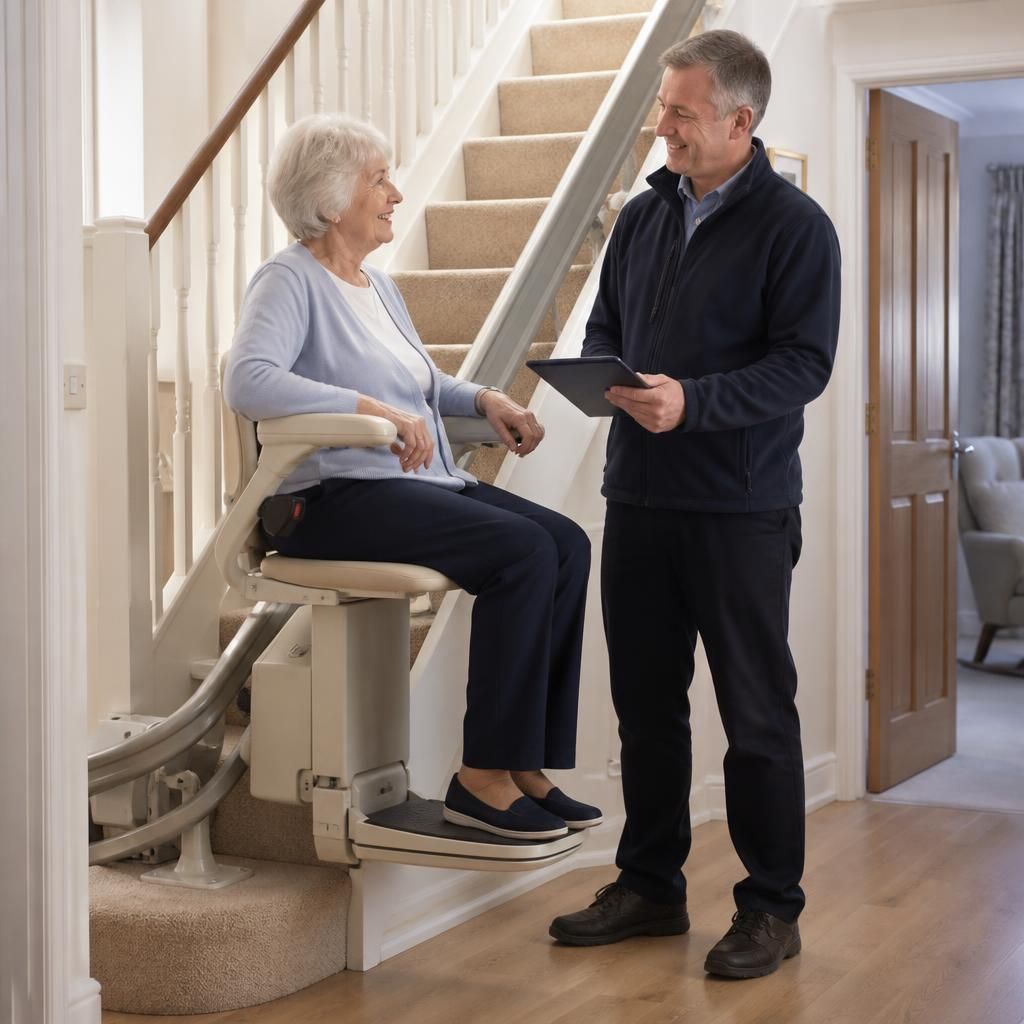
Discuss Your Stairlift Options and Find the Best Value
Discuss your staircase, mobility requirements and budget with Independent Stairlifts to compare suitable new, reconditioned or rental options. We can arrange a professional assessment and provide a clear quotation covering the recommended stairlift, installation and aftercare.