
What should you consider when balancing cost and features in selecting a stairlift?
Balance cost and features by prioritising the stairlift’s essential safety, suitability and reliability for your staircase, then comparing optional comfort features and the total installation cost. A professional assessment can help identify where a simpler model is appropriate and where spending more is justified by your mobility needs, staircase layout or expected usage.
Balancing stairlift cost and features means paying first for safe, reliable suitability, then comparing comfort and convenience options against how the lift will be used. The right choice is not necessarily the model with the lowest purchase price: it is the one that fits the staircase, supports the user correctly, includes essential safety functions and represents good value over its expected service life.
A professional assessment is the best starting point because the staircase, user and installation requirements all affect the appropriate specification and final cost. A straightforward staircase may allow a simpler lift, while a narrow, curved or multi-level staircase can require a more customised solution. Discuss the following areas before comparing quotations.
Start with essential safety and suitability
- Correct fit for the staircase: The rail must follow the staircase accurately and leave suitable access at the top and bottom. On a curved or unusually configured staircase, a bespoke rail may be necessary rather than an off-the-shelf straight arrangement.
- Weight capacity and seating position: The lift must be suitable for the user’s weight, posture, balance and ability to transfer on and off the seat. A seat that is too narrow, low or difficult to operate can make an otherwise affordable lift unsuitable.
- Safety controls: Look for features such as a seat belt, sensors that stop the lift when an obstruction is detected, secure armrests and controls that can be used comfortably. Safety features should not be treated as optional extras simply to reduce the initial price.
- Reliable stopping and parking: The lift should stop predictably at the correct points and park where it does not obstruct the stairs or household movement. Swivel or powered seat functions may be particularly valuable if turning at the top or bottom is difficult.
- Battery and charging arrangements: Battery-powered stairlifts are designed to charge at their parking points, allowing normal operation during a mains power interruption. Check how charging works and whether the user can easily park the lift correctly.
Separate essential features from comfort features
Once safety and suitability are established, compare features according to the user’s actual needs. Some options provide important practical support, while others mainly improve convenience or appearance.
- Seat comfort: Consider cushioning, seat width, back support and the ease of using the armrests. A more supportive seat can be worthwhile where the lift will be used frequently or journeys are longer.
- Swivel and powered seat options: A manual swivel may be sufficient for someone who can turn safely, whereas a powered swivel can reduce physical effort for a person with limited strength or balance.
- Folding components: A lift with a folding seat, arms and footrest may leave more usable space on the stairs. A powered folding mechanism can be useful where reaching down is difficult, but may not be necessary for every user.
- Controls: Hand controls, remote controls and alternative control positions should be assessed for grip, reach, dexterity and vision. A basic control that the user can operate confidently is better value than a more advanced arrangement that is confusing.
- Appearance and finish: Upholstery and trim choices can affect price without changing the lift’s core function. These may be worth considering after the practical specification has been agreed.
Consider how the stairlift will be used
Usage can change which features provide genuine value. Someone who uses the stairlift occasionally may prioritise a simple, dependable design and ease of maintenance. Someone who relies on it throughout the day may benefit from additional seat support, powered adjustments, smoother transfers and controls positioned for regular use. Also consider who else may use the staircase, whether the lift needs to be folded away, and whether visitors or carers will need to operate it.
Think about the user’s likely needs over the expected period of use rather than choosing only for today. A cheaper seat or control arrangement may become poor value if changing mobility makes it difficult to operate later. Conversely, paying for functions that the user cannot or will not use does not necessarily improve the solution.
Compare the complete installed cost
Quotations should be compared on a like-for-like basis. The total price may include the survey, manufacture or preparation of the rail, installation, electrical work where required, delivery, demonstration and aftercare. Ask whether removal of an existing lift, unusual access, additional parking points or alterations to the staircase are included.
A low headline price can be misleading if important items are excluded or if the specification is not suitable for the staircase. Conversely, a higher quotation may reflect a curved rail, a more supportive seat, additional safety functions or more involved installation rather than unnecessary extras. Request a clear written breakdown and check exactly which model and features are being offered.
Weigh new and reconditioned options carefully
A reconditioned stairlift can reduce the initial cost, particularly where a suitable straight model is available. Its value depends on the condition of the lift, the quality of the refurbishment, the suitability of the rail and the support available after installation. Ask what has been inspected or replaced, whether the equipment is covered by a warranty and whether servicing is available.
New equipment may offer a wider choice of seating, controls and finishes, as well as a new rail made for the staircase. A reconditioned lift may be a practical choice when the specification is straightforward, but it should not be selected solely because it is cheaper. Reliability, safe installation and future support remain essential.
Check servicing, warranty and ongoing support
Value includes the support available after installation. Confirm the warranty terms, what happens if the lift stops working, how servicing is arranged and whether replacement parts are available. Ask whether the installer will demonstrate daily operation, charging, remote controls and basic user checks.
Maintenance requirements vary by model and use. Keeping the rail and surrounding area clear, following the manufacturer’s operating guidance and reporting unusual noises or movement promptly can help protect reliability. A modest difference in purchase price may be outweighed by avoidable repair costs or difficulty obtaining support.
Use the assessment to prioritise the budget
- Describe the user’s mobility, balance, strength, transfer ability and any relevant health considerations.
- Explain how often the stairlift is likely to be used and whether other people need to use the stairs.
- Identify essential safety, seating and control requirements before discussing cosmetic options.
- Ask which features are necessary for this particular staircase and which are optional conveniences.
- Compare the full installed price, warranty and aftercare on a like-for-like basis.
- Test or discuss the proposed controls and seat position rather than relying on price alone.
The most cost-effective stairlift is therefore the simplest suitable solution, not automatically the cheapest available model. Spending more is justified where it improves safe transfers, accommodates the staircase, supports regular use or avoids a foreseeable replacement. Keeping the specification focused on genuine needs allows you to control cost without compromising safety, reliability or day-to-day usability.
Balancing stairlift cost and features means paying for essential safety, correct staircase fit and dependable operation before adding comfort or convenience options. A lower-priced model is only better value if it remains suitable for the user and the way the stairs will be used.
When comparing options, separate features into two groups:
- Essential features: suitable weight capacity, secure seating, a seat belt, obstruction sensors, accessible controls and reliable charging.
- Optional features: powered swivelling or folding functions, upgraded upholstery, additional control arrangements and cosmetic finishes.
Optional features can be worthwhile where they make transfers safer or reduce physical effort, but they should be assessed against the user’s actual needs. Also compare the complete installed price, including the survey, fitting, demonstration, warranty and aftercare. This helps prevent a seemingly cheap stairlift from becoming poor value because important costs or support arrangements were excluded.
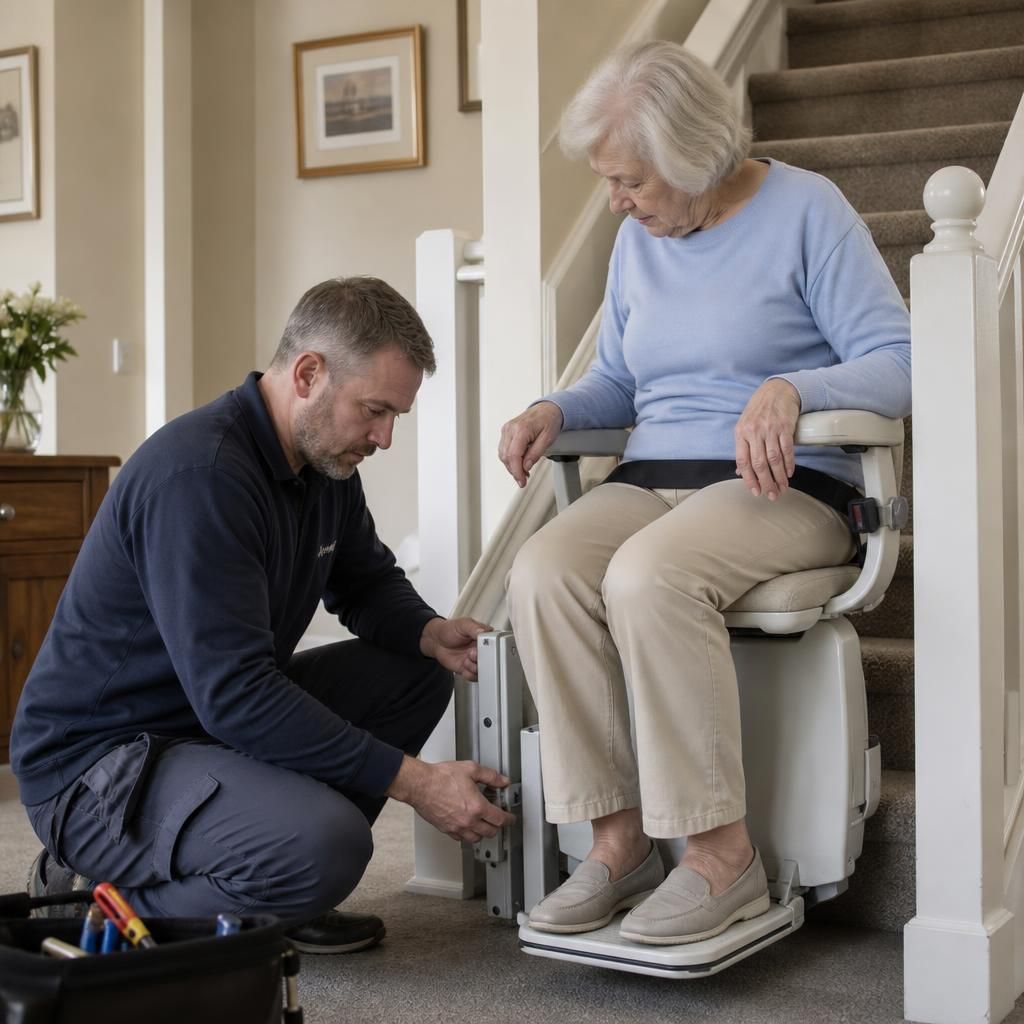
Arrange a stairlift assessment
Arrange a stairlift assessment to discuss your staircase, mobility needs and the features that provide genuine value. We can help you compare a suitable specification and the complete installed cost before you decide.