
What are the key features to consider when selecting an affordable stairlift for your home?
When selecting an affordable stairlift for your home, prioritise essential safety features, a suitable fit for your staircase, comfortable operation and dependable reliability over non-essential extras. Also check the warranty, servicing arrangements, battery performance and total installation and ownership costs so the lift remains good value over time.
An affordable stairlift should provide the essential safety, fit, comfort and reliability needed for everyday use without paying for features that are unlikely to benefit you. The most important considerations are whether it suits the shape and condition of your staircase, supports the user safely, operates comfortably, and represents good value after installation, servicing and future maintenance are taken into account.
Safety features should come first. A suitable stairlift will normally include a secure seat belt, a stable seat and footrest, and controls that are easy to use. Obstruction sensors are also important because they can stop the lift if an object is detected on the stairs or in its path. Depending on the model and the user’s needs, useful features may include swivel or powered swivel seating, armrests that provide support, and safety edges around the footrest.
Check how the stairlift starts, stops and parks. The movement should be controlled rather than abrupt, with a braking system designed for the stairlift and its intended load. A battery-powered lift should also provide suitable backup during a power cut, although the available travel during an outage depends on the battery condition, the installation and the model. Ask how the batteries are charged and how often they are likely to need replacement.
Accurate fitting is essential for both safety and value. Straight stairlifts are designed for a single, uninterrupted flight, while curved stairlifts are made to follow bends, landings and changes in direction. A staircase with narrow sections, doorways, radiators or unusual turns may require a bespoke rail or careful parking arrangement. An assessment should consider the full route, not just the length of the stairs.
The lift should leave enough practical space for other people to use the stairs where possible, while also allowing the user to get on and off safely. A compact or slimline design may be helpful on a narrow staircase, but it must still provide adequate seat width, support and stability. Do not choose a smaller model solely because it has a lower starting price if it is uncomfortable or difficult to use.
Comfort and ease of operation affect whether the stairlift is used consistently. Look for a seat that supports the user’s posture, an adjustable or suitable-height footrest, and controls that can be operated without stretching or excessive grip strength. A simple control on the armrest may be preferable to a more complex interface. Remote controls can be useful when more than one person needs to call the lift between floors.
Consider the user’s mobility and dexterity rather than choosing features in isolation. A powered swivel seat, folding footrest or automatic safety function may add to the price but could be worthwhile if the user struggles to turn, stand or bend. Conversely, manually operated features may offer better value where the user can use them safely and confidently.
Reliability depends on more than the age or headline price of the lift. Ask about the condition of the batteries, motor, rail, controls and safety systems. If you are considering a reconditioned stairlift, it should be inspected, tested and installed by a suitably qualified provider, with clear information about the warranty and the work carried out. A new lift may offer the latest design, while a properly prepared reconditioned model can reduce the initial cost without removing essential safety equipment.
Review the warranty carefully. Check what is covered, how long cover lasts, whether call-outs and parts are included, and who to contact if a fault occurs. Also ask about servicing, battery replacement and the availability of technical support. A lower purchase price may not represent good value if routine maintenance or repairs are difficult to arrange.
Compare the total cost rather than the advertised price alone. Request a clear quotation that separates the stairlift, survey, rail, installation and any necessary alterations. Confirm whether removal of an existing lift, delivery, follow-up adjustments and VAT are included where applicable. For a curved staircase, the rail design and the complexity of the installation can have a significant effect on the final price.
- Choose the correct stairlift type for the staircase, including any bends, intermediate landings or outdoor exposure.
- Confirm the user’s weight and mobility requirements are within the manufacturer’s stated limits.
- Check the seat, belt, armrests, footrest and controls for safe and comfortable use.
- Ask how obstruction sensors, braking and battery backup work.
- Consider where the lift parks and whether it obstructs a doorway, landing or other route.
- Compare warranty, servicing and repair arrangements as well as the initial quotation.
- Ask whether a reconditioned option could meet the user’s needs without compromising safety or support.
An assessment at the property is the most reliable way to identify the features that are genuinely necessary. It should take account of the staircase, the user’s present abilities and any expected changes in mobility. The best affordable choice is not necessarily the model with the fewest features; it is the one that provides the required safety and support, fits the home properly, and avoids paying for unnecessary extras.
A property assessment is essential when choosing an affordable stairlift because the staircase, landing space and user’s mobility determine which features are genuinely necessary. A straight lift may suit a single uninterrupted flight, while bends, intermediate landings, narrow sections or restricted parking areas may require a curved or bespoke installation.
The assessment should also check seat width, user weight, transfer ability, controls, footrest position and where the lift parks when not in use. This helps avoid paying for unsuitable extras while ensuring essential safety and comfort are not compromised. Ask for the quotation to include the survey, rail, installation, warranty and any required adjustments so the total cost is clear from the outset.
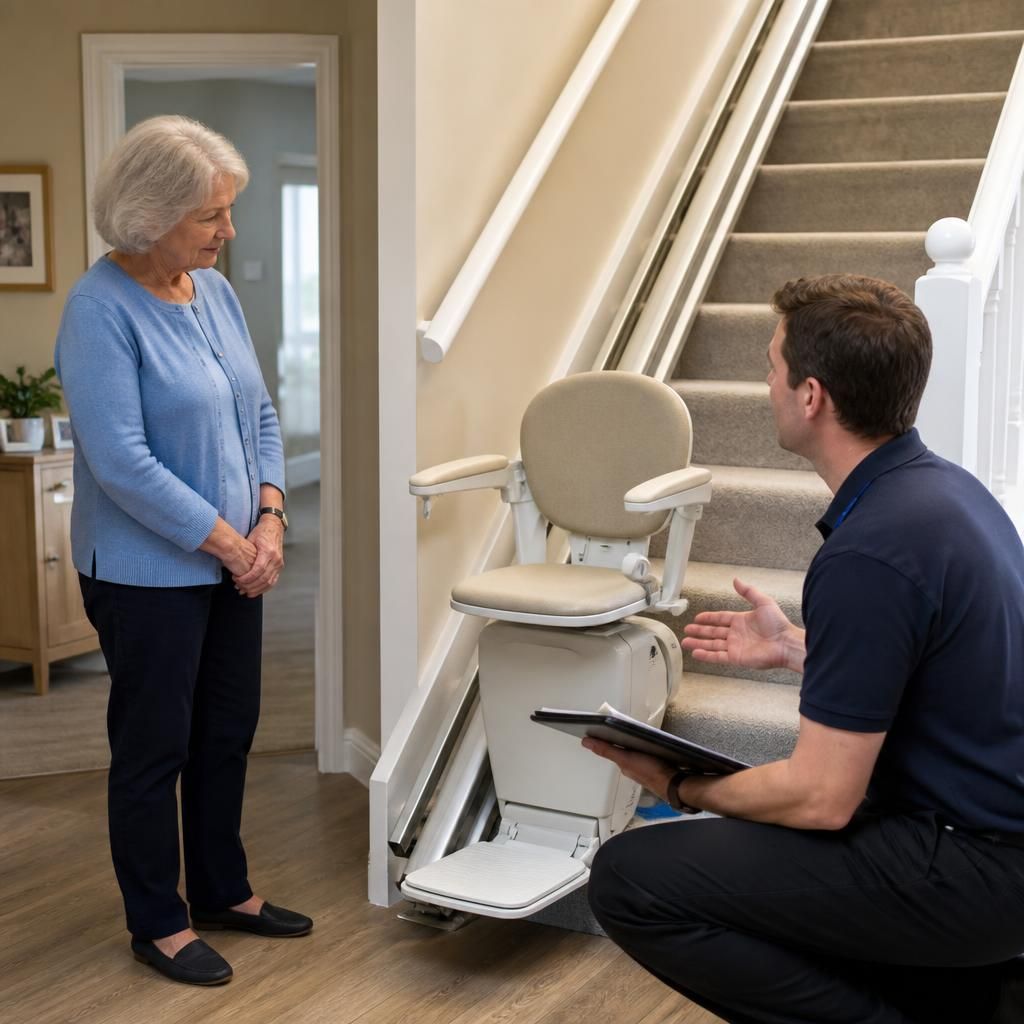
Arrange your affordable stairlift assessment
Arrange an affordable stairlift assessment so we can check your staircase, user requirements and essential features before you choose a model. We will explain the available options and provide a clear quotation covering the lift, installation and ongoing support.