
What are the benefits of opting for a bespoke stairlift solution over a standard model?
A bespoke stairlift is designed around your staircase, access needs and preferred seating position, rather than relying on the standard dimensions of a straight model. This can provide a better fit, improved comfort and safer, more practical installation on curved, narrow, steep or otherwise challenging stairways.
A bespoke stairlift is designed to suit the layout of your staircase, your physical requirements and the way you use your home, rather than being fitted to a standard set of dimensions. Compared with a standard model, it can provide a more practical fit on curved, narrow, steep, unusually shaped or multi-level staircases, while improving comfort, access and installation safety.
A bespoke solution is not necessarily a completely different type of stairlift. It may involve a made-to-measure rail, customised seating, adjusted controls or other adaptations to ensure the equipment works properly in the available space. The appropriate specification is established through a home assessment, which considers the staircase, landing areas, users’ mobility and any access issues at the top and bottom of the stairs.
The main benefits of choosing a bespoke stairlift include:
- A better fit for the staircase. A standard straight stairlift is intended for a simple, uninterrupted flight. If your stairs curve, have intermediate landings, change direction or include unusual angles, a bespoke rail can follow the route more accurately. This allows the stairlift to serve the parts of the home that would otherwise remain difficult to access.
- Improved use of limited space. Narrow staircases, restricted landings and doorways close to the stairs can make positioning important. A tailored design can take account of available clearance and may incorporate features such as a compact seat, a swivel seat or a folding mechanism where appropriate. The aim is to keep the staircase as usable as possible for other household members.
- Greater comfort and support. Seating, armrests, controls and footrest arrangements can be selected to suit the user’s height, posture, strength and balance. This is particularly useful where getting on or off a standard seat would be uncomfortable, or where the user needs additional support when turning towards the landing.
- Safer transfers. A stairlift must allow the user to board and leave the seat with as little unnecessary movement as possible. A bespoke assessment can identify whether the seat should stop at a particular position, whether a swivel function would help, and whether the controls need to be placed for easier operation. These details can reduce awkward reaching and twisting, although a stairlift does not remove the need to follow safe-use guidance.
- More suitable landing access. The end of the rail is just as important as the route along the stairs. On some staircases, the lift may need to finish beyond the top step, turn into a landing or stop in a position that leaves a clear route to a room or doorway. A tailored design can address these access requirements more effectively than a standard installation.
- Better integration with the home. Bespoke equipment can be planned around bannisters, radiators, doorways, low ceilings and other fixed features. It may also reduce the need for extensive changes to the staircase or surrounding structure, subject to the findings of the survey and the requirements of the chosen equipment.
- Support for changing needs. Mobility can change over time. During the assessment, it is sensible to consider whether the user may need easier controls, more stable seating or simpler transfers in the future. Selecting suitable features at the outset can avoid choosing a lift that meets only the immediate need but becomes difficult to use later.
How a bespoke stairlift differs from a standard model
A standard model can be an effective and economical option on a straightforward staircase. It usually uses a pre-designed rail and a familiar set of features, making it suitable where the stairs are straight and there is adequate space at both ends. Bespoke work becomes more valuable when the staircase or the user’s requirements fall outside those typical conditions.
The difference is therefore not simply that one option is better than the other. A standard stairlift may provide the best value when it fits safely and comfortably without modification. A bespoke stairlift can offer better overall value where a standard model would require compromises, leave part of the staircase inaccessible or make boarding and disembarking unnecessarily difficult.
Factors considered during a bespoke assessment
A proper assessment should consider more than the shape of the stairs. It normally looks at the full route through the home and how the user will approach, operate and leave the lift. Relevant points include:
- the number of flights, bends, landings and changes in direction;
- the width of the stairs and available clearance beside the rail;
- headroom, door positions, radiators, bannisters and other obstructions;
- where the user can safely sit or stand before boarding and after leaving the lift;
- the user’s height, weight, posture, balance, leg strength and ability to bend their knees;
- whether controls need to be positioned on a particular armrest or supplied with a remote control;
- whether a powered swivel seat, hinged rail, powered footrest or other option would improve safe use;
- the location of a suitable electrical supply and any charging requirements; and
- whether other people need to continue using the staircase normally.
This information helps determine whether a straight, curved, outdoor or otherwise specialised stairlift is appropriate. It also helps identify practical issues that may not be obvious from photographs or measurements supplied without a visit.
Does bespoke always mean more expensive?
A made-to-measure rail or additional features generally involve more design, manufacturing and installation work than a basic standard model, so the initial quotation may be higher. However, comparing only the purchase price can give an incomplete picture of value. A standard lift that cannot reach the required landing, restricts access or is uncomfortable to use may not be a suitable solution, even if it costs less initially.
Ask for the quotation to explain what is included, such as the survey, manufacture, installation, testing, user guidance, warranty and aftercare. It is also useful to confirm whether any extra work is required around the staircase and whether the quoted specification includes the features recommended during the assessment. This makes it easier to compare solutions on suitability and long-term practicality rather than price alone.
When a standard model may be the sensible choice
If the staircase is straight, the landings provide enough room and the user can transfer comfortably using the standard seat and controls, a standard stairlift may meet the need without unnecessary customisation. A thorough assessment should establish this rather than assuming that bespoke equipment is required. The most appropriate option is the one that provides safe, reliable access while matching the home and the user’s capabilities.
Before making a decision, consider how confidently the user can approach the lift, sit down, operate the controls, travel the full route and leave the seat at the destination. If any part of this process feels awkward, ask whether a tailored rail or adapted feature would resolve it. A bespoke stairlift is most beneficial when its design directly addresses a specific access, comfort or safety requirement identified during the assessment.
A bespoke stairlift is tailored to the staircase and the user, rather than fitted from a standard straight-rail specification. This is particularly useful where the stairs curve, include landings, have limited clearance or require a safer, more comfortable position for boarding and leaving the seat.
The assessment considers the complete route, including bends, doorways, bannisters, radiators, headroom and the space available at the top and bottom. A made-to-measure rail can follow the staircase more accurately, while features such as a swivel seat, folding mechanism or hinged rail may help preserve access for other people using the stairs.
Personal details also affect the specification. Seat height, armrest position, control location and footrest design can be selected to suit the user’s posture, balance and ability to bend or turn. These adjustments can reduce awkward reaching and twisting during transfers, although the user must still follow the operating and safety guidance provided at installation.
A standard model may be the most economical choice on a simple, straight staircase with plenty of room at both ends. Where those conditions do not apply, the value of a bespoke solution lies in providing a practical route and usable landing access without relying on compromises that could make everyday operation difficult.
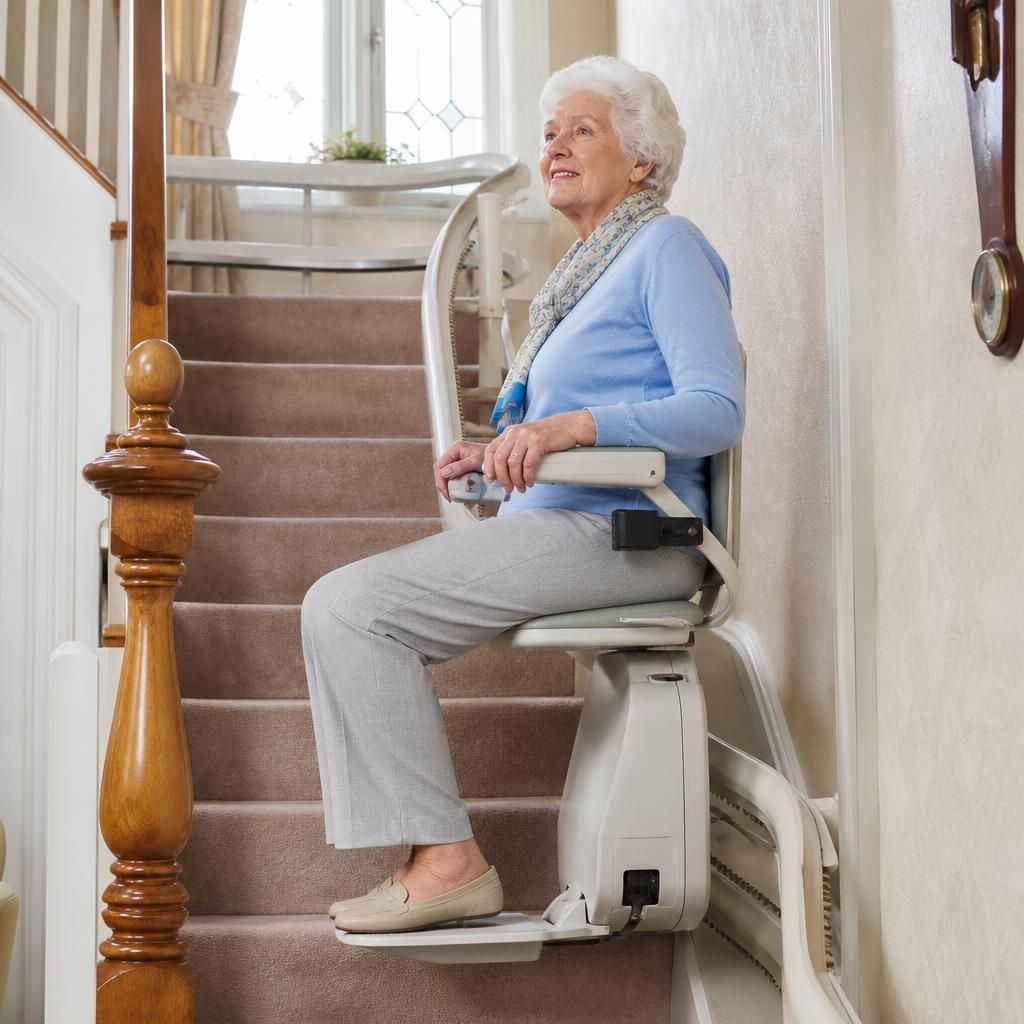
Arrange Your Bespoke Stairlift Assessment
Arrange a bespoke stairlift assessment with Independent Stairlifts to review your staircase, access requirements and suitable features. We can then explain whether a tailored or standard solution is the most practical option for your home.