
What factors should I consider when determining if an Acorn stairlift is the best fit for my home's layout and my budget?
An Acorn stairlift may be a suitable choice if its rail can be safely fitted to your staircase, the seat and controls meet your mobility needs, and the total cost fits your budget. Independent Stairlifts can assess your layout, compare new and reconditioned options, and explain installation, warranty and ongoing servicing costs before you decide.
An Acorn stairlift is likely to be a suitable fit when its rail can be installed safely on your staircase, its seat and controls match the user’s mobility needs, and the complete cost remains affordable over the expected period of use. The decision should be based on an assessment of the staircase and the person using the lift, rather than on the model price alone. Independent Stairlifts can help you assess the layout, compare available Acorn options and understand the costs of installation, warranty cover, servicing and any future removal.
Start with the shape and construction of the staircase. A straight stairlift is generally intended for a staircase that runs continuously between two floors without a change of direction or intermediate landing. A staircase with a bend, curve, half-landing or multiple flights will usually require a rail designed for that particular route. The rail must follow the usable line of the stairs while leaving sufficient clearance for people who still need to use the staircase on foot.
During a survey, the important points include the width of the stairs, the position and size of landings, the angle and consistency of the steps, the location of doors and radiators, and the available space at the top and bottom. A narrow staircase does not automatically rule out an Acorn stairlift, but it may affect the seat position, the space left for other users and the type of rail or seat configuration that can be used. Obstructions may need to be moved, protected or taken into account when the lift is parked.
Consider where the stairlift will park. The lift needs a safe place to stop at the top and bottom of the stairs. If a door, hallway or narrow landing is close to the final step, a standard parking position may not be practical. A hinged, sliding or other rail arrangement may help in some layouts, although the suitability depends on the staircase and the space available. The lift should not create a trip hazard, block a fire escape route or prevent doors from opening safely.
Match the equipment to the user, not only to the staircase. The user should be able to sit down, remain stable during travel, operate the controls and get on and off without unnecessary twisting or reaching. Relevant points include:
- Whether the seat is comfortable and provides adequate support for the user’s height, posture and weight.
- Whether the armrest, joystick or remote control can be operated reliably, particularly if hand strength or dexterity is reduced.
- Whether the seat, footrest and safety features allow the user to travel securely and dismount in a controlled manner.
- Whether a powered swivel seat or another optional feature would make access easier.
- Whether more than one person will use the stairlift and whether the controls can be understood by everyone who needs them.
A stairlift can improve access between floors, but it does not remove every risk. The user must still be able to transfer safely from a chair or standing position onto the stairlift. If their mobility is changing, discuss this during the assessment rather than choosing equipment based only on current ability. An occupational therapist or other relevant healthcare professional may also be able to advise on transfers where there are significant balance, strength or posture concerns.
Check the electrical requirements and practical surroundings. Stairlifts normally need a suitable electrical supply and a safe charging position. The survey should identify where charging can take place and whether any electrical work or adaptations are required. Battery condition, charging behaviour and power-failure operation are also relevant when comparing a new lift with a reconditioned one. Do not assume that an existing socket is suitable without having it checked as part of the installation assessment.
Compare the full cost rather than the headline price. Your budget should allow for more than the stairlift itself. Ask for a clear explanation of:
- The stairlift and rail configuration.
- Survey, delivery and installation charges.
- Any additional work needed because of the staircase, electrical supply or surrounding obstructions.
- Optional features selected for comfort, access or parking.
- Warranty terms and what is excluded from cover.
- Planned servicing, call-out charges and replacement parts after the included cover ends.
- Potential costs if the stairlift needs to be moved, removed or adapted later.
A bespoke curved installation will normally involve more design and manufacturing work than a straightforward straight installation, so the layout has a direct effect on the quotation. The condition and availability of a reconditioned stairlift may reduce the initial cost, but suitability, warranty protection, battery condition and the availability of compatible parts should be confirmed. A lower purchase price is not necessarily the lowest overall cost if the equipment needs more attention or cannot be adapted to the user’s future needs.
Decide whether new or reconditioned is more appropriate. A new Acorn stairlift may provide the widest choice of configuration, finish and optional features, together with a warranty arranged for new equipment. A reconditioned option can be useful where the staircase and user’s requirements suit an available model and keeping the initial spend lower is important. It should be inspected, tested and installed by a competent provider, with the condition of the batteries, charging system, drive mechanism, safety features and rail clearly explained.
For a curved staircase, a reconditioned rail is not usually a universal product because the rail is made for a particular route. Ask whether the proposed rail is being reused for the same or a compatible layout, or whether a new rail is required. This distinction can make a substantial difference to both price and timescale.
Allow for future use and household changes. Think about whether the user’s mobility may change, whether another person could use the lift, and whether furniture, doors or flooring may be altered later. A configuration that works today may become less convenient if transfers become more difficult. It is sensible to ask whether the selected seat and controls can accommodate likely changes, while avoiding optional features that do not provide a practical benefit.
Also consider the effect on other household members. The stairlift should leave a safe walking route where possible, park clear of doorways and be manageable when folded away. If there is limited space, request a demonstration or ask the surveyor to explain the folded dimensions and the clearance needed for safe use.
Use the survey and quotation to test whether the choice is right. Before accepting an installation, make sure you know:
- Which Acorn model and configuration have been proposed, and why they suit the staircase.
- Where the lift will park and how much stair and landing space will remain.
- What the quoted price includes and which items could incur an additional charge.
- What warranty cover applies to the lift, batteries, rail and workmanship.
- How servicing is arranged, what a breakdown call involves and which costs may apply after the warranty period.
- Whether the lift can be removed or altered if the home or user’s needs change.
If the proposed installation is technically suitable but outside your budget, ask about a reconditioned alternative, a simpler specification or available payment arrangements rather than compromising on safety. Conversely, if a low-cost option does not provide a safe transfer, adequate support or a usable parking position, it is unlikely to be good value.
Independent Stairlifts can assess straight, curved and outdoor requirements across the UK and explain the practical differences between available Acorn solutions. A home survey and a fully itemised quotation give you the information needed to judge the fit, the ongoing commitment and the total cost before making a decision.
Determining whether an Acorn stairlift suits your home and budget requires comparing the complete installed cost with the practical demands of your staircase and the user’s mobility. The initial price should be considered alongside the rail design, installation work, optional features, warranty cover, servicing and any future removal or adaptation.
A home survey is particularly important where the stairs are narrow, curved or close to doors and landings. Ask where the lift will park, how much walking space will remain and whether the proposed seat and controls support safe transfers. If a new installation exceeds your budget, a suitable reconditioned stairlift or simpler specification may reduce the initial cost, but battery condition, safety checks, warranty terms and compatibility with the staircase should be confirmed before deciding.
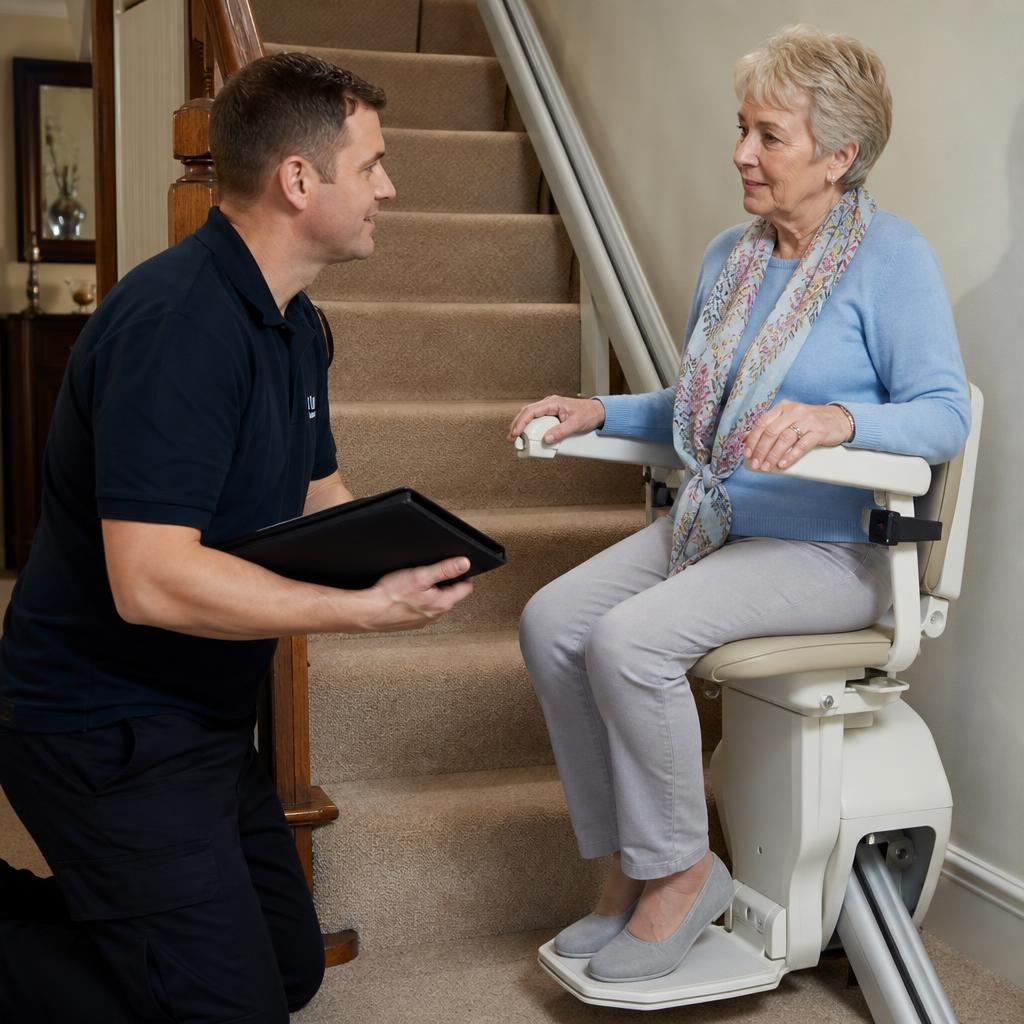
Arrange Your Acorn Stairlift Assessment
Arrange an Acorn stairlift assessment with Independent Stairlifts to check your staircase layout, user requirements and complete installation costs. We can also explain suitable new or reconditioned options before you decide.