
How can I choose between the different Acorn stairlift models to best suit the unique design of my home and my mobility needs?
Choose an Acorn stairlift according to your staircase layout first—straight, curved or outdoor—then compare seating, controls, safety features and whether a new or reconditioned lift suits your mobility needs and budget. Independent Stairlifts can assess your home and recommend the most suitable model, taking account of turning spaces, transfers, weight capacity and the way you use the stairs.
The best Acorn stairlift model is determined first by the shape and construction of your staircase, then by your mobility, transfer ability, preferred controls and budget. In broad terms, the Acorn 130 is designed for straight staircases, while the Acorn 180 is intended for curved staircases with bends, intermediate landings or changes in direction. An outdoor model is needed where the lift will be exposed to external conditions. Independent Stairlifts can assess the staircase and discuss how you use it before recommending a new or reconditioned option.
Start with the staircase layout
A straight stairlift runs along one continuous flight without a bend or intermediate landing requiring the rail to change direction. The Acorn 130 may be suitable where the stairs follow this layout and there is enough clear space at the top and bottom for safe transfers. The position of the charging points, the width of the stairs and the available landing space still need to be checked, even on a straightforward installation.
A curved stairlift is required when the staircase turns around a corner, includes a half or quarter landing, or has more than one flight that needs to be followed by the same lift. The Acorn 180 uses a rail manufactured to follow the individual staircase rather than a standard straight rail. This makes it more adaptable to complex layouts, but the design and installation process is more involved. The rail may be made to stop at selected floors or landings, depending on the arrangement of the home and the intended way of using the lift.
External stairs require equipment designed for outdoor exposure. An Acorn outdoor stairlift may be appropriate for steps leading to a garden, driveway, entrance or another external level. The assessment should consider rain, frost, direct sunlight, drainage, the location of the charging point and whether the lift can be parked in a suitably protected position. An indoor model should not simply be treated as an outdoor solution because external conditions can affect its materials, controls and charging equipment.
Match the lift to your mobility needs
Consider how you transfer on and off the stairlift, how steadily you can sit, and whether your condition is likely to change. A standard seat may be appropriate if you can sit upright, bend your knees sufficiently and transfer with limited assistance. If bending is difficult, a powered or manually operated swivel seat can help turn you towards the landing before you stand. The correct choice depends on the individual model, the position of the stairlift and the space available at the top and bottom.
Seat padding, armrest support, the footrest position and the shape of the seat can affect comfort and stability. Ask to try the controls and, where possible, sit in the proposed configuration before making a decision. A user with reduced grip may benefit from larger, clearly positioned controls. If a carer or family member may operate the lift, the control arrangement should be easy for them to reach without leaning across the user.
Weight capacity must be checked against the user’s current needs, including clothing or items carried while travelling. Do not assume that every Acorn model has the same capacity or dimensions. If the user is tall, has limited hip or knee movement, or needs extra room to position their feet, these points should be discussed during the survey rather than judged from photographs or a brochure.
Check the staircase width and transfer areas
The lift must leave suitable clearance for the user and, where necessary, for other people to use the stairs. Narrow stairs can restrict the choice of seat, armrest position or rail arrangement. At the top and bottom, measure the space needed to approach the seat, turn safely and move away from the lift. A swivel seat, powered footrest or different parking position may be useful, but only if the landing can accommodate it.
Doors, radiators, cupboards, handrails and low ceilings can influence the installation. A curved rail can sometimes be designed to park out of a doorway or away from a narrow landing, but this must be planned around the actual structure of the home. If the staircase is shared, the assessment should also consider whether the lift can be folded or parked so that it causes as little obstruction as possible.
Compare the practical features
- Controls: Decide whether a seat control, remote control or both are needed. Remote controls are useful for calling the lift between floors, particularly when more than one person uses the staircase.
- Swivel seat: This can make getting on and off safer where turning on the stairs is difficult. Confirm whether the swivel is manual or powered and whether the user can operate it reliably.
- Folding parts: Folding the seat, arms and footrest can improve access on a narrow staircase. It may also reduce obstruction when the lift is parked.
- Safety sensors: Sensors are intended to stop the lift if an obstruction is detected. Keep the stairway clear and ask how the sensors and emergency stop controls are operated.
- Seat belt and support: The belt should be easy to fasten and release, while the armrests should provide useful support without making transfers harder.
- Battery operation: Stairlifts normally use rechargeable batteries so that they can continue to operate for a period during a power interruption. Ask about charging locations, battery care and what to do if the lift does not charge.
Features should solve a particular difficulty rather than being selected simply because they are available. For example, a powered swivel seat may be more useful than an additional control option if the main problem is turning safely at the landing. Conversely, simple controls may be preferable where the user has limited dexterity or memory.
Decide between a new and reconditioned model
A new Acorn stairlift gives you the opportunity to specify the available options and is often considered where the installation has unusual requirements or the user wants the latest configuration. A reconditioned Acorn stairlift may offer a lower purchase cost where a suitable model and compatible rail are available. Reconditioned equipment should be inspected, tested and installed by a competent provider, with its condition, included features, warranty and aftercare explained clearly.
For a straight staircase, a reconditioned lift may be easier to match because standard straight rails can sometimes be reused where the dimensions and installation points are suitable. Curved stairlifts are made for individual staircases, so a used curved rail is less likely to be suitable without modification. Availability, rail condition and the cost of adapting or replacing parts all need to be considered before comparing the headline price.
Consider the whole household
The primary user’s needs are the priority, but the lift should also work for other people in the home. Consider whether children or visitors need to use the stairs, whether furniture is regularly carried between floors and where the lift can be parked. A folding design, remote controls or a rail with an appropriate parking position may reduce disruption. If the user has a carer, agree whether the carer will walk alongside the lift, operate controls or help with transfers, and make sure the chosen arrangement supports that routine.
Use a home assessment before choosing
A quotation based only on a general model description cannot confirm whether a stairlift will suit your home. During an assessment, Independent Stairlifts can review the stair shape, measurements, landings, obstructions, electrical supply, transfer points and the user’s physical requirements. You should receive a clear explanation of the recommended model, available alternatives, installation work, warranty and ongoing servicing before agreeing to proceed.
To choose confidently, compare each suitable model against the same questions: does it fit the staircase, can the user transfer safely, are the controls manageable, will it leave adequate household access, and does the total cost match the expected length of use? This approach helps distinguish features that are genuinely necessary from those that are merely optional and ensures the Acorn stairlift is selected for the home and the person using it.
Choosing the right Acorn stairlift starts with a proper assessment of both the staircase and the user’s mobility needs. A straight model may suit one continuous flight, while a curved or outdoor model may be necessary where the stairs turn, include intermediate landings or are exposed to weather.
Independent Stairlifts can assess the rail route, staircase width, landing space, obstructions and transfer areas, then discuss practical features such as a swivel seat, folding parts and control positions. This helps ensure the chosen model is safe and manageable for the user without creating unnecessary obstruction for other people in the home.
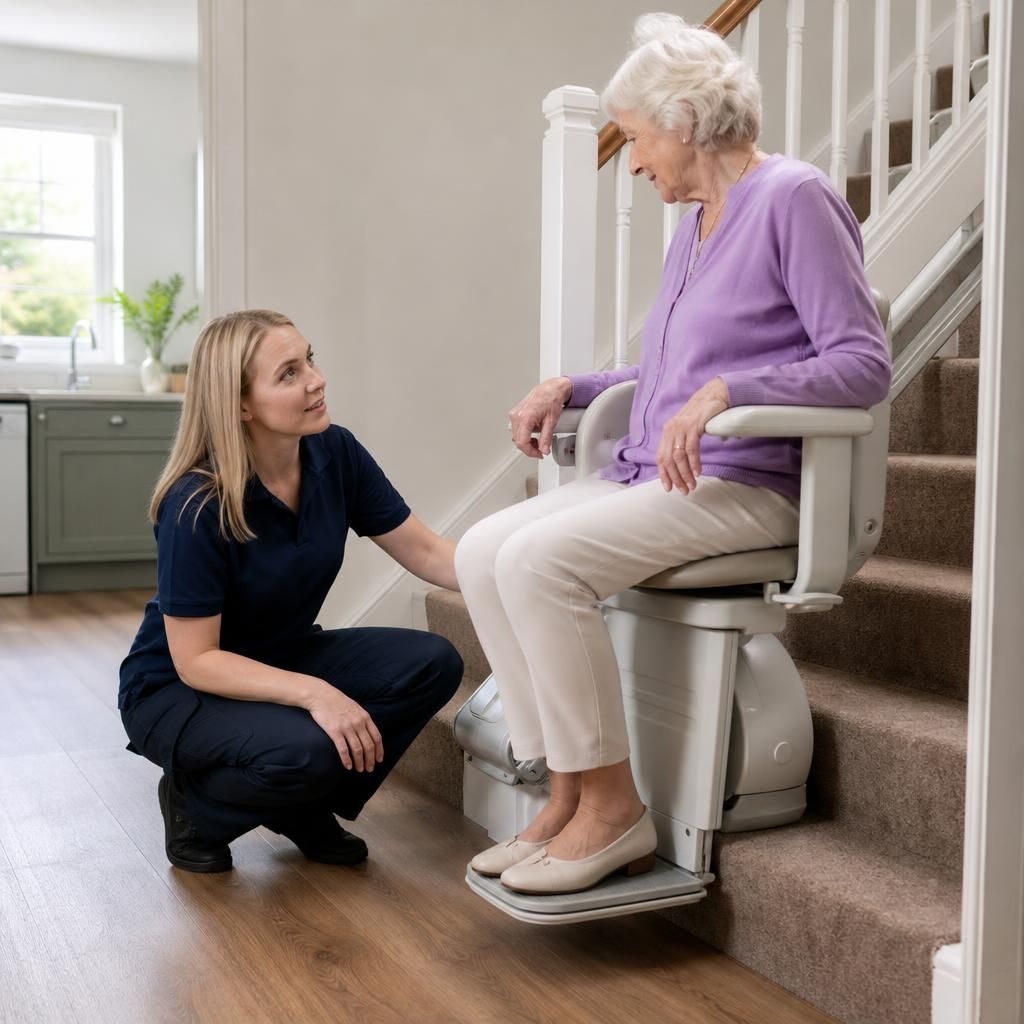
Arrange your Acorn stairlift assessment
Arrange your Acorn stairlift assessment with Independent Stairlifts to review your staircase, mobility needs and suitable model options. Contact us for practical advice and a free, no-obligation quote.