
What are the key differences in longevity and maintenance requirements between new and reconditioned stairlifts?
New stairlifts generally offer the longest expected service life and the lowest early maintenance needs, while reconditioned stairlifts can provide dependable service when professionally inspected, refurbished and correctly installed. Both require routine servicing, battery replacement over time and prompt attention to wear; the main differences are the stairlift’s age, component condition, warranty and availability of replacement parts.
New stairlifts generally provide the longest potential service life and the lowest likelihood of early maintenance, because all major components are unused and covered by the manufacturer’s specification. A professionally reconditioned stairlift can also be dependable, but its remaining service life depends on its age, previous use, refurbishment quality, replacement parts and installation. Both types require routine care, servicing and eventual battery replacement.
Longevity: new stairlifts
A new stairlift begins its working life with unused mechanical, electrical and battery components. Subject to suitable use and regular servicing, this normally gives the clearest expectation of long-term operation. The manufacturer’s design, installation requirements and recommended maintenance schedule are also easier to establish, as the complete service history starts with the original installation.
New does not mean maintenance-free. Batteries gradually lose capacity, and parts such as rollers, drive components, switches, charging contacts and seat mechanisms can eventually show wear. How long a stairlift remains reliable is also affected by the staircase, frequency of use, weight loading, cleanliness, moisture and whether it is operated correctly. A new stairlift installed in a demanding environment may need attention sooner than one used less frequently in favourable conditions.
Longevity: reconditioned stairlifts
A reconditioned stairlift has already been used, so some of its overall service life has passed. The remaining lifespan cannot be judged from age alone. A unit that has been well maintained and lightly used may have considerable useful life left, while one exposed to heavy use or poor storage may require more component replacement before it is ready for installation.
Effective refurbishment should identify and address wear rather than simply clean the equipment. This can include functional testing, safety checks, inspection of the rail and drive system, examination of the seat and controls, replacement of unsuitable or worn parts, battery assessment and testing under operating conditions. The quality and completeness of this process are more important than the label “reconditioned”. The installation should also be checked to confirm that the stairlift is suitable for the particular staircase and user.
Because the previous operating history may not always be fully available, a reconditioned stairlift usually carries more uncertainty about long-term component life than a new model. That does not make it unreliable, but it makes the supplier’s inspection procedure, refurbishment standards, warranty and aftercare particularly important.
Maintenance requirements compared
The basic maintenance requirements are similar for both new and reconditioned stairlifts:
- Keep the rail, charging points and surrounding floor area free from dust, pet hair and objects that could interfere with movement.
- Use the stairlift as instructed and do not exceed its specified user or load limits.
- Keep the batteries charging whenever the lift is parked at its charging point, unless the manufacturer’s instructions say otherwise.
- Arrange servicing at the recommended intervals or sooner if the stairlift is used heavily or develops a change in performance.
- Report unusual noises, juddering, slower movement, incomplete charging, error messages or difficulty operating the controls promptly.
- Do not attempt to bypass safety switches or carry out electrical or mechanical repairs without suitable training.
New stairlifts are less likely to need corrective work during their early service period, although routine checks remain necessary. With a reconditioned stairlift, the first service or inspection may identify wear that was not apparent during normal operation, particularly if a battery or moving component is nearing the end of its useful life. A reputable installer should explain what has been checked, what has been replaced and which items may need monitoring.
Batteries and other wear items
Battery condition is one of the most noticeable differences between new and reconditioned equipment. New batteries start with their full expected capacity, whereas a reconditioned stairlift may have replacement batteries fitted as part of the refurbishment or may retain batteries that have passed testing. Batteries naturally deteriorate with age and use, so reduced travel between charges, failure to hold charge or repeated low-battery warnings should be investigated.
Other parts that may require attention over time include drive belts or gears, rollers, armrests, seat swivels, footplates, control switches, charging contacts and safety edges. Their condition depends on the design of the stairlift and how it has been used. Parts that are commonly available and supported by the manufacturer can make future maintenance more straightforward. Before choosing a reconditioned model, it is sensible to confirm that replacement parts and technical support remain available.
Warranty and service support
Warranty cover does not necessarily reflect the exact remaining mechanical life of a stairlift, but it provides important protection if a fault occurs. New stairlifts normally come with the manufacturer’s applicable warranty for the equipment and installation. Reconditioned stairlifts may have different warranty terms, exclusions or durations, depending on the refurbishment work and the supplier’s policy.
Check what the warranty covers, whether it includes labour and call-outs, which parts are excluded, and who to contact if a fault develops. Also ask whether ongoing servicing is available after the warranty ends. Clear records of installation, inspections, replaced parts and servicing can help with future diagnosis and support.
Which option is likely to need less maintenance?
If the priority is minimising early maintenance and having the most predictable starting condition, a new stairlift is usually the more straightforward choice. If the priority is obtaining a suitable lift for a particular staircase while managing the purchase cost, a professionally reconditioned model may offer dependable operation, provided its condition and support arrangements are clearly established.
For either option, the installation assessment is important. A correctly measured rail, suitable charging position, safe access to controls and appropriate seating arrangement all reduce avoidable strain and operating problems. Tell us about the intended user’s mobility, transfer ability and expected frequency of use so that the equipment can be matched to the home and maintained appropriately.
In practical terms, compare the total ownership requirements rather than the purchase price alone. Consider the stairlift’s condition, expected remaining service life, battery status, warranty, service availability, replacement-part support and the cost of any likely remedial work. Independent Stairlifts can explain these points during an assessment and help you choose between new and reconditioned equipment based on the staircase, user and expected use.
Both new and reconditioned stairlifts need routine care, but a reconditioned model may require closer monitoring of wear-prone parts because it has already been used. Keep the rail and charging contacts clean, leave the lift on charge as instructed, and report slower movement, unusual noise, juddering or battery warnings promptly. A new stairlift usually offers a more predictable starting condition, while the maintenance needs of a reconditioned lift depend on the quality of its inspection, replacement parts and refurbishment.
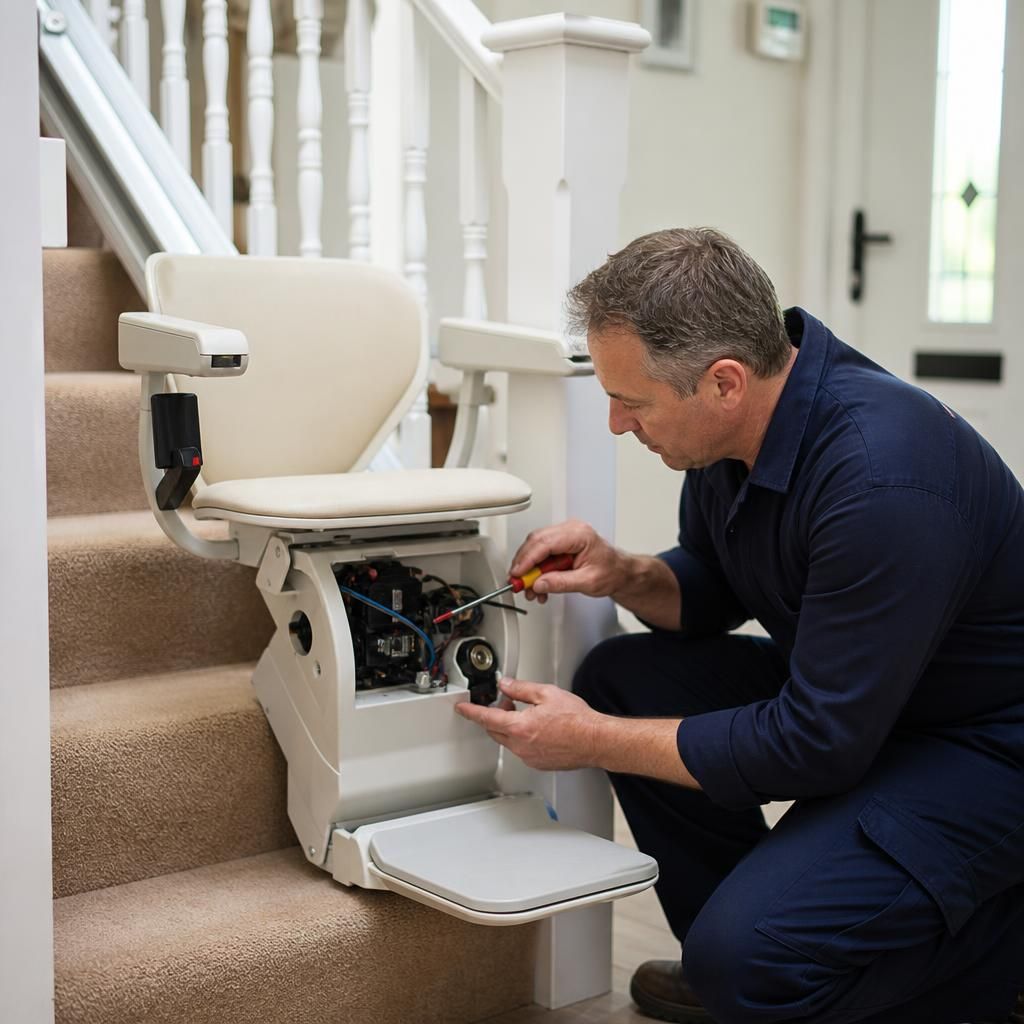
Compare your new and reconditioned stairlift options
Contact Independent Stairlifts to compare new and reconditioned options based on your staircase, expected use, warranty requirements and likely maintenance needs.