
How does the process of refurbishing a reconditioned stairlift ensure its safety and reliability compared to new models?
A reconditioned stairlift is made safe through a structured process of inspection, cleaning, replacement of worn components, electrical and mechanical testing, and final safety checks before installation. When properly refurbished and installed, it can provide dependable everyday performance comparable to a new model, although its condition, remaining service life and warranty should be clearly confirmed.
A reconditioned stairlift is made safe and reliable through a controlled process of inspection, cleaning, component replacement, testing and commissioning. The lift should only be offered for reuse after its condition has been assessed, worn or faulty parts have been dealt with, and its operation has been checked against the manufacturer’s requirements. When this work is carried out properly and the lift is correctly matched to the staircase, a reconditioned model can provide dependable everyday service, although its age, remaining service life and warranty may differ from those of a new stairlift.
The refurbishment process usually includes the following stages:
- Initial assessment and identification: The stairlift is recorded by model and specification, and its history and condition are considered where that information is available. This helps determine whether it is suitable for refurbishment and whether replacement parts and technical support remain available.
- Detailed inspection: The rail, carriage, seat, armrests, footrest, swivel mechanism, safety sensors, controls, wiring, batteries and charging equipment are examined. Particular attention is given to components subject to regular movement, loading or contact with the staircase.
- Cleaning and preparation: Surfaces and accessible mechanisms are cleaned, while dirt or debris that could affect movement, switches or charging is removed. Cleaning is not a substitute for servicing; it forms part of a wider inspection and preparation process.
- Replacement of unsuitable parts: Components that are worn, damaged, unreliable or outside the recommended service condition should be replaced with suitable parts. Depending on the model, this may include batteries, rollers, covers, switches, belts, wiring or other mechanical and electrical items. Parts should not simply be retained because the lift still operates during a basic demonstration.
- Mechanical and electrical testing: The lift is operated through its functions to check smooth travel, stopping, charging, controls and the performance of safety devices. The installer should also check that the seat, footrest, swivel or folding features lock correctly and that the lift responds as intended when an obstruction or control is encountered.
- Installation and commissioning: Before fitting, the proposed stairlift is checked against the staircase, access requirements and the user’s mobility needs. After installation, the rail fixings, clearances, charging points and controls are checked in the actual home. The lift is then run repeatedly through its route rather than being accepted solely on the basis of workshop testing.
- Final handover checks: The customer should be shown how to use the controls, charge the batteries, use the safety features and respond to a fault or power interruption. Relevant service and warranty information should also be explained.
Why these checks matter
A stairlift’s reliability depends on more than whether its motor runs. Batteries can lose capacity, rollers and drive components can wear, charging contacts can become unreliable, and safety switches can be affected by damage or adjustment. A structured refurbishment process is designed to identify these issues before installation and to confirm that the lift operates safely under normal use.
Suitability is also part of safety. A reconditioned stairlift must be appropriate for the shape and width of the staircase, the available landing space and the user’s posture, weight and transfer ability. The seat position, controls and swivel operation should be assessed with the person who will use the lift, wherever possible. A technically sound stairlift is not a suitable solution if the user cannot transfer safely or reach the controls comfortably.
How this compares with a new model
A new stairlift has new components and has not previously been used, so it will generally offer the longest potential service life from the date of installation. It is still dependent on correct fitting, commissioning, charging and ongoing maintenance. A new model can also develop faults or require adjustment; being new does not remove the need for installation checks or responsible use.
A reconditioned stairlift has already been used, so its remaining service life depends on its model, previous use, storage, condition and the quality of the refurbishment. Its safety does not come from being unused; it comes from the inspection, replacement, testing and installation process. The main practical difference is therefore the condition and history of the equipment, rather than an assumption that every new stairlift is automatically safer than every reconditioned one.
Before choosing a reconditioned model, ask for clear information about:
- the model and approximate age of the equipment, where known;
- which parts have been inspected, serviced or replaced;
- the checks completed before installation and commissioning;
- the warranty, including what is covered and for how long;
- the availability of replacement parts and future servicing;
- the expected battery performance and what happens if the batteries need replacing;
- the aftercare process if the lift develops a fault.
These questions help distinguish a professionally refurbished stairlift from one that has merely been cleaned and resold. It is reasonable to expect a written quotation or specification to identify the equipment supplied, the installation work, the warranty terms and the support available after handover.
Once installed, reliability is supported by using the stairlift as instructed, keeping the rail and charging area clear, ensuring the lift is returned to its charging point when required, and reporting unusual noises, hesitant movement, repeated fault indications or reduced battery performance. Do not continue using a lift that has a safety fault or has suffered damage; contact the service team for advice.
In practical terms, a properly refurbished stairlift can be a safe and reliable alternative to a new model, particularly when it has been professionally assessed and matched to the home. The important comparison is not simply new versus used. It is the documented quality of the refurbishment, the suitability of the installation, the support provided afterwards and the clarity of the warranty and expected service life.
The safety of a reconditioned stairlift depends on documented refurbishment checks, not simply on whether the lift operates during a demonstration. Before installation, the equipment should be inspected for wear or damage, cleaned, fitted with suitable replacement parts where required, and tested through its normal functions.
Particular attention should be given to the batteries, charging contacts, drive components, safety sensors, controls, seat, footrest and swivel mechanism. After fitting, the installer should run the stairlift repeatedly on the customer’s staircase, check clearances and fixings, and confirm that it stops correctly when a control or safety feature is activated. These checks help ensure that the reconditioned model is safe for its intended user and dependable in everyday use.
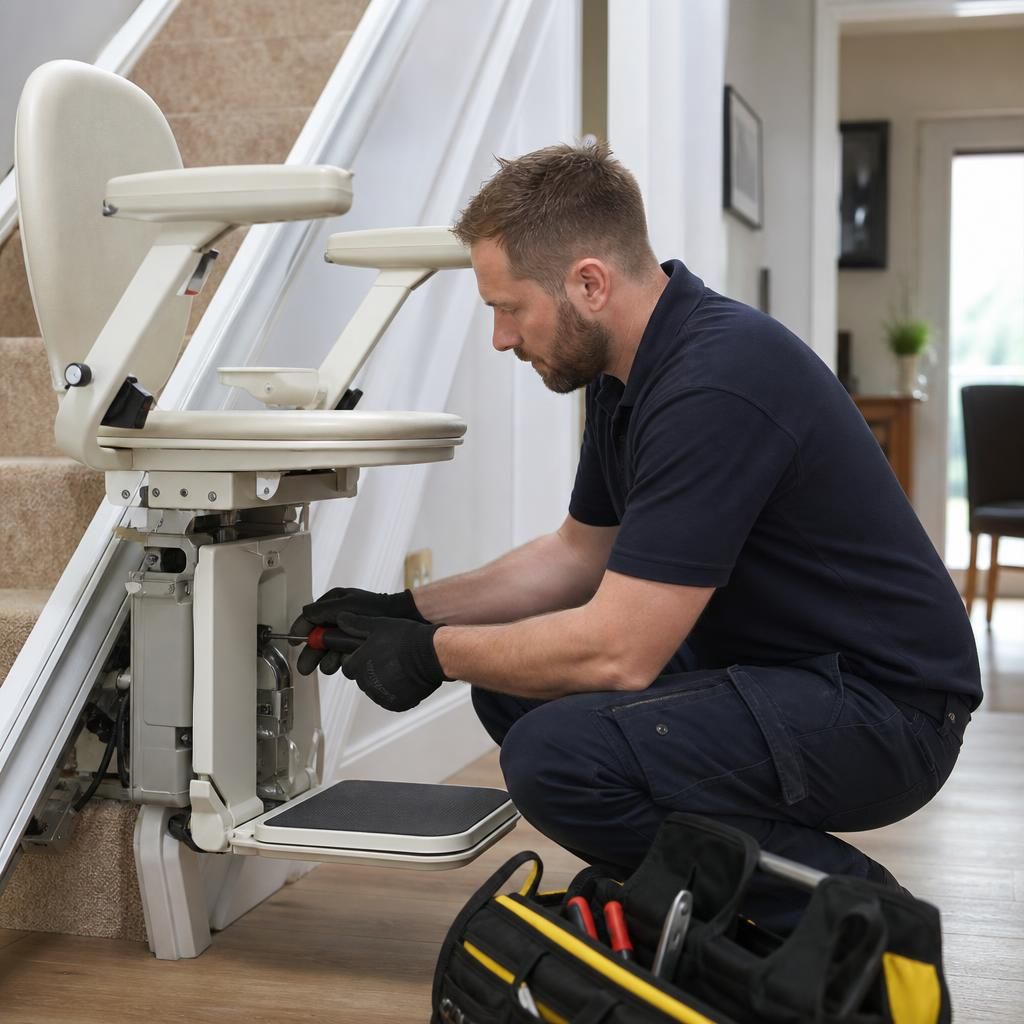
Ask us about a reconditioned stairlift assessment
Ask us about a reconditioned stairlift assessment to review your staircase, user requirements and the condition of a suitable model. We can also explain the refurbishment checks, warranty and aftercare included before you make a decision.