
What should you expect from the installation process of a reconditioned stairlift?
Installation of a reconditioned stairlift typically includes a home assessment, checking the stairway and electrical supply, followed by fitting the lift to suit your staircase. The installer will then test its safety and operation, explain how to use it, and provide information about servicing and warranty cover.
Installation of a reconditioned stairlift normally involves a home assessment, a suitability check, fitting the lift to your staircase, comprehensive safety testing and a practical handover. Although the stairlift has been previously used, it should be inspected, serviced and tested before installation so that the equipment is suitable for your staircase and operating needs.
Before installation
An assessment is used to confirm that the proposed stairlift is appropriate for your home. The installer will consider the shape and width of the staircase, the position of the steps and landings, available space at the top and bottom, and any doors or obstructions near the stairway. For a curved staircase, measurements and photographs or a detailed survey may be needed because the rail is generally made to follow the individual staircase. A straight stairlift may offer more flexibility, but the available space still needs to be checked carefully.
The assessment also considers the person who will use the stairlift. This can include their height, weight, mobility, ability to transfer on and off the seat, and whether they need features such as powered controls, a swivel seat or a folding footrest. These details help prevent a mismatch between the reconditioned model available and the user’s actual requirements.
The installer will also check the electrical supply. Most stairlifts use a standard domestic electricity connection and charge through charging points positioned along the rail or at designated ends. Any requirements for the socket, cable route or charging location should be discussed before fitting.
Checking the reconditioned equipment
A responsible installation process includes more than attaching a previously used stairlift to the staircase. The equipment should be checked for wear, cleaned and serviced, with key components inspected before it is offered for installation. Depending on the model and its condition, this may include the motor, gearbox, batteries, charging system, controls, seat mechanism, safety sensors, rail and fixings.
Parts that are worn, damaged or outside acceptable operating condition should be repaired or replaced before the stairlift is fitted. The precise work depends on the age, model, condition and design of the equipment. You should be told what preparation has been carried out and whether any limitations apply to the reconditioned stairlift.
On the day of fitting
The installer will usually protect the relevant areas of the home and bring the rail, carriage, seat, controls and associated components into position. The rail is secured to the staircase or, where appropriate, to the structure beside it rather than relying on the wall alone. It is positioned to leave safe access around the lift and to provide suitable parking at the top or bottom of the stairs.
The carriage and seat are then fitted to the rail. The installer connects the charging equipment and checks that the lift travels smoothly along the full route. Where the staircase has turns or intermediate landings, the installer pays particular attention to clearances, stopping positions and the movement of the seat through each section.
Installation work should be carried out without unnecessary alteration to the staircase. However, fixing holes, a suitable electrical connection or minor adjustments to nearby furniture or obstructions may be necessary. Any work that could affect the surrounding area should be explained to you.
Safety and operation checks
After fitting, the stairlift should be tested under normal operating conditions. The installer will check the direction controls, stopping points, charging, battery operation and the movement of the seat or carriage. Safety features should also be checked, including the sensors that stop the lift if an obstruction is detected, the seat belt or restraint, swivel-seat locking and the manual controls.
The stairlift should be tested from each relevant parking position and throughout the complete journey. The installer should not leave until the lift is operating correctly and you understand how to use it safely. If a problem is identified during testing, it should be addressed before the installation is treated as complete.
Your handover and demonstration
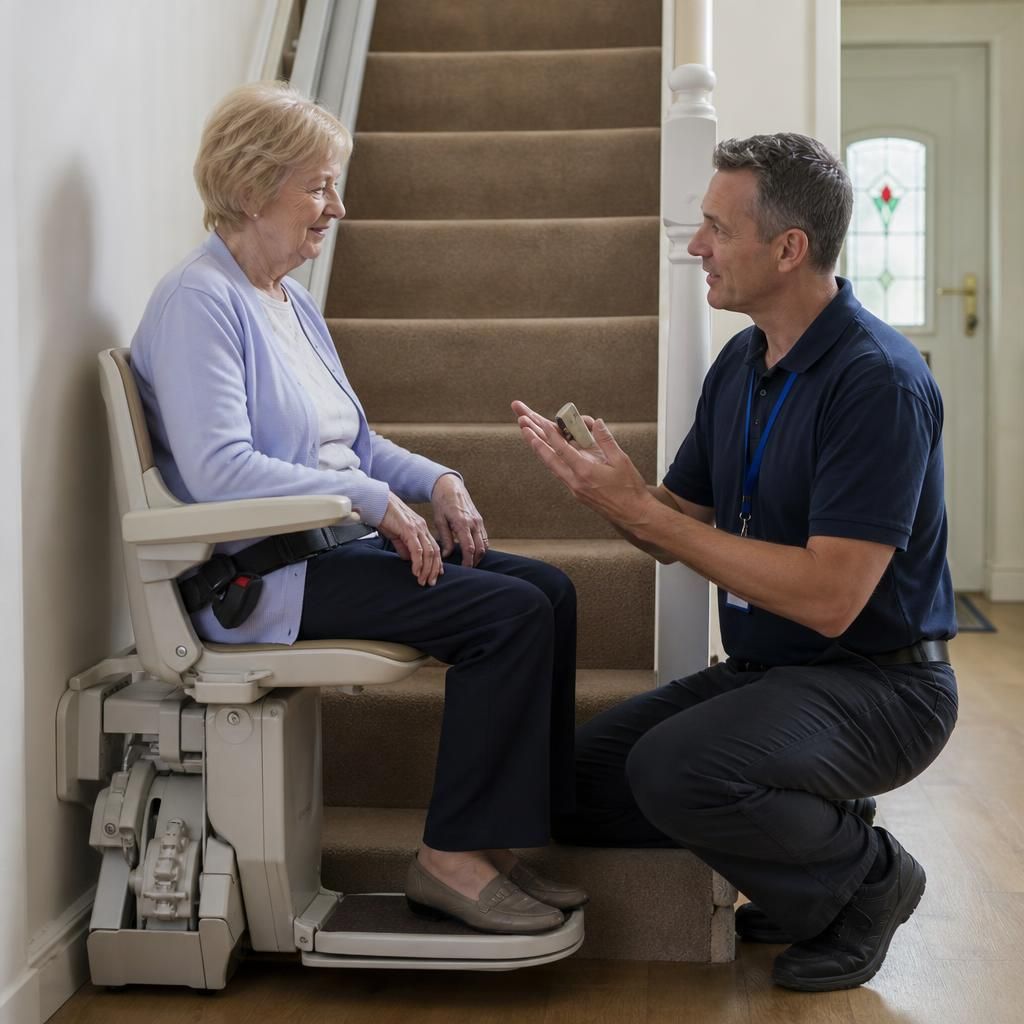
You should receive a practical demonstration rather than only written instructions. This normally covers starting and stopping the stairlift, using the controls, fastening the seat belt, swivelling and locking the seat where fitted, using the remote controls and parking the lift correctly. The installer should also explain what to do if the stairlift stops, how to use any manual lowering or emergency procedure provided, and who to contact for assistance.
If more than one person will use the stairlift, each regular user should have an opportunity to practise under supervision. Keep the operating instructions, service information and contact details in an accessible place. Do not allow other people to operate the lift until they have been shown how to use it.
Warranty, servicing and aftercare
Before installation, check what warranty or guarantee is included and whether it covers parts, labour, batteries, call-outs and faults caused by normal wear. Cover can vary for reconditioned equipment, so the terms should be clear rather than assumed. Ask whether servicing is recommended, how faults are reported and whether support is available if the stairlift stops working.
Regular servicing can help identify battery deterioration, worn rollers, loose fixings or control problems before they affect reliability. You should also keep the rail clear, avoid placing objects on the stairs and report unusual noises, jerky movement, warning lights or repeated stopping. Do not attempt to repair electrical or mechanical components yourself.
What can affect the installation
- The staircase may require a different rail, seat configuration or control arrangement from the equipment originally supplied.
- A narrow staircase, unusual landing or nearby doorway may affect where the stairlift can park and how easily the user can get on and off.
- Curved staircases usually require a rail designed for that specific layout, so a suitable reconditioned unit may need to be sourced and adapted before fitting.
- The condition of the electrical supply, batteries or charging points may require attention before the stairlift can be used reliably.
- Existing furniture, carpets, handrails or doors may need to be moved if they obstruct safe operation.
If the assessment identifies a safety issue or shows that the available reconditioned stairlift is not suitable, it is better to resolve that before installation than to proceed with an inappropriate model. Ask the installer to explain any recommended changes, the work included in the quoted price and anything that is excluded.
Once the stairlift has been installed, tested and demonstrated, you should be able to use it within the agreed operating conditions. Keep the staircase and landing clear, follow the manufacturer’s instructions and contact Independent Stairlifts if you need help with operation, servicing or a fault after the installation.
The handover is an essential part of reconditioned stairlift installation. Once the lift has been fitted and safety-tested, the installer should demonstrate its controls and explain how to use it safely in your home.
You should be shown how to start and stop the stairlift, fasten the seat belt, use the swivel seat where fitted, operate the remote controls and park the lift correctly. The installer should also explain what to do if it stops unexpectedly, how to report a fault and which warranty or servicing arrangements apply. Each regular user should have the opportunity to practise under supervision before the installation is completed.
Arrange your reconditioned stairlift installation assessment
Contact Independent Stairlifts to arrange an assessment for your reconditioned stairlift installation. We will check your staircase, discuss your requirements and confirm the most suitable fitting arrangements.