
What are the key considerations when choosing a reconditioned stairlift for an outdoor staircase?
When choosing a reconditioned stairlift for an outdoor staircase, check that it is specifically designed for external use, has been professionally inspected and tested, and is suitable for the staircase layout and weather exposure. Also confirm the condition of the batteries and electrical components, the installation requirements, available warranty and ongoing servicing arrangements.
A reconditioned stairlift for an outdoor staircase should be an external-use model that has been professionally inspected, tested and prepared for exposure to rain, damp, temperature changes and dirt. Before choosing one, confirm that its weather protection, batteries, controls, track, charging arrangement, safety features, installation requirements, warranty and future servicing are all suitable for your staircase and local conditions.
Check that it is designed for outdoor use
An indoor stairlift should not be adapted for an external staircase. Outdoor models use materials, electrical components, finishes and protective covers intended to withstand changing weather. Ask specifically whether the particular lift is suitable for outdoor installation, rather than relying on a general description such as “reconditioned” or “refurbished”.
Consider how exposed the staircase is. A sheltered entrance may have different requirements from an open garden staircase that receives driving rain, frost, strong sunlight or coastal air. The lift should be positioned and protected in accordance with the manufacturer’s instructions, with suitable drainage and a practical way to keep the seat, controls and charging points as dry as possible.
Have the complete staircase assessed
Suitability depends on more than the number of steps. An installer should assess the angle and width of the stairs, the position of gates or doors, landings, changes in direction, the top and bottom stopping points, and the available space for getting on and off safely. They should also consider whether the staircase is uneven, slippery or exposed to falling leaves, standing water or ice.
A reconditioned straight stairlift may be appropriate for a simple, straight external flight, but a staircase with bends, intermediate landings or unusual geometry may require a track made specifically for that route. The track and lift must work together; a used lift with a suitable-looking track is not necessarily compatible with the dimensions or layout of your staircase.
Ask how the lift has been reconditioned and tested
Find out what work has been carried out before installation. A proper reconditioning process should include cleaning, inspection, replacement of worn or unsuitable parts, electrical and safety checks, and a functional test under conditions appropriate to the model. Ask whether the outdoor casing, seals, switches and charging equipment have been checked for deterioration or water ingress.
Request clear information about the lift’s condition, age where known, previous use and any parts that have been replaced. Particular attention should be paid to:
- the motor, gearbox and drive mechanism;
- the rail, brackets and fixings, including any corrosion;
- the seat, armrests, footrest and swivel mechanism;
- the controls, sensors, safety edges and emergency stop functions;
- the battery condition and charging system; and
- covers, seals and other components that protect the lift from the weather.
Outdoor exposure can accelerate corrosion and affect electrical connections, even when a lift appears clean. A professional inspection should therefore cover hidden and load-bearing components as well as visible surfaces.
Confirm battery and charging performance
Most stairlifts use batteries so they can continue to operate during a mains power interruption. Outdoor batteries and charging points may be affected by cold, damp and long periods without use. Ask how the batteries have been tested, whether they hold a suitable charge and how their condition will be monitored after installation.
Check where the lift will charge at the top or bottom of the staircase and whether the charging point remains accessible when the lift is parked. If the staircase is not used regularly, ask what maintenance routine is recommended. Leaving the lift unused without an appropriate charging arrangement can shorten battery life and reduce reliability.
Review the safety features and operating conditions
The lift should have working safety features appropriate to the model, including a secure seat belt, obstruction sensors, safe braking, arm controls and a mechanism that allows the user to get on and off securely. The footrest and seat should remain stable, and the user should be able to operate the controls without stretching or twisting.
Outdoor conditions can make the steps wet, icy or slippery. A stairlift does not remove the need for safe access around the staircase, particularly when transferring on or off the seat. Discuss whether additional lighting, handrails, weather protection or changes to the surrounding surface would improve safety.
Understand installation requirements
External installation may require more than fixing a track to the stairs. The installer may need to consider the condition of the steps, wall or mounting surfaces, drainage, cable routes, nearby power supplies and protection from water. Fixings must be suitable for the structure and the outdoor environment.
Ask what preparation is included and whether any building, electrical or drainage work falls outside the installation. The finished installation should leave adequate clearance at the stopping points and should not obstruct doors, paths or other users. A final demonstration should cover normal operation, charging, emergency procedures and what to do if the lift stops.
Compare the total cost, not only the purchase price
A reconditioned lift can reduce the initial cost, but the overall cost may include a bespoke track, removal of an existing lift, electrical work, weather protection, delivery, installation and future replacement parts. Ask for an itemised quotation so that you can compare like for like.
Battery replacement and servicing are normal ownership considerations. Outdoor use may increase the importance of regular cleaning, corrosion checks and inspection of seals and connections. Ask how often the lift should be serviced and whether the service plan covers external components as well as the main stairlift.
Check the warranty and aftercare arrangements
Before agreeing to the purchase, establish what warranty is provided and whether it covers parts, labour, batteries, the motor, track and call-outs. Check the warranty period, exclusions and any conditions relating to servicing or weather damage. A warranty that only covers the lift indoors may not provide the protection you expect for an external installation.
Also confirm who will provide repairs, whether replacement parts remain available and how quickly assistance can normally be arranged. A reconditioned stairlift is a significant safety-related purchase, so ongoing support is as important as the initial inspection.
Use a suitability assessment before making a decision
The safest choice is the reconditioned outdoor model that matches the staircase, user and environment, not simply the one with the lowest advertised price. During an assessment, explain how often the lift will be used, who will operate it, whether the user has difficulty transferring, and how exposed the staircase is. The installer can then confirm the appropriate configuration and identify any changes needed around the steps.
Before installation, obtain written confirmation that the stairlift is intended for outdoor use, has been inspected and tested, will be installed by a competent professional, and is supported by clear warranty and servicing arrangements. These checks help ensure that a reconditioned stairlift provides dependable access without overlooking the additional demands of an external staircase.
A reconditioned outdoor stairlift must be designed for external use, not simply a previously used indoor model. Outdoor models have weather-resistant components and protective finishes intended to withstand rain, damp, frost, sunlight and dirt. Ask for confirmation that the specific lift has been inspected for corrosion, water ingress, damaged seals and deterioration to its controls, charging equipment and electrical connections.
The staircase environment also affects suitability. An exposed flight may need better drainage, protection for the parked lift and a charging point that remains dry and accessible. The installer should assess the steps, landings and surrounding surfaces, including the risk of standing water, ice or slippery areas. These checks help ensure the reconditioned lift is suitable for the conditions it will face throughout the year.
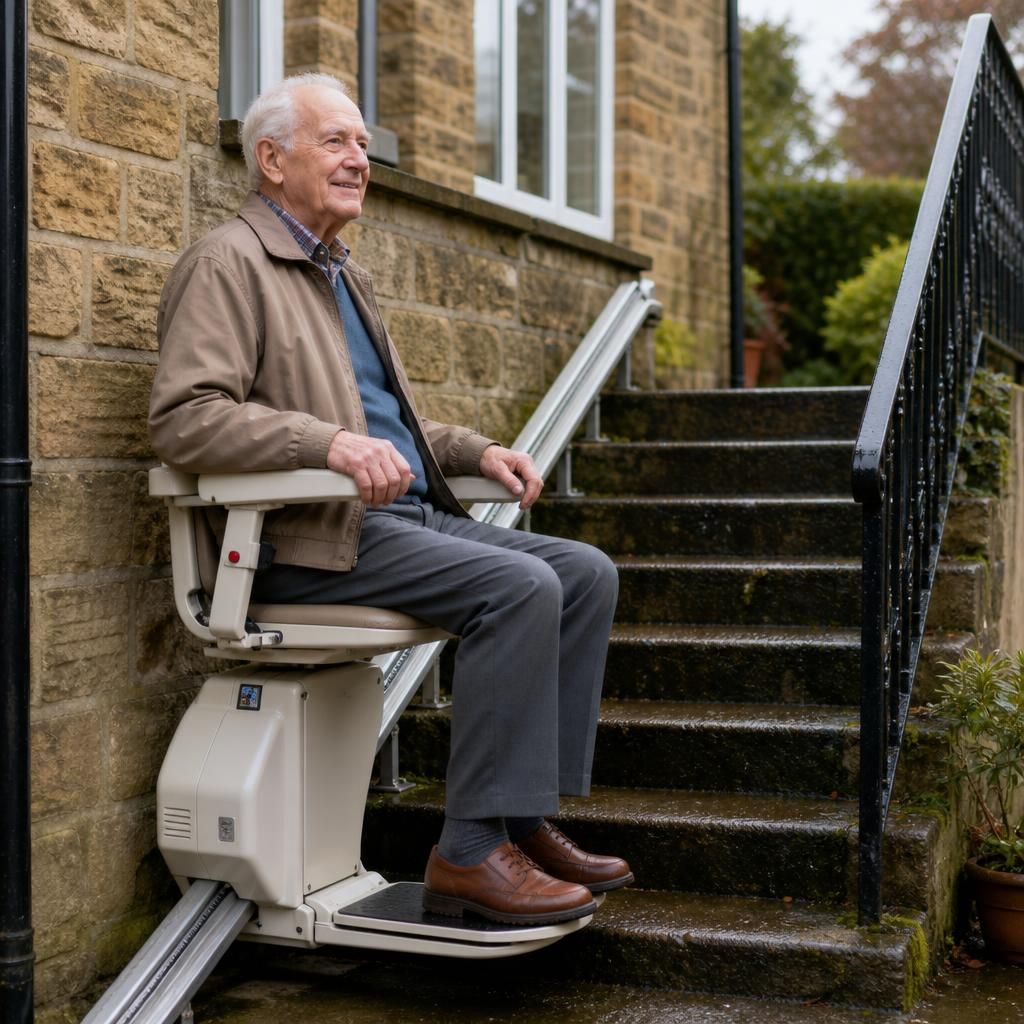
Arrange an assessment for your outdoor staircase
Arrange an assessment of your outdoor staircase so we can confirm the right reconditioned stairlift, weather protection, charging arrangement and installation requirements for your property.