
What are the benefits of choosing a refurbished stairlift over a new one for straight staircases?
A refurbished stairlift for a straight staircase can provide the same essential assistance as a new model at a lower cost, while making use of a proven design and components. When professionally inspected, safety-tested, installed and covered by an appropriate warranty, it can offer reliable day-to-day performance with potentially quicker availability than ordering new.
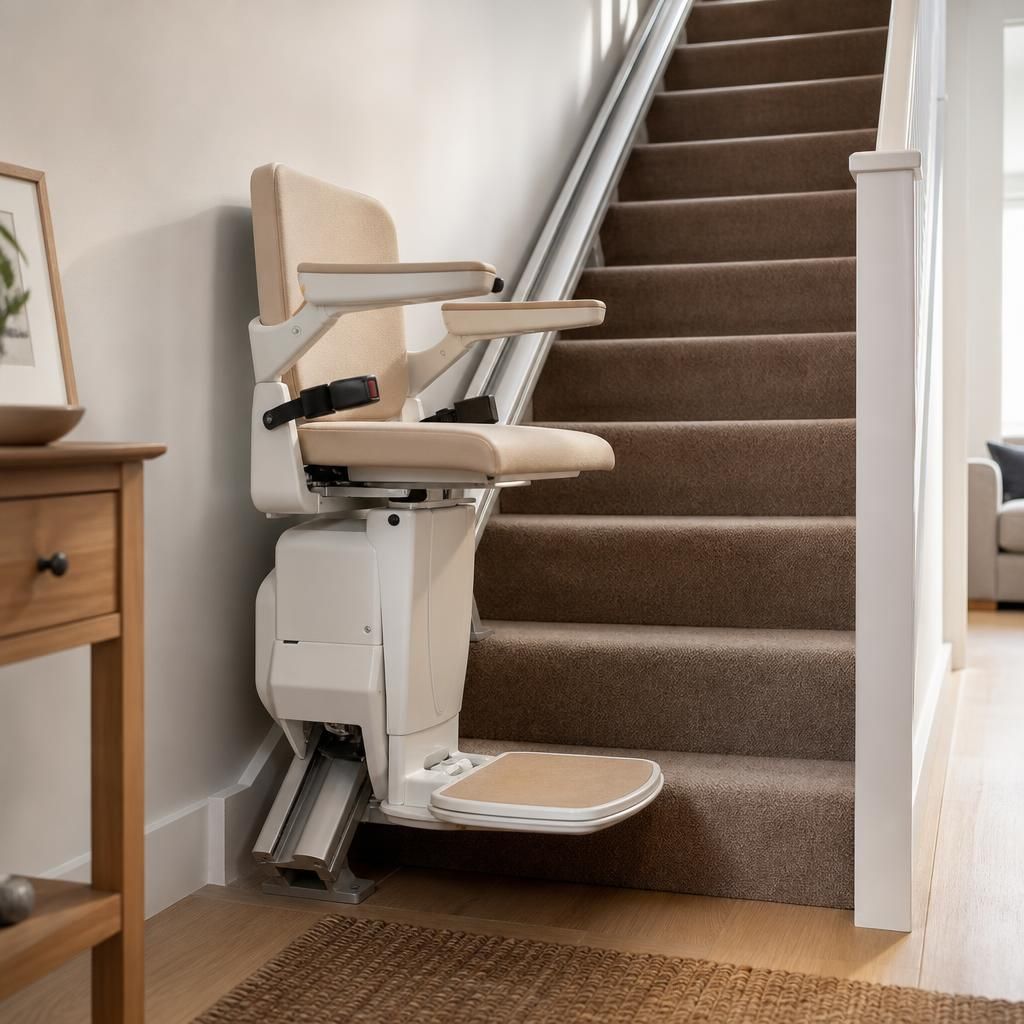
A refurbished stairlift for a straight staircase can provide the essential function of a new stairlift at a lower overall cost, provided it has been professionally inspected, serviced, safety-tested and installed. Because straight stairlifts use a simpler rail layout than curved models, a refurbished unit is often a practical option where the staircase is genuinely straight and the equipment can be correctly matched to the user and the home.
Lower purchase and installation cost
The main benefit is usually price. A refurbished stairlift has already been manufactured and used, so the cost can be lower than buying an equivalent new model. This may make powered access between floors more affordable, particularly where a stairlift is needed quickly or where the available budget is limited.
The quoted price should be considered as a complete installation rather than as the cost of the stairlift alone. It may include the rail, seat, controls, batteries, fitting, removal of existing equipment and warranty cover. Asking what is included helps you make a fair comparison with a new stairlift, as a low initial price may not represent the full cost if important services are excluded.
Reliable performance from a proven design
Refurbished stairlifts are normally based on models that have already been used in domestic settings. Their controls, folding parts, charging system and safety features are established rather than untested. A reputable supplier will assess the unit before it is offered for reuse, replacing worn or unsuitable components and checking that it operates as intended.
This does not mean that every used stairlift is automatically reliable. Condition depends on its age, previous use, storage, servicing history and the quality of the refurbishment. The important distinction is between a professionally refurbished unit prepared for reuse and a stairlift sold without meaningful inspection or aftercare.
Potentially quicker availability
A suitable refurbished straight stairlift may be available sooner than a new model that needs to be ordered, manufactured or supplied with particular options. This can be useful when someone is finding the stairs increasingly difficult, has recently returned home, or needs a temporary accessibility solution while longer-term arrangements are considered.
Availability still depends on finding a model that suits the staircase, the user’s physical needs and the installation requirements. A faster installation should not replace a proper assessment. The stairlift must be safe to use and positioned so that the user can transfer on and off the seat securely.
Good suitability for many straight staircases
Straight stairlifts generally travel along a single continuous rail, which can make a refurbished unit easier to match than a lift designed for a staircase with bends, intermediate landings or multiple flights. If the staircase has no change of direction, a standard refurbished rail may be suitable, although the rail length and fitting position still need to be assessed.
Some staircases that appear straight may include a small landing, a change in angle, a narrow section or an obstruction at the top or bottom. In these situations, a standard straight model may not provide the correct travel path or parking position. An assessment confirms whether a straight stairlift is appropriate and whether the rail can be installed without obstructing doors, walkways or other household users.
Less waste and continued use of serviceable equipment
Refurbishing a stairlift allows usable equipment and components to remain in service instead of being discarded when a previous installation is removed. Reuse can therefore reduce unnecessary waste, particularly when the stairlift is in good condition and can be restored safely.
Responsible refurbishment is not simply cleaning the seat and testing whether it moves. It should involve a detailed inspection, appropriate replacement of consumable or worn parts, electrical and operational checks, and confirmation that the safety systems work correctly. Equipment that does not meet the required standard should not be reinstalled.
What should be checked before choosing one?
- Condition: Ask what has been inspected, serviced or replaced, including the drive system, seat, armrests, swivel mechanism, rail, sensors and controls.
- Batteries: Batteries are wear items and may need replacement if they no longer hold charge or provide dependable operation during a power interruption.
- Safety features: The footrest sensors, seat belt, obstruction sensors, limit switches, braking system and emergency controls should be tested before handover.
- Suitability: The seat width, weight capacity, transfer position, controls and operating direction must suit the user, not just the staircase.
- Warranty: Check how long cover lasts, whether it includes parts and labour, and how faults are reported and dealt with.
- Aftercare: Confirm who will provide servicing, repairs, replacement batteries and technical support after installation.
Refurbished does not mean identical to new
A new stairlift may offer the widest choice of colours, seat styles, powered options and other specifications. It will also have no previous installation history. A refurbished stairlift may have cosmetic marks or a more limited choice of features, although these do not necessarily affect safe operation. The right comparison is the condition, specification, warranty and total installed cost of each option.
For many straight staircases, the most useful features are straightforward controls, a comfortable and supportive seat, dependable charging, suitable parking positions and safety systems that are easy to use. Paying for features that are not needed may not improve daily access, while choosing a unit that is too narrow, difficult to transfer into or unsuitable for the user’s mobility can make it less practical regardless of its condition.
Installation remains important
A refurbished stairlift should be installed by a competent professional who has assessed the staircase and checked the equipment. The installer should secure the rail correctly, position the charging points, set the controls and test the lift under normal operating conditions. They should also explain how to use the seat, belt, swivel mechanism, controls and emergency lowering or stopping functions.
After installation, the user should be able to reach the seat safely, operate the controls without confusion and park the stairlift without creating an avoidable obstruction. Family members or carers should understand the basic charging and fault procedures as well.
When a new stairlift may be the better choice
A new stairlift may be preferable where a particular seat configuration or powered option is essential, where the user has complex mobility requirements, or where a suitable refurbished model is not available. It may also be the better long-term choice if the difference in total cost is small once refurbishment, installation, warranty and likely maintenance are taken into account.
For a standard straight staircase, however, a professionally refurbished stairlift can be a sound alternative. The decision should be based on the user’s needs, the staircase layout, the condition of the equipment, the scope of testing, the warranty and the aftercare available—not on the word “refurbished” alone.
A home assessment and clear quotation will establish whether a refurbished stairlift is suitable, what preparation is required and what is included in the installation. This gives you a practical basis for comparing it with a new model and choosing safe, reliable access for the staircase.
A refurbished stairlift for a straight staircase is a previously used unit that has been inspected, serviced and safety-tested before being installed again. Its simpler single-rail design can make it a practical, lower-cost alternative to a new stairlift, provided the equipment is correctly matched to the user and the staircase.
The main benefit is reduced overall cost without removing the essential functions needed for safe daily access. A professionally refurbished lift should have its drive system, batteries, controls, sensors, seat and safety mechanisms checked, with worn parts replaced where necessary. Ask for a clear quotation covering installation, warranty and aftercare, rather than comparing the equipment price alone.
Refurbishment can also mean quicker availability, as a suitable unit may already be in stock. This should not replace a proper home assessment: the rail length, parking position, transfer space and user’s comfort must all be confirmed before installation.
Arrange a refurbished stairlift assessment
Arrange a home assessment to confirm whether a refurbished stairlift is suitable for your straight staircase, the user’s needs and the available space. We will explain the condition of the equipment, installation requirements, warranty and aftercare before providing a clear quotation.